
Growing grapes on the balcony

The most important points in brief
- Growing grapes on a balcony is possible even in small spaces with careful planning, a suitable location, and good care, and rewards you with healthy grapes and beautiful greenery.
- Stable climbing supports such as trellises and a sufficiently large planting container, for example, the Manarola raised bed from ELEO, create optimal conditions for the vines to grow.
- When choosing a planting container, look for dwarf varieties suitable for containers and don't neglect watering, fertilizing, and regular pruning. will.
Growing Grapes on Your Balcony: Here's How to Do It
Climbing grapevines are a wonderful sight, provide pleasant shade in the summer, and yield delicious grapes packed with vitamins. The best part is: you can even grow grapes on your balcony. With careful planning and good care, it's quite possible to create a small "vineyard landscape" on your balcony. Grapevines grown on balconies prove surprisingly adaptable and reward you with a bountiful harvest if given the right care. In this guide, we explain what you need to consider when growing grapevines on your balcony. Contents Choosing a Location and Trellis Choosing a Container and Soil Conditions Planting and Watering Fertilizing and Pruning Variety Selection and Recommendations Frequently Asked Questions (FAQ)
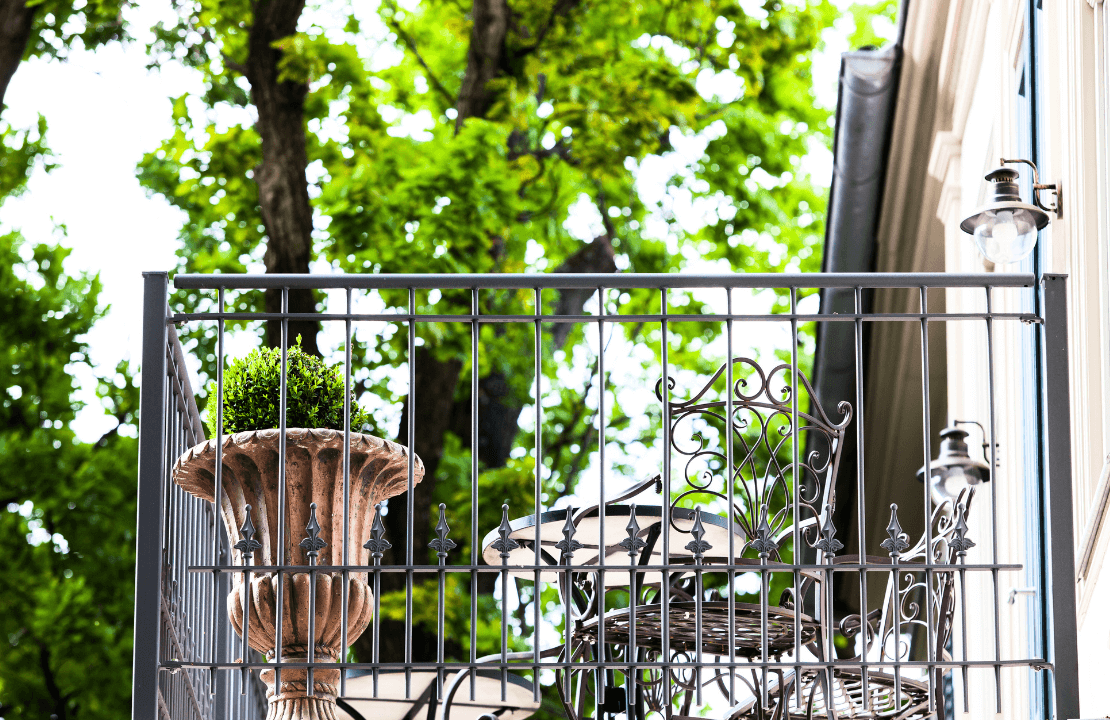
Growing grapes is also possible on a balcony. Location, choice of container, and care are important. Pictured: The Lucca balcony railing powder-coated anthracite. © ELEO
Location and Support
The key to successfully growing grapes on a balcony lies first and foremost in choosing the right location. Grapevines are true sun worshippers: A sunny spot with at least six hours of direct sunlight per day is essential for the growth and development of healthy grapes. But be careful: Grapevines prefer sheltered locations, as they are sensitive to wind and drafts. A sheltered corner on the balcony and the use of a sturdy climbing support such as trellis, espaliers, or obelisks are therefore a smart choice to allow plants to climb safely.
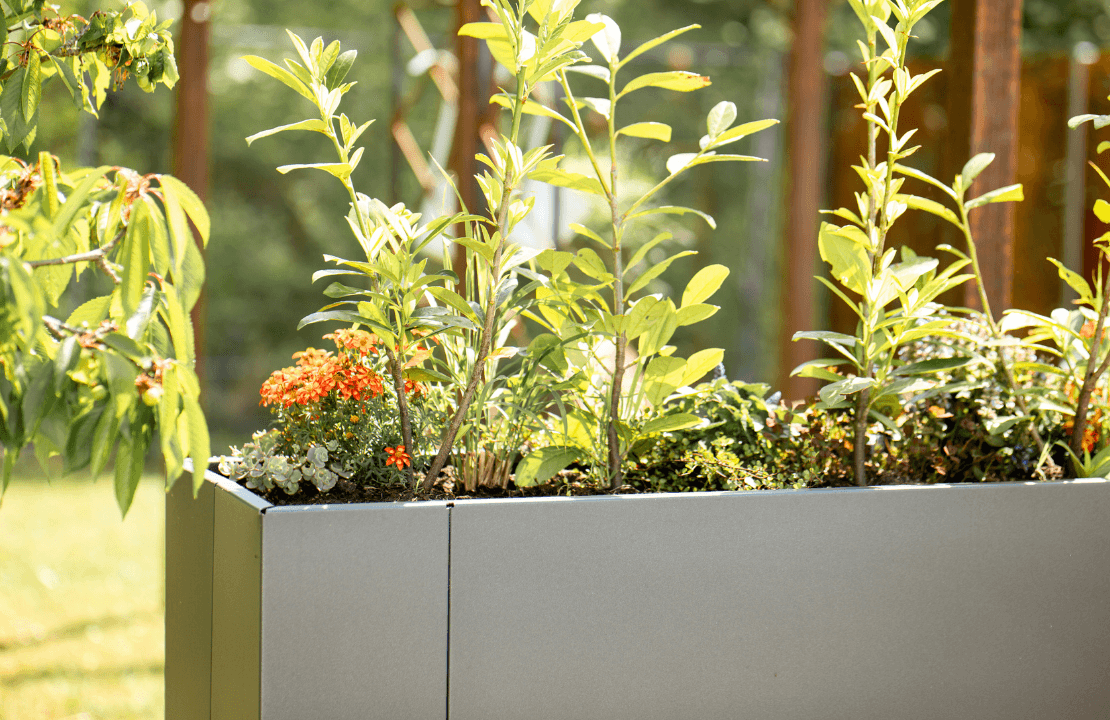
Grapevines need plenty of space. A raised bed is ideal. Pictured: The ELEO Manarola raised bed. © ELEO
Tip: Do you have a garden? How about a vine arbor? Here, the grapevines have plenty of room to climb while you relax in the arbor.
Choosing a Container and Soil Conditions
A generously sized container, or even better, a metal raised bed, forms the basis for successful winegrowing on the balcony. Choose a container with a diameter of at least 40 cm and a capacity of about 20 liters. Make sure the container has sufficient drainage to prevent waterlogging. The choice of soil is also crucial. A mixture of clay, peat, sand, and compost is ideal. However, a high-quality potting mix for container plants, which is well-draining and retains water effectively, is also suitable for the healthy growth of your vines. Planting and Watering Grapevines are planted in spring or autumn. Plant them deep enough in the container so that the graft union (the thickened part of the stem) is about 3 to 5 cm above the soil surface. Watering is another key to success. Water the vines regularly, but be careful to avoid waterlogging by allowing excess water to drain away. Especially on hot days, it is advisable to water the plants in the morning or evening to prevent them from drying out. Fertilizing and Pruning During the growing season, grapevines require regular fertilization. Every two to four weeks, you should use a special liquid fertilizer for grapevines to promote growth and support a bountiful harvest. In winter, careful pruning is necessary to encourage growth the following year. Cut back the shoots by about a third to promote healthy development.
Variety Selection and Recommendations
When selecting varieties for balcony cultivation, dwarf varieties are particularly recommended. Among the most popular varieties are 'Souvignier Gris', Vitis vinifera Pixie® 'Pinot Meunier Purple Grape', and Vitis 'Strawberry Grape'.
|
Variety |
Tree Height |
Harvest Time |
|
Souvignier Gris |
1.5 - 2.5 m |
August - September |
|
Vitis vinifera Pixie ® 'Pinot Meunier Purple Grape' |
0.5 - 1 m |
August - September |
|
Vitis 'Strawberry Grape' |
up to 5 m |
August - September |
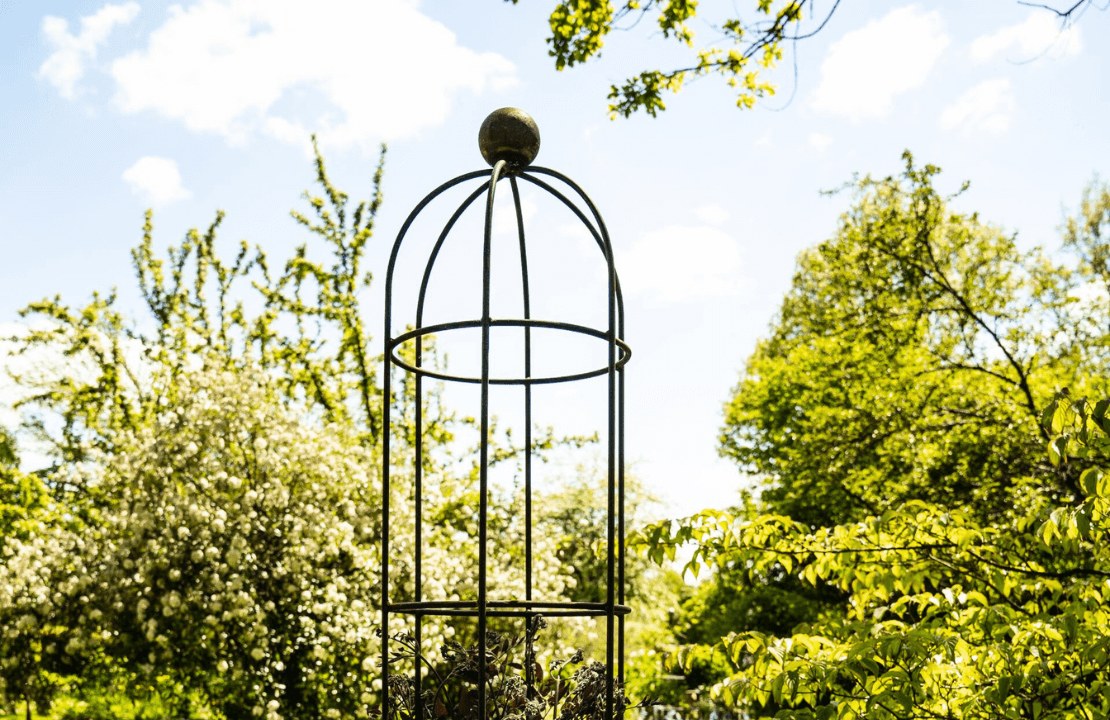
A vine obelisk is well-suited for growing grapes on a balcony. Pictured: Messina Vine Obelisk uncoated. © ELEO
Frequently Asked Questions (FAQ)
Can you plant grapevines on a balcony?
Yes, grapevines can also be planted on a balcony. However, make sure they have a sunny location, a sturdy support structure, and a large planter.
Can you keep grapevines in pots?
Yes, grapevines can be kept in pots. Choose a sufficiently large pot with a diameter of at least 40 cm and a volume of 20 liters. A trellis also provides support, as grapevines are very vigorous climbers.
Which grapevine variety is suitable for containers?
For container cultivation, dwarf and self-fertile varieties are particularly well-suited. Popular varieties include 'Souvignier Gris', Vitis vinifera Pixie® 'Pinot Meunier Purple Grape', and Vitis 'Erdbeertraube'.
How large should a planting container for grapevines be?
The planting container should have a diameter of at least 40 cm and a capacity of 20 liters. Ensure there is sufficient drainage and holes in the soil for water runoff.
Can you plant grapevines in autumn?
Grapevines can be planted in autumn. However, make sure the plant is well-rooted before the first frost.
What can you train grapevines to grow on?
Grapevines can grow beautifully on trellises, espaliers, or obelisks.

Tip – this is how you get started with gardening on your balcony
Raised beds are a good way to grow grapevines in a small space. They offer the advantage that the soil warms up better and the roots have more room.

Artikel teilen