
Gardening tips for April

The most important points in brief
- April is the right time for key gardening tasks such as planting kohlrabi and lettuce in raised beds – for example, in the ELEO Monterosso raised bed – as well as pricking out seedlings and aerating the lawn.
- Early bloomers should now be given nitrogen-rich fertilizer, while potatoes are planted outdoors or in raised beds, and seedlings are transplanted into larger pots.
- Despite the changeable weather, April is essential for the gardening season, and targeted measures can already ensure a successful start. Now for healthy growth and a bountiful harvest.
Contents:
- Gardening Checklist for April
- Planting Raised Beds: Kohlrabi and Lettuce
- Aerating the Lawn with a Garden Fork or Lawn Claw
- Fertilizing Early Bloomers – for Next Spring
- Planting Potatoes Outdoors in April Planting
April, April, it does what it wants. A saying that contains a lot of truth. Because in April, temperatures can easily climb to 20 degrees Celsius – only to plummet again the next day with heavy rain. But even if the weather is still unsettled, the fourth month of the year is essential for the further course of the gardening season. We explain what you should do in the garden in April.
Checklist for gardening in April
- Salads & Plant kohlrabi in a raised bed Aerate the lawn Fertilize early bloomers Plant potatoes outdoors Prick out seedlings

Kohlrabi and lettuce can be planted in the raised bed in April. Pictured: The ELEO Monterosso raised garden bed Monterosso made of metal. © ELEO
Planting a Raised Bed: Kohlrabi and Lettuce
Frost-resistant vegetables like kohlrabi and lettuce can now be planted in raised beds. Even though night frosts and unpleasant temperatures are still possible in April, kohlrabi and lettuce can already grow well outdoors – and you can look forward to an early harvest.
Aerating the Lawn with a Garden Fork or Lawn Claw
April is the ideal month to aerate the lawn. Aeration is particularly recommended for areas in the garden that are frequently walked on, such as paths to flower beds or seating areas. To aerate the lawn, you can use a classic garden fork or a lawn claw. The turf is loosened to allow air to reach the root system. The holes you poke in the lawn allow rainwater to drain away more easily – and experience shows that April is known for its frequent and heavy rainfall. Aerating the lawn helps prevent moss growth and promotes the development of a dense, even turf.
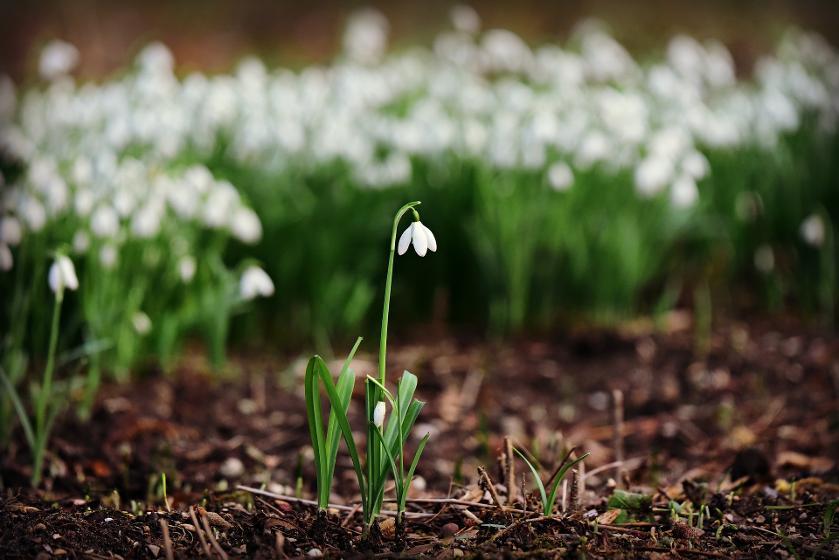
Early bloomers like snowdrops appreciate nitrogen-rich fertilizer in April. Image source: pixabay.com, MabelAmber
Fertilizing early bloomers – for next spring
Snowdrops, daffodils, and other early bloomers are fertilized in April to promote flowering next year. The ideal time is directly after flowering. A nitrogen-rich fertilizer is ideal. Tip: Tomato fertilizer is excellent for this.
Important: Don't cut back early bloomers too early! Only when the leaves are no longer green and have withered. Until this point, the plant draws up nutrients that are important for growth in the coming year.
Plant potatoes outdoors in April
Sprouted seed potatoes can be planted in the vegetable garden or raised bed from April onwards. Ensure sufficient spacing of at least 30 cm and a planting depth of approximately 15 cm. As soon as the shoots emerge from the soil, mound up the soil around them. This protects the side shoots, on which the potatoes that will later be harvested will develop, from sunlight.
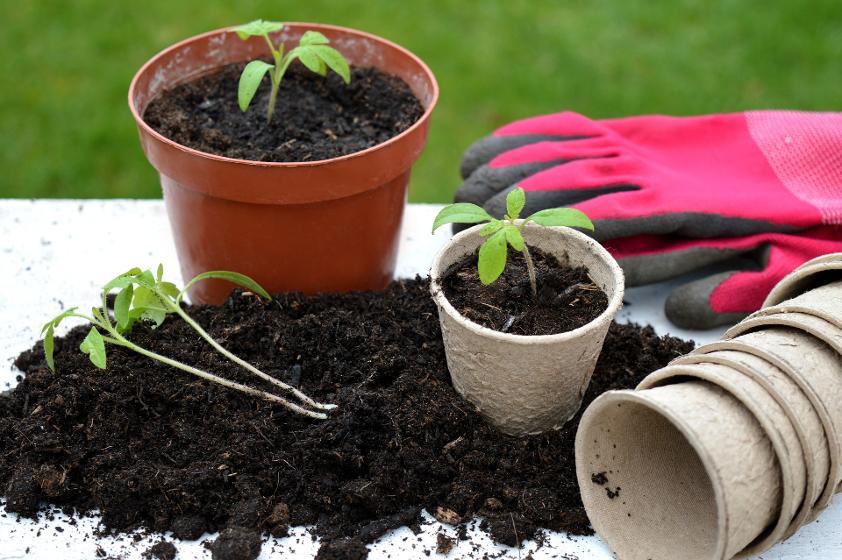 In April, you can prick out your pre-grown vegetable plants. Image source: pixabay.com, neelam279
Prick out young plants and plant them in larger pots
Pre-grown vegetable plants, which you have started, for example, in a cold frame or indoors on a windowsill, can be pricked out in April. Now each seedling gets its own pot. In these pots, the plants can grow for a few more weeks before being moved outdoors after the last frost in May.
How to Properly Transplant Your Seedlings
- Step 1
- Step 2
- Step 3
Fill the new pots about two-thirds full with high-quality potting soil and then water them.
Now carefully remove the plants from their seedling pots and place them in the new pots. Make sure to plant them slightly deeper than before to encourage the formation of new roots.
Cover the pots with soil and water again. Some plants, such as tomatoes and cucumbers, may also need additional support at this stage. For this, for example, kebab skewers or small bamboo sticks are very suitable.
After repotting, the plants may initially appear a little limp. Don't worry, this is perfectly normal. They will perk up again within a few hours.

Farmer's proverb of the month: If April brings much rain, it indicates blessings.

Artikel teilen