A raised bed allows for space-saving and productive vegetable cultivation in your own garden or even on your balcony and can be built yourself with simple materials such as Euro pallets or wooden beams.
The step-by-step instructions show how to prepare the basic frame, ensure optimal stability, and attach wire and tarpaulin to reliably protect plants and wood.
ELEO also offers high-quality metal raised beds that impress with their durability and modern design and are available with custom privacy screens upon request. are.
How do I build my own raised garden bed? – Explained step by step
There's hardly anything better than growing and harvesting your own vegetables, fruits, and herbs and using them to prepare delicious meals in your own kitchen. Homegrown produce simply tastes better, and it's a true joy to watch the plants grow and thrive. A raised bed is a good and space-saving alternative to the classic vegetable garden, fits into almost any corner of the garden and even on a balcony, and can be built quickly and easily yourself.
We'll explain how you can build a wooden raised bed yourself in two variations: from ready-made Euro pallets or from high-quality timber beams.
Building a raised bed from pallets – quick and easy in just a few steps
Balcony furniture, tables, and even entire shelves: The trend around Homemade structures made from Euro pallets are incredibly durable. The sturdy pallets are simple, practical, and possess a unique, rustic charm. Pallets are also ideal for building your own raised garden bed.
A DIY raised garden bed made from classic Euro pallets can be assembled quickly and is ready to use immediately. You can buy the pallets at a well-stocked hardware store. For a large raised garden bed with overall dimensions of 270 x 120 x 80 cm, you will need six pallets. You will also need the following materials:
Fine-mesh wire
Thicker tarpaulin
20 to 30 pan head screws
Tacker, hand stapler, or nail gun
Branches and leaves
Compost and Potting soil
Step 1: Level the ground
What you absolutely need for building your raised bed is a suitable location with a level surface. Otherwise, water may collect in one corner of your bed, and your plants won't receive sufficient water everywhere. Furthermore, it is helpful to clear the soil of unwanted plants such as weeds to create the best conditions for undisturbed plant growth.
Step 2: Paving the Base (optional)
If you like, and have the time and inclination, you can pave your chosen location with paving stones to protect your wooden raised bed from additional moisture from below and thus extend its lifespan. Alternatively, you can place your bed directly on the prepared, level surface of the ground. When laying the paving stones, be sure to sink them a few centimeters into the ground and always use a spirit level to ensure the raised bed is perfectly level.
Step 3: Build the basic frame for the pallet raised bed
The basic frame of your DIY raised bed is assembled in no time. The Euro pallets are screwed together to form a rectangle, with the tops facing inwards – two pallets along each long side and one at each end. Use thick pan-head screws with a sufficient length of at least 25 cm for assembly.
Step 4: Now for the wire and tarpaulin
Once the basic frame of your raised bed is complete, you can line the bottom with fine-mesh wire. The wire provides reliable protection against burrowers and rodents that would otherwise like to dig into the raised bed and help themselves to the vegetables. Simply attach the wire to the side walls with staples.
The tarpaulin goes on top of the wire. This should completely line the raised bed and not just cover the bottom. Make sure to use the thickest tarpaulin possible, as thinner models tear easily. If the tarpaulin is too large, simply fold it over. To attach the tarpaulin, use the staple gun again. The tarpaulin should extend right to the edge of the pallets to ensure that the wood does not come into contact with the water.
A raised bed made from timber beams – a project for advanced gardeners
You can build a raised bed not only from Euro pallets, but also from timber beams Building a raised garden bed. This option is somewhat more complex and time-consuming, but also looks more elegant. Sturdy timber beams are perfect for building a robust and visually appealing DIY raised garden bed.
For a self-built raised garden bed made from timber beams, you will need:
Timber beams (quantity depends on the desired size of the raised bed)
Corner timbers (4 to 6; depending on the desired size of the raised bed)
To prepare, you must also carry out step 1 above, and step 2 if desired.
Then the individual pieces of wood are laid out on your flat surface to be screwed together. Lay the desired number of timbers (the quantity depends on the planned size of your raised bed) side by side and ensure they are all parallel.
Now you can secure the timbers with mounting strips. Screw a mounting strip to each end of the timbers – and the side walls are finished. Repeat this process with fewer timbers for the ends if you want your raised bed to be rectangular.
Once the side walls and ends are complete, the corner pieces are used to connect the walls. Clamps are best for this, providing a practical assembly aid. Start by assembling one corner, consisting of a side wall and an end piece, to create a stable base. Then the remaining components follow.
The basic frame of your raised bed is complete – now the wire mesh for voles can be placed at the bottom and secured. Next comes the liner, which you pull up to the top edge of the raised bed and also secure with staples or nails.
Layer by layer – How do I fill a raised bed correctly?
Your raised bed is complete. Now it can be filled. For optimal soil structure, layer different materials before filling your raised bed with soil. The decomposition of the layered material generates continuous heat, which further supports plant growth. Furthermore, the different layers provide the plants with valuable nutrients.
The bottom layer usually consists of coarse branches and twigs and should fill one-third of the raised bed. Then add leaves on top of the branch layer. Be generous with the amount. If available, you can also mix in wood chips. The third layer is coarse compost. The final layer is the actual soil. You can use commercially available potting soil here. Special raised bed soil is often advertised in garden centers, but it's not necessarily better suited – and considerably more expensive.
What are the advantages and disadvantages of a raised bed?
Advantages
Disadvantages
Working upright
Watering during hot periods
Less slug infestation
Time required for the Construction
Sufficient nutrients for your plants
Material costs
Also suitable for balconies and patios
Less weeds
Longer harvest periods possible
Which plants are best suited for a raised bed? – Monoculture or mixed cropping?
Before you start planting vegetables and herbs in your self-built raised bed, make sure that the different varieties are compatible with each other. Unfortunately, not all plant species thrive together and some can even inhibit each other's growth.
Generally, you can only plant one type of plant in your raised bed. Since most people prefer a little variety in their garden and on their plates, you should be careful when choosing your plants.
A mixed planting of different vegetables is actually ideal for your raised bed. This way, the nutritional needs of the different varieties are taken into account. Ideally, you should plant heavy feeders like cabbage varieties next to light feeders like lettuce and herbs.
The following vegetables and herbs go well together and can be planted next to each other in a raised bed without any problems:
Which vegetables can I plant together in a raised bed?
-Liquid error (snippets/product-price-listing line 103): Computation results in '-Infinity'%
Sold out
{"id":6874156138589,"title":"Monterosso corten steel raised bed","handle":"monterosso-corten-steel-raised-bed","description":"\u003cp\u003e\u003cstrong\u003eOur \"Monterosso\" raised garden bed made of weatherproof Corten steel\u003c\/strong\u003e\u003c\/p\u003e\n\n\u003cp\u003e\n Our \"Monterosso\" raised garden bed is handcrafted from Corten steel, a controlled-rusting steel.\n This intentional rusting does not damage the high-quality material but rather gives your raised garden bed added strength and a unique look.\n Corten steel is maintenance-free for years.\n\u003c\/p\u003e\n\n\u003cp\u003e\n \u003cspan style=\"font-weight: 400;\"\u003e\n You will receive the \"Monterosso\" raised garden bed directly from us as the \u003cstrong\u003eoriginal manufacturer\u003c\/strong\u003e.\n We prioritize the highest quality, design standards, and customer satisfaction.\n \u003c\/span\u003e\n\u003c\/p\u003e\n\n\u003cp\u003e\u003cstrong\u003eTip:\u003c\/strong\u003e Corten steel can act as a deterrent to slugs and snails, as they find the rusty surface unpleasant and tend to avoid it.\u003c\/p\u003e\n\n\u003cp\u003e\n \u003cspan style=\"font-weight: 400;\"\u003e\n With a comfortable working height of 68 cm, our \"Monterosso\" raised bed is particularly easy on the back.\n Choose your ideal option from our selection:\n \u003c\/span\u003e\n\u003c\/p\u003e\n\n\u003cul\u003e\n \u003cli\u003e45 x 90 x 68 cm with 4 corner and 2 intermediate blocks\u003c\/li\u003e\n \u003cli\u003e45 x 135 x 68 cm with 4 corner and 4 intermediate blocks\u003c\/li\u003e\n \u003cli\u003e90 x 90 x 68 cm with 4 corner and 4 intermediate blocks\u003c\/li\u003e\n \u003cli\u003e90 x 135 x 68 cm with 4 corner and 4 intermediate blocks \/ 6 intermediate blocks\u003c\/li\u003e\n\u003c\/ul\u003e\n\n\u003cp\u003eThe \"Monterosso\" raised bed is delivered \u003cstrong\u003ewithout\u003c\/strong\u003e a base.\u003c\/p\u003e\n\n\u003cp\u003e\n \u003cspan style=\"font-weight: 400;\"\u003e\n With the separately available intermediate blocks (45 x 45 x 68 cm), you can change the size of your raised bed at any time.\n \u003c\/span\u003e\n\u003c\/p\u003e\n\n\u003cp\u003e\n \u003cspan style=\"font-weight: 400;\"\u003e\n \u003cstrong\u003eTip:\u003c\/strong\u003e Our \"Monterosso\" raised bed is also available in\n \u003ca href=\"https:\/\/www.eleo-garden.co.uk\/products\/hochbeet-monterosso-metall\"\u003estable metal\u003c\/a\u003e\n and as a\n \u003ca href=\"https:\/\/www.eleo-garden.co.uk\/products\/hochbeet-sichtschutz-monterosso-cortenstahl\"\u003eraised garden bed with privacy screen\u003c\/a\u003e\n where you can freely choose the coating.\n \u003c\/span\u003e\n\u003c\/p\u003e\n\n\u003cp\u003e\u003cstrong\u003eNote:\u003c\/strong\u003e \u003cspan style=\"font-weight: 400;\"\u003eTo ensure sufficient stability, we recommend using no more than six intermediate blocks for a raised bed. Connecting screws and nuts are included.\u003c\/span\u003e\u003c\/p\u003e\n\n\u003cp\u003e\u003cstrong\u003eCaution:\u003c\/strong\u003e \u003cspan style=\"font-weight: 400;\"\u003eCorten steel can cause discoloration when combined with natural stone surfaces, resulting from detached rust particles. This risk is especially high if the steel is constantly exposed to moisture. To prevent this risk, you can simply treat the surfaces with weatherproof paint.\u003c\/span\u003e\u003c\/p\u003e","published_at":"2022-01-13T13:22:43+01:00","created_at":"2022-07-20T22:06:14+02:00","vendor":"ELEO Garten","type":"","tags":["cross-sell-raised-beds","gartenartikel","hochbeet","promo-01","shipping-raised-bed"],"price":22885,"price_min":22885,"price_max":64285,"available":true,"price_varies":true,"compare_at_price":null,"compare_at_price_min":0,"compare_at_price_max":0,"compare_at_price_varies":false,"variants":[{"id":40326392479837,"title":"45 x 45 x 68 cm","option1":"45 x 45 x 68 cm","option2":null,"option3":null,"sku":"GA1018.1","requires_shipping":true,"taxable":true,"featured_image":{"id":32327584251997,"product_id":6874156138589,"position":16,"created_at":"2022-12-21T11:17:30+01:00","updated_at":"2026-04-08T10:07:29+02:00","alt":"Hochbeet Monterosso 45x45x68cm als 3D-Modell | Cortenstahl","width":1000,"height":562,"src":"\/\/www.eleo-garden.co.uk\/cdn\/shop\/products\/Main_Rust_14_Raised_Beds-Variants_14a_4__Eck_Baustein_II.png?v=1775635649","variant_ids":[40326392479837]},"available":true,"name":"Monterosso corten steel raised bed - 45 x 45 x 68 cm","public_title":"45 x 45 x 68 cm","options":["45 x 45 x 68 cm"],"price":22885,"weight":0,"compare_at_price":null,"inventory_management":null,"barcode":null,"featured_media":{"alt":"Hochbeet Monterosso 45x45x68cm als 3D-Modell | Cortenstahl","id":24626339643485,"position":16,"preview_image":{"aspect_ratio":1.779,"height":562,"width":1000,"src":"\/\/www.eleo-garden.co.uk\/cdn\/shop\/products\/Main_Rust_14_Raised_Beds-Variants_14a_4__Eck_Baustein_II.png?v=1775635649"}},"requires_selling_plan":false,"selling_plan_allocations":[],"quantity_rule":{"min":1,"max":null,"increment":1}},{"id":40326392512605,"title":"45 x 90 x 68 cm","option1":"45 x 90 x 68 cm","option2":null,"option3":null,"sku":"GA1018.4","requires_shipping":true,"taxable":true,"featured_image":{"id":32327584317533,"product_id":6874156138589,"position":1,"created_at":"2022-12-21T11:17:30+01:00","updated_at":"2025-09-01T07:19:00+02:00","alt":"Hochbeet Monterosso Cortenstahl (unbeschichtet) 45x90x68cm","width":1000,"height":562,"src":"\/\/www.eleo-garden.co.uk\/cdn\/shop\/products\/Main_Rust_14_Raised_Beds-Variants_14b_4__Eck_Baustein_II___2x_Zwinchen_Baustein_II.png?v=1756703940","variant_ids":[40326392512605]},"available":true,"name":"Monterosso corten steel raised bed - 45 x 90 x 68 cm","public_title":"45 x 90 x 68 cm","options":["45 x 90 x 68 cm"],"price":35075,"weight":0,"compare_at_price":null,"inventory_management":null,"barcode":null,"featured_media":{"alt":"Hochbeet Monterosso Cortenstahl (unbeschichtet) 45x90x68cm","id":24626339512413,"position":1,"preview_image":{"aspect_ratio":1.779,"height":562,"width":1000,"src":"\/\/www.eleo-garden.co.uk\/cdn\/shop\/products\/Main_Rust_14_Raised_Beds-Variants_14b_4__Eck_Baustein_II___2x_Zwinchen_Baustein_II.png?v=1756703940"}},"requires_selling_plan":false,"selling_plan_allocations":[],"quantity_rule":{"min":1,"max":null,"increment":1}},{"id":40326392545373,"title":"45 x 135 x 68 cm","option1":"45 x 135 x 68 cm","option2":null,"option3":null,"sku":"GA1018.7","requires_shipping":true,"taxable":true,"featured_image":{"id":32327584710749,"product_id":6874156138589,"position":19,"created_at":"2022-12-21T11:17:30+01:00","updated_at":"2026-04-08T10:07:29+02:00","alt":"Hochbeet Monterosso 45x135x68cm als 3D-Modell | Cortenstahl","width":1000,"height":562,"src":"\/\/www.eleo-garden.co.uk\/cdn\/shop\/products\/Main_Rust_14_Raised_Beds-Variants_14c_4__Eck_Baustein_II___4x_Zwinchen_Baustein_II.png?v=1775635649","variant_ids":[40326392545373]},"available":true,"name":"Monterosso corten steel raised bed - 45 x 135 x 68 cm","public_title":"45 x 135 x 68 cm","options":["45 x 135 x 68 cm"],"price":52785,"weight":0,"compare_at_price":null,"inventory_management":null,"barcode":null,"featured_media":{"alt":"Hochbeet Monterosso 45x135x68cm als 3D-Modell | Cortenstahl","id":24626339479645,"position":19,"preview_image":{"aspect_ratio":1.779,"height":562,"width":1000,"src":"\/\/www.eleo-garden.co.uk\/cdn\/shop\/products\/Main_Rust_14_Raised_Beds-Variants_14c_4__Eck_Baustein_II___4x_Zwinchen_Baustein_II.png?v=1775635649"}},"requires_selling_plan":false,"selling_plan_allocations":[],"quantity_rule":{"min":1,"max":null,"increment":1}},{"id":40326392578141,"title":"90 x 90 x 68 cm","option1":"90 x 90 x 68 cm","option2":null,"option3":null,"sku":"GA1018.10","requires_shipping":true,"taxable":true,"featured_image":{"id":32327584481373,"product_id":6874156138589,"position":17,"created_at":"2022-12-21T11:17:30+01:00","updated_at":"2026-04-08T10:07:29+02:00","alt":"Hochbeet Monterosso 90x90x68cm als 3D-Modell | Cortenstahl","width":1000,"height":562,"src":"\/\/www.eleo-garden.co.uk\/cdn\/shop\/products\/Main_Rust_14_Raised_Beds-Variants_14d_4__Eck_Baustein_II___4x_Zwinchen_Baustein_II.png?v=1775635649","variant_ids":[40326392578141]},"available":true,"name":"Monterosso corten steel raised bed - 90 x 90 x 68 cm","public_title":"90 x 90 x 68 cm","options":["90 x 90 x 68 cm"],"price":52785,"weight":0,"compare_at_price":null,"inventory_management":null,"barcode":null,"featured_media":{"alt":"Hochbeet Monterosso 90x90x68cm als 3D-Modell | Cortenstahl","id":24626339676253,"position":17,"preview_image":{"aspect_ratio":1.779,"height":562,"width":1000,"src":"\/\/www.eleo-garden.co.uk\/cdn\/shop\/products\/Main_Rust_14_Raised_Beds-Variants_14d_4__Eck_Baustein_II___4x_Zwinchen_Baustein_II.png?v=1775635649"}},"requires_selling_plan":false,"selling_plan_allocations":[],"quantity_rule":{"min":1,"max":null,"increment":1}},{"id":40326392610909,"title":"90 x 135 x 68 cm","option1":"90 x 135 x 68 cm","option2":null,"option3":null,"sku":"GA1018.13","requires_shipping":true,"taxable":true,"featured_image":{"id":32327584645213,"product_id":6874156138589,"position":18,"created_at":"2022-12-21T11:17:31+01:00","updated_at":"2026-04-08T10:07:29+02:00","alt":"Hochbeet Monterosso 90x135x68cm als 3D-Modell | Cortenstahl","width":1000,"height":562,"src":"\/\/www.eleo-garden.co.uk\/cdn\/shop\/products\/Main_Rust_14_Raised_Beds-Variants_14e_4__Eck_Baustein_II___6x_Zwinchen_Baustein_II.png?v=1775635649","variant_ids":[40326392610909]},"available":true,"name":"Monterosso corten steel raised bed - 90 x 135 x 68 cm","public_title":"90 x 135 x 68 cm","options":["90 x 135 x 68 cm"],"price":64285,"weight":0,"compare_at_price":null,"inventory_management":null,"barcode":null,"featured_media":{"alt":"Hochbeet Monterosso 90x135x68cm als 3D-Modell | Cortenstahl","id":24626339709021,"position":18,"preview_image":{"aspect_ratio":1.779,"height":562,"width":1000,"src":"\/\/www.eleo-garden.co.uk\/cdn\/shop\/products\/Main_Rust_14_Raised_Beds-Variants_14e_4__Eck_Baustein_II___6x_Zwinchen_Baustein_II.png?v=1775635649"}},"requires_selling_plan":false,"selling_plan_allocations":[],"quantity_rule":{"min":1,"max":null,"increment":1}}],"images":["\/\/www.eleo-garden.co.uk\/cdn\/shop\/products\/Main_Rust_14_Raised_Beds-Variants_14b_4__Eck_Baustein_II___2x_Zwinchen_Baustein_II.png?v=1756703940","\/\/www.eleo-garden.co.uk\/cdn\/shop\/files\/Hochbeet_Monterosso_Cortenstahl.png?v=1775635649","\/\/www.eleo-garden.co.uk\/cdn\/shop\/files\/Hochbeet_2.jpg?v=1775635649","\/\/www.eleo-garden.co.uk\/cdn\/shop\/files\/hochbeet-cortenstahl-edit_2.jpg?v=1775635649","\/\/www.eleo-garden.co.uk\/cdn\/shop\/products\/DSC_0082.jpg?v=1775635649","\/\/www.eleo-garden.co.uk\/cdn\/shop\/files\/hochbeet-monterosso-cortenstahl_45_x_90_x_68_cm_25.jpg?v=1775635649","\/\/www.eleo-garden.co.uk\/cdn\/shop\/files\/hochbeet-monterosso-cortenstahl_7.jpg?v=1775635649","\/\/www.eleo-garden.co.uk\/cdn\/shop\/files\/Hochbeet_6.jpg?v=1775635649","\/\/www.eleo-garden.co.uk\/cdn\/shop\/files\/hochbeet-monterosso-cortenstahl_6_5af94b0c-7781-4466-9a4a-261b48939cf6.jpg?v=1775635649","\/\/www.eleo-garden.co.uk\/cdn\/shop\/products\/DSC_0045.jpg?v=1775635649","\/\/www.eleo-garden.co.uk\/cdn\/shop\/files\/hochbeet-monterosso-cortenstahl45x90x68cm_15.jpg?v=1775635649","\/\/www.eleo-garden.co.uk\/cdn\/shop\/files\/hochbeet-monterosso-cortenstahl_2_d38bc0b5-aab6-41a9-adac-3fdf3555c9c5.jpg?v=1775635649","\/\/www.eleo-garden.co.uk\/cdn\/shop\/files\/Hochbeet_5.jpg?v=1775635649","\/\/www.eleo-garden.co.uk\/cdn\/shop\/files\/Hochbeet_1.jpg?v=1775635649","\/\/www.eleo-garden.co.uk\/cdn\/shop\/files\/Hochbeet.jpg?v=1775635649","\/\/www.eleo-garden.co.uk\/cdn\/shop\/products\/Main_Rust_14_Raised_Beds-Variants_14a_4__Eck_Baustein_II.png?v=1775635649","\/\/www.eleo-garden.co.uk\/cdn\/shop\/products\/Main_Rust_14_Raised_Beds-Variants_14d_4__Eck_Baustein_II___4x_Zwinchen_Baustein_II.png?v=1775635649","\/\/www.eleo-garden.co.uk\/cdn\/shop\/products\/Main_Rust_14_Raised_Beds-Variants_14e_4__Eck_Baustein_II___6x_Zwinchen_Baustein_II.png?v=1775635649","\/\/www.eleo-garden.co.uk\/cdn\/shop\/products\/Main_Rust_14_Raised_Beds-Variants_14c_4__Eck_Baustein_II___4x_Zwinchen_Baustein_II.png?v=1775635649"],"featured_image":"\/\/www.eleo-garden.co.uk\/cdn\/shop\/products\/Main_Rust_14_Raised_Beds-Variants_14b_4__Eck_Baustein_II___2x_Zwinchen_Baustein_II.png?v=1756703940","options":["Dimensions W x L x H"],"media":[{"alt":"Hochbeet Monterosso Cortenstahl (unbeschichtet) 45x90x68cm","id":24626339512413,"position":1,"preview_image":{"aspect_ratio":1.779,"height":562,"width":1000,"src":"\/\/www.eleo-garden.co.uk\/cdn\/shop\/products\/Main_Rust_14_Raised_Beds-Variants_14b_4__Eck_Baustein_II___2x_Zwinchen_Baustein_II.png?v=1756703940"},"aspect_ratio":1.779,"height":562,"media_type":"image","src":"\/\/www.eleo-garden.co.uk\/cdn\/shop\/products\/Main_Rust_14_Raised_Beds-Variants_14b_4__Eck_Baustein_II___2x_Zwinchen_Baustein_II.png?v=1756703940","width":1000},{"alt":null,"id":59270601736515,"position":2,"preview_image":{"aspect_ratio":0.998,"height":1081,"width":1079,"src":"\/\/www.eleo-garden.co.uk\/cdn\/shop\/files\/Hochbeet_Monterosso_Cortenstahl.png?v=1775635649"},"aspect_ratio":0.998,"height":1081,"media_type":"image","src":"\/\/www.eleo-garden.co.uk\/cdn\/shop\/files\/Hochbeet_Monterosso_Cortenstahl.png?v=1775635649","width":1079},{"alt":"Hochbeet Monterosso bepflanzt neben einem kleinen Weg zum Wintergarten | Cortenstahl","id":52332318196035,"position":3,"preview_image":{"aspect_ratio":1.5,"height":1280,"width":1920,"src":"\/\/www.eleo-garden.co.uk\/cdn\/shop\/files\/Hochbeet_2.jpg?v=1775635649"},"aspect_ratio":1.5,"height":1280,"media_type":"image","src":"\/\/www.eleo-garden.co.uk\/cdn\/shop\/files\/Hochbeet_2.jpg?v=1775635649","width":1920},{"alt":"Hochbeet Monterosso freistehend in einem Garten neben einem ELEO Pflanzkübel Cortenstahl","id":52332318228803,"position":4,"preview_image":{"aspect_ratio":0.663,"height":1920,"width":1272,"src":"\/\/www.eleo-garden.co.uk\/cdn\/shop\/files\/hochbeet-cortenstahl-edit_2.jpg?v=1775635649"},"aspect_ratio":0.663,"height":1920,"media_type":"image","src":"\/\/www.eleo-garden.co.uk\/cdn\/shop\/files\/hochbeet-cortenstahl-edit_2.jpg?v=1775635649","width":1272},{"alt":"Hochbeet Monterosso bepflanzt vor einer dichten Hecke | Cortenstahl","id":24626339577949,"position":5,"preview_image":{"aspect_ratio":0.662,"height":1024,"width":678,"src":"\/\/www.eleo-garden.co.uk\/cdn\/shop\/products\/DSC_0082.jpg?v=1775635649"},"aspect_ratio":0.662,"height":1024,"media_type":"image","src":"\/\/www.eleo-garden.co.uk\/cdn\/shop\/products\/DSC_0082.jpg?v=1775635649","width":678},{"alt":"Hochbeet Monterosso freistehend auf einem gepflegten Rasen | Cortenstahl","id":52332318064963,"position":6,"preview_image":{"aspect_ratio":1.412,"height":1360,"width":1920,"src":"\/\/www.eleo-garden.co.uk\/cdn\/shop\/files\/hochbeet-monterosso-cortenstahl_45_x_90_x_68_cm_25.jpg?v=1775635649"},"aspect_ratio":1.412,"height":1360,"media_type":"image","src":"\/\/www.eleo-garden.co.uk\/cdn\/shop\/files\/hochbeet-monterosso-cortenstahl_45_x_90_x_68_cm_25.jpg?v=1775635649","width":1920},{"alt":"Hochbeet Monterosso bepflanzt in einem Garten | Cortenstahl","id":46255867298115,"position":7,"preview_image":{"aspect_ratio":0.662,"height":2048,"width":1356,"src":"\/\/www.eleo-garden.co.uk\/cdn\/shop\/files\/hochbeet-monterosso-cortenstahl_7.jpg?v=1775635649"},"aspect_ratio":0.662,"height":2048,"media_type":"image","src":"\/\/www.eleo-garden.co.uk\/cdn\/shop\/files\/hochbeet-monterosso-cortenstahl_7.jpg?v=1775635649","width":1356},{"alt":"Hochbeet Monterosso schön bepflanzt im Garten | Cortenstahl","id":52332318294339,"position":8,"preview_image":{"aspect_ratio":0.667,"height":1902,"width":1268,"src":"\/\/www.eleo-garden.co.uk\/cdn\/shop\/files\/Hochbeet_6.jpg?v=1775635649"},"aspect_ratio":0.667,"height":1902,"media_type":"image","src":"\/\/www.eleo-garden.co.uk\/cdn\/shop\/files\/Hochbeet_6.jpg?v=1775635649","width":1268},{"alt":"Hochbeet Monterosso bepflanzt in einem Garten bei sommerlichem Wetter | Cortenstahl","id":52332318163267,"position":9,"preview_image":{"aspect_ratio":0.667,"height":1920,"width":1280,"src":"\/\/www.eleo-garden.co.uk\/cdn\/shop\/files\/hochbeet-monterosso-cortenstahl_6_5af94b0c-7781-4466-9a4a-261b48939cf6.jpg?v=1775635649"},"aspect_ratio":0.667,"height":1920,"media_type":"image","src":"\/\/www.eleo-garden.co.uk\/cdn\/shop\/files\/hochbeet-monterosso-cortenstahl_6_5af94b0c-7781-4466-9a4a-261b48939cf6.jpg?v=1775635649","width":1280},{"alt":"Hochbeet Monterosso im Garten vor einer Hauswand | Cortenstahl","id":24626339610717,"position":10,"preview_image":{"aspect_ratio":1.511,"height":677,"width":1023,"src":"\/\/www.eleo-garden.co.uk\/cdn\/shop\/products\/DSC_0045.jpg?v=1775635649"},"aspect_ratio":1.511,"height":677,"media_type":"image","src":"\/\/www.eleo-garden.co.uk\/cdn\/shop\/products\/DSC_0045.jpg?v=1775635649","width":1023},{"alt":"Hochbeet Monterosso freistehend in einem Garten mit ELEO Pavillon im Hintergrund | Cortenstahl","id":46260633502019,"position":11,"preview_image":{"aspect_ratio":0.667,"height":2880,"width":1920,"src":"\/\/www.eleo-garden.co.uk\/cdn\/shop\/files\/hochbeet-monterosso-cortenstahl45x90x68cm_15.jpg?v=1775635649"},"aspect_ratio":0.667,"height":2880,"media_type":"image","src":"\/\/www.eleo-garden.co.uk\/cdn\/shop\/files\/hochbeet-monterosso-cortenstahl45x90x68cm_15.jpg?v=1775635649","width":1920},{"alt":"Hochbeet Monterosso in einem Garten mit ELEO Pavillon im Hintergrund | Cortenstahl","id":52332318130499,"position":12,"preview_image":{"aspect_ratio":1.5,"height":1280,"width":1920,"src":"\/\/www.eleo-garden.co.uk\/cdn\/shop\/files\/hochbeet-monterosso-cortenstahl_2_d38bc0b5-aab6-41a9-adac-3fdf3555c9c5.jpg?v=1775635649"},"aspect_ratio":1.5,"height":1280,"media_type":"image","src":"\/\/www.eleo-garden.co.uk\/cdn\/shop\/files\/hochbeet-monterosso-cortenstahl_2_d38bc0b5-aab6-41a9-adac-3fdf3555c9c5.jpg?v=1775635649","width":1920},{"alt":"Hochbeet Monterosso Nahaufnahme Frontansicht | Cortenstahl","id":52332318327107,"position":13,"preview_image":{"aspect_ratio":1.5,"height":1270,"width":1905,"src":"\/\/www.eleo-garden.co.uk\/cdn\/shop\/files\/Hochbeet_5.jpg?v=1775635649"},"aspect_ratio":1.5,"height":1270,"media_type":"image","src":"\/\/www.eleo-garden.co.uk\/cdn\/shop\/files\/Hochbeet_5.jpg?v=1775635649","width":1905},{"alt":"Hochbeet Monterosso bepflanzt mit pinken Blüten vor einem Pool | Cortenstahl","id":52332318359875,"position":14,"preview_image":{"aspect_ratio":0.667,"height":1920,"width":1280,"src":"\/\/www.eleo-garden.co.uk\/cdn\/shop\/files\/Hochbeet_1.jpg?v=1775635649"},"aspect_ratio":0.667,"height":1920,"media_type":"image","src":"\/\/www.eleo-garden.co.uk\/cdn\/shop\/files\/Hochbeet_1.jpg?v=1775635649","width":1280},{"alt":"Hochbeet Monterosso bepflanzt mit bunten Blüten vor einem Pool im Sommer | Cortenstahl","id":52332318261571,"position":15,"preview_image":{"aspect_ratio":0.667,"height":1920,"width":1280,"src":"\/\/www.eleo-garden.co.uk\/cdn\/shop\/files\/Hochbeet.jpg?v=1775635649"},"aspect_ratio":0.667,"height":1920,"media_type":"image","src":"\/\/www.eleo-garden.co.uk\/cdn\/shop\/files\/Hochbeet.jpg?v=1775635649","width":1280},{"alt":"Hochbeet Monterosso 45x45x68cm als 3D-Modell | Cortenstahl","id":24626339643485,"position":16,"preview_image":{"aspect_ratio":1.779,"height":562,"width":1000,"src":"\/\/www.eleo-garden.co.uk\/cdn\/shop\/products\/Main_Rust_14_Raised_Beds-Variants_14a_4__Eck_Baustein_II.png?v=1775635649"},"aspect_ratio":1.779,"height":562,"media_type":"image","src":"\/\/www.eleo-garden.co.uk\/cdn\/shop\/products\/Main_Rust_14_Raised_Beds-Variants_14a_4__Eck_Baustein_II.png?v=1775635649","width":1000},{"alt":"Hochbeet Monterosso 90x90x68cm als 3D-Modell | Cortenstahl","id":24626339676253,"position":17,"preview_image":{"aspect_ratio":1.779,"height":562,"width":1000,"src":"\/\/www.eleo-garden.co.uk\/cdn\/shop\/products\/Main_Rust_14_Raised_Beds-Variants_14d_4__Eck_Baustein_II___4x_Zwinchen_Baustein_II.png?v=1775635649"},"aspect_ratio":1.779,"height":562,"media_type":"image","src":"\/\/www.eleo-garden.co.uk\/cdn\/shop\/products\/Main_Rust_14_Raised_Beds-Variants_14d_4__Eck_Baustein_II___4x_Zwinchen_Baustein_II.png?v=1775635649","width":1000},{"alt":"Hochbeet Monterosso 90x135x68cm als 3D-Modell | Cortenstahl","id":24626339709021,"position":18,"preview_image":{"aspect_ratio":1.779,"height":562,"width":1000,"src":"\/\/www.eleo-garden.co.uk\/cdn\/shop\/products\/Main_Rust_14_Raised_Beds-Variants_14e_4__Eck_Baustein_II___6x_Zwinchen_Baustein_II.png?v=1775635649"},"aspect_ratio":1.779,"height":562,"media_type":"image","src":"\/\/www.eleo-garden.co.uk\/cdn\/shop\/products\/Main_Rust_14_Raised_Beds-Variants_14e_4__Eck_Baustein_II___6x_Zwinchen_Baustein_II.png?v=1775635649","width":1000},{"alt":"Hochbeet Monterosso 45x135x68cm als 3D-Modell | Cortenstahl","id":24626339479645,"position":19,"preview_image":{"aspect_ratio":1.779,"height":562,"width":1000,"src":"\/\/www.eleo-garden.co.uk\/cdn\/shop\/products\/Main_Rust_14_Raised_Beds-Variants_14c_4__Eck_Baustein_II___4x_Zwinchen_Baustein_II.png?v=1775635649"},"aspect_ratio":1.779,"height":562,"media_type":"image","src":"\/\/www.eleo-garden.co.uk\/cdn\/shop\/products\/Main_Rust_14_Raised_Beds-Variants_14c_4__Eck_Baustein_II___4x_Zwinchen_Baustein_II.png?v=1775635649","width":1000}],"requires_selling_plan":false,"selling_plan_groups":[],"content":"\u003cp\u003e\u003cstrong\u003eOur \"Monterosso\" raised garden bed made of weatherproof Corten steel\u003c\/strong\u003e\u003c\/p\u003e\n\n\u003cp\u003e\n Our \"Monterosso\" raised garden bed is handcrafted from Corten steel, a controlled-rusting steel.\n This intentional rusting does not damage the high-quality material but rather gives your raised garden bed added strength and a unique look.\n Corten steel is maintenance-free for years.\n\u003c\/p\u003e\n\n\u003cp\u003e\n \u003cspan style=\"font-weight: 400;\"\u003e\n You will receive the \"Monterosso\" raised garden bed directly from us as the \u003cstrong\u003eoriginal manufacturer\u003c\/strong\u003e.\n We prioritize the highest quality, design standards, and customer satisfaction.\n \u003c\/span\u003e\n\u003c\/p\u003e\n\n\u003cp\u003e\u003cstrong\u003eTip:\u003c\/strong\u003e Corten steel can act as a deterrent to slugs and snails, as they find the rusty surface unpleasant and tend to avoid it.\u003c\/p\u003e\n\n\u003cp\u003e\n \u003cspan style=\"font-weight: 400;\"\u003e\n With a comfortable working height of 68 cm, our \"Monterosso\" raised bed is particularly easy on the back.\n Choose your ideal option from our selection:\n \u003c\/span\u003e\n\u003c\/p\u003e\n\n\u003cul\u003e\n \u003cli\u003e45 x 90 x 68 cm with 4 corner and 2 intermediate blocks\u003c\/li\u003e\n \u003cli\u003e45 x 135 x 68 cm with 4 corner and 4 intermediate blocks\u003c\/li\u003e\n \u003cli\u003e90 x 90 x 68 cm with 4 corner and 4 intermediate blocks\u003c\/li\u003e\n \u003cli\u003e90 x 135 x 68 cm with 4 corner and 4 intermediate blocks \/ 6 intermediate blocks\u003c\/li\u003e\n\u003c\/ul\u003e\n\n\u003cp\u003eThe \"Monterosso\" raised bed is delivered \u003cstrong\u003ewithout\u003c\/strong\u003e a base.\u003c\/p\u003e\n\n\u003cp\u003e\n \u003cspan style=\"font-weight: 400;\"\u003e\n With the separately available intermediate blocks (45 x 45 x 68 cm), you can change the size of your raised bed at any time.\n \u003c\/span\u003e\n\u003c\/p\u003e\n\n\u003cp\u003e\n \u003cspan style=\"font-weight: 400;\"\u003e\n \u003cstrong\u003eTip:\u003c\/strong\u003e Our \"Monterosso\" raised bed is also available in\n \u003ca href=\"https:\/\/www.eleo-garden.co.uk\/products\/hochbeet-monterosso-metall\"\u003estable metal\u003c\/a\u003e\n and as a\n \u003ca href=\"https:\/\/www.eleo-garden.co.uk\/products\/hochbeet-sichtschutz-monterosso-cortenstahl\"\u003eraised garden bed with privacy screen\u003c\/a\u003e\n where you can freely choose the coating.\n \u003c\/span\u003e\n\u003c\/p\u003e\n\n\u003cp\u003e\u003cstrong\u003eNote:\u003c\/strong\u003e \u003cspan style=\"font-weight: 400;\"\u003eTo ensure sufficient stability, we recommend using no more than six intermediate blocks for a raised bed. Connecting screws and nuts are included.\u003c\/span\u003e\u003c\/p\u003e\n\n\u003cp\u003e\u003cstrong\u003eCaution:\u003c\/strong\u003e \u003cspan style=\"font-weight: 400;\"\u003eCorten steel can cause discoloration when combined with natural stone surfaces, resulting from detached rust particles. This risk is especially high if the steel is constantly exposed to moisture. To prevent this risk, you can simply treat the surfaces with weatherproof paint.\u003c\/span\u003e\u003c\/p\u003e"}
-Liquid error (snippets/product-price-listing line 103): Computation results in '-Infinity'%
Sold out
{"id":6874156630109,"title":"Monterosso metal raised bed","handle":"monterosso-metal-raised-bed","description":"\u003cp\u003e\u003cb\u003eOur \"Monterosso\" raised garden bed made of weather-resistant metal\u003c\/b\u003e\u003c\/p\u003e\n\n\u003cp\u003e\u003cspan style=\"font-weight: 400;\"\u003eWhether you've just discovered your love of gardening or are already an experienced hobby gardener, our \"Monterosso\" raised garden bed made of weather-resistant metal always promises a bountiful harvest. Rediscover gardening: back-friendly thanks to a comfortable working height of 68 cm.\u003c\/span\u003e\u003c\/p\u003e\n\n\u003cp\u003e\u003cspan style=\"font-weight: 400;\"\u003eYou can purchase the \"Monterosso\" raised garden bed directly from us as the original manufacturer.\u003c\/strong\u003e We prioritize the highest quality, design standards, and customer satisfaction.\u003c\/span\u003e\u003c\/p\u003e\n\n\u003cp\u003e\u003cspan style=\"font-weight: 400;\"\u003eCustomize the metal raised garden bed to your needs and choose from the following size options:\u003c\/span\u003e\u003c\/p\u003e\n\n\u003cli style=\"font-weight: 400;\"\u003e\u003cspan style=\"font-weight: 400;\"\u003e45 x 90 x 68 cm with 4 corner and 2 intermediate blocks\n\u003c\/span\u003e\u003c\/li\u003e\n\u003cli style=\"font-weight: 400;\"\u003e\u003cspan style=\"font-weight: 400;\"\u003e45 x 135 x 68 cm with 4 corner and 4 intermediate blocks\n\u003c\/span\u003e\u003c\/li\u003e\n\u003cli style=\"font-weight: 400;\"\u003e\u003cspan style=\"font-weight: 400;\"\u003e90 x 90 x 68 cm with 4 corner and 4 Intermediate blocks\n\n90 x 135 x 68 cm with 4 corner blocks and 6 intermediate blocks\n\nThe \"Monterosso\" raised bed is delivered without a base.\n\nWith the separately available intermediate blocks (45 x 45 x 68 cm), you can easily adjust the size of your raised bed.\n\nNote: To ensure sufficient stability, we recommend using no more than six intermediate blocks per raised bed. Connecting screws and nuts are included.\u003c\/span\u003e\u003c\/p\u003e\n\u003cp\u003e\u003cb\u003eTip:\u003c\/b\u003e\u003c\/p\u003e\n\u003cp\u003e\u003cspan style=\"font-weight: 400;\"\u003eOur \"Monterosso\" raised bed is also available in \u003ca href=\"https:\/\/www.eleo-garden.co.uk\/products\/hochbeet-monterosso-cortenstahl\"\u003emodern Corten steel\u003c\/a\u003e\u003c\/span\u003e and as a \u003ca href=\"https:\/\/www.eleo-garden.co.uk\/products\/hochbeet-sichtschutz-monterosso-metall\"\u003eraised garden bed with privacy screen\u003c\/a\u003e \u003cspan style=\"font-weight: 400;\"\u003e.\u003c\/span\u003e\u003cbr\u003e\u003c\/p\u003e","published_at":"2022-01-13T13:22:19+01:00","created_at":"2022-07-20T22:06:46+02:00","vendor":"ELEO Garten","type":"","tags":["cross-sell-raised-beds","gartenartikel","hochbeet","promo-01","shipping-raised-bed"],"price":16675,"price_min":16675,"price_max":58535,"available":true,"price_varies":true,"compare_at_price":null,"compare_at_price_min":0,"compare_at_price_max":0,"compare_at_price_varies":false,"variants":[{"id":40326393430109,"title":"Powder-coated anthracite \/ 45 x 45 x 68 cm","option1":"Powder-coated anthracite","option2":"45 x 45 x 68 cm","option3":null,"sku":"GA1018.3","requires_shipping":true,"taxable":true,"featured_image":{"id":32327495024733,"product_id":6874156630109,"position":19,"created_at":"2022-12-21T11:08:05+01:00","updated_at":"2026-04-08T10:08:13+02:00","alt":"Hochbeet Monterosso 45x45x68 cm in pulverbeschichtet Anthrazit als 3D-Modell","width":1000,"height":562,"src":"\/\/www.eleo-garden.co.uk\/cdn\/shop\/products\/Monterosso_450x450_pulverbeschichtet-anthrazit.png?v=1775635693","variant_ids":[40326393430109]},"available":true,"name":"Monterosso metal raised bed - Powder-coated anthracite \/ 45 x 45 x 68 cm","public_title":"Powder-coated anthracite \/ 45 x 45 x 68 cm","options":["Powder-coated anthracite","45 x 45 x 68 cm"],"price":20585,"weight":0,"compare_at_price":null,"inventory_management":null,"barcode":null,"featured_media":{"alt":"Hochbeet Monterosso 45x45x68 cm in pulverbeschichtet Anthrazit als 3D-Modell","id":24626250154077,"position":20,"preview_image":{"aspect_ratio":1.779,"height":562,"width":1000,"src":"\/\/www.eleo-garden.co.uk\/cdn\/shop\/products\/Monterosso_450x450_pulverbeschichtet-anthrazit.png?v=1775635693"}},"requires_selling_plan":false,"selling_plan_allocations":[],"quantity_rule":{"min":1,"max":null,"increment":1}},{"id":40326393462877,"title":"Powder-coated anthracite \/ 45 x 90 x 68 cm","option1":"Powder-coated anthracite","option2":"45 x 90 x 68 cm","option3":null,"sku":"GA1018.6","requires_shipping":true,"taxable":true,"featured_image":{"id":32327495188573,"product_id":6874156630109,"position":1,"created_at":"2022-12-21T11:08:05+01:00","updated_at":"2025-10-21T09:41:30+02:00","alt":"Hochbeet Monterosso 45x90x68 cm in pulverbeschichtet Anthrazit als 3D-Modell","width":1000,"height":562,"src":"\/\/www.eleo-garden.co.uk\/cdn\/shop\/products\/Monterosso_450x900_pulverbeschichtet-anthrazit.png?v=1761032490","variant_ids":[40326393462877]},"available":true,"name":"Monterosso metal raised bed - Powder-coated anthracite \/ 45 x 90 x 68 cm","public_title":"Powder-coated anthracite \/ 45 x 90 x 68 cm","options":["Powder-coated anthracite","45 x 90 x 68 cm"],"price":31625,"weight":0,"compare_at_price":null,"inventory_management":null,"barcode":null,"featured_media":{"alt":"Hochbeet Monterosso 45x90x68 cm in pulverbeschichtet Anthrazit als 3D-Modell","id":24626249957469,"position":1,"preview_image":{"aspect_ratio":1.779,"height":562,"width":1000,"src":"\/\/www.eleo-garden.co.uk\/cdn\/shop\/products\/Monterosso_450x900_pulverbeschichtet-anthrazit.png?v=1761032490"}},"requires_selling_plan":false,"selling_plan_allocations":[],"quantity_rule":{"min":1,"max":null,"increment":1}},{"id":40326393495645,"title":"Powder-coated anthracite \/ 45 x 135 x 68 cm","option1":"Powder-coated anthracite","option2":"45 x 135 x 68 cm","option3":null,"sku":"GA1018.9","requires_shipping":true,"taxable":true,"featured_image":{"id":32327495319645,"product_id":6874156630109,"position":20,"created_at":"2022-12-21T11:08:05+01:00","updated_at":"2026-04-08T10:08:13+02:00","alt":"Hochbeet Monterosso 45x135x68 cm in pulverbeschichtet Anthrazit als 3D-Modell","width":1000,"height":562,"src":"\/\/www.eleo-garden.co.uk\/cdn\/shop\/products\/Monterosse_450x1350_pulverbeschichtet-anthrazit.png?v=1775635693","variant_ids":[40326393495645]},"available":true,"name":"Monterosso metal raised bed - Powder-coated anthracite \/ 45 x 135 x 68 cm","public_title":"Powder-coated anthracite \/ 45 x 135 x 68 cm","options":["Powder-coated anthracite","45 x 135 x 68 cm"],"price":48185,"weight":0,"compare_at_price":null,"inventory_management":null,"barcode":null,"featured_media":{"alt":"Hochbeet Monterosso 45x135x68 cm in pulverbeschichtet Anthrazit als 3D-Modell","id":24626250186845,"position":21,"preview_image":{"aspect_ratio":1.779,"height":562,"width":1000,"src":"\/\/www.eleo-garden.co.uk\/cdn\/shop\/products\/Monterosse_450x1350_pulverbeschichtet-anthrazit.png?v=1775635693"}},"requires_selling_plan":false,"selling_plan_allocations":[],"quantity_rule":{"min":1,"max":null,"increment":1}},{"id":40326393528413,"title":"Powder-coated anthracite \/ 90 x 90 x 68 cm","option1":"Powder-coated anthracite","option2":"90 x 90 x 68 cm","option3":null,"sku":"GA1018.12","requires_shipping":true,"taxable":true,"featured_image":{"id":32327494959197,"product_id":6874156630109,"position":21,"created_at":"2022-12-21T11:08:05+01:00","updated_at":"2026-04-08T10:08:13+02:00","alt":"Hochbeet Monterosso 90x90x68 cm in pulverbeschichtet Anthrazit als 3D-Modell","width":1000,"height":562,"src":"\/\/www.eleo-garden.co.uk\/cdn\/shop\/products\/Monterosse_900x900_pulverbeschichtet-anthrazit.png?v=1775635693","variant_ids":[40326393528413]},"available":true,"name":"Monterosso metal raised bed - Powder-coated anthracite \/ 90 x 90 x 68 cm","public_title":"Powder-coated anthracite \/ 90 x 90 x 68 cm","options":["Powder-coated anthracite","90 x 90 x 68 cm"],"price":48185,"weight":0,"compare_at_price":null,"inventory_management":null,"barcode":null,"featured_media":{"alt":"Hochbeet Monterosso 90x90x68 cm in pulverbeschichtet Anthrazit als 3D-Modell","id":24626250317917,"position":22,"preview_image":{"aspect_ratio":1.779,"height":562,"width":1000,"src":"\/\/www.eleo-garden.co.uk\/cdn\/shop\/products\/Monterosse_900x900_pulverbeschichtet-anthrazit.png?v=1775635693"}},"requires_selling_plan":false,"selling_plan_allocations":[],"quantity_rule":{"min":1,"max":null,"increment":1}},{"id":40326393561181,"title":"Powder-coated anthracite \/ 90 x 135 x 68 cm","option1":"Powder-coated anthracite","option2":"90 x 135 x 68 cm","option3":null,"sku":"GA1018.15","requires_shipping":true,"taxable":true,"featured_image":{"id":32327495385181,"product_id":6874156630109,"position":22,"created_at":"2022-12-21T11:08:05+01:00","updated_at":"2026-04-08T10:08:13+02:00","alt":"Hochbeet Monterosso 90x135x68 cm in pulverbeschichtet Anthrazit als 3D-Modell","width":1000,"height":562,"src":"\/\/www.eleo-garden.co.uk\/cdn\/shop\/products\/Monterosse_900x1350_pulverbeschichtet-anthrazit.png?v=1775635693","variant_ids":[40326393561181]},"available":true,"name":"Monterosso metal raised bed - Powder-coated anthracite \/ 90 x 135 x 68 cm","public_title":"Powder-coated anthracite \/ 90 x 135 x 68 cm","options":["Powder-coated anthracite","90 x 135 x 68 cm"],"price":58535,"weight":0,"compare_at_price":null,"inventory_management":null,"barcode":null,"featured_media":{"alt":"Hochbeet Monterosso 90x135x68 cm in pulverbeschichtet Anthrazit als 3D-Modell","id":24626249891933,"position":23,"preview_image":{"aspect_ratio":1.779,"height":562,"width":1000,"src":"\/\/www.eleo-garden.co.uk\/cdn\/shop\/products\/Monterosse_900x1350_pulverbeschichtet-anthrazit.png?v=1775635693"}},"requires_selling_plan":false,"selling_plan_allocations":[],"quantity_rule":{"min":1,"max":null,"increment":1}},{"id":47511641850179,"title":"galvanised \/ 45 x 45 x 68 cm","option1":"galvanised","option2":"45 x 45 x 68 cm","option3":null,"sku":"GA1018.2","requires_shipping":true,"taxable":true,"featured_image":{"id":32327540670557,"product_id":6874156630109,"position":23,"created_at":"2022-12-21T11:12:32+01:00","updated_at":"2026-04-08T10:08:13+02:00","alt":"Hochbeet Monterosso 45x45x68cm als 3D-Modell | Feuerverzinkt","width":1000,"height":562,"src":"\/\/www.eleo-garden.co.uk\/cdn\/shop\/products\/Monterosso_450x450_feuerverzinkt.png?v=1775635693","variant_ids":[47511641850179]},"available":true,"name":"Monterosso metal raised bed - galvanised \/ 45 x 45 x 68 cm","public_title":"galvanised \/ 45 x 45 x 68 cm","options":["galvanised","45 x 45 x 68 cm"],"price":16675,"weight":0,"compare_at_price":null,"inventory_management":null,"barcode":null,"featured_media":{"alt":"Hochbeet Monterosso 45x45x68cm als 3D-Modell | Feuerverzinkt","id":24626296193117,"position":24,"preview_image":{"aspect_ratio":1.779,"height":562,"width":1000,"src":"\/\/www.eleo-garden.co.uk\/cdn\/shop\/products\/Monterosso_450x450_feuerverzinkt.png?v=1775635693"}},"requires_selling_plan":false,"selling_plan_allocations":[],"quantity_rule":{"min":1,"max":null,"increment":1}},{"id":47511641882947,"title":"galvanised \/ 45 x 90 x 68 cm","option1":"galvanised","option2":"45 x 90 x 68 cm","option3":null,"sku":"GA1018.5","requires_shipping":true,"taxable":true,"featured_image":{"id":32327540965469,"product_id":6874156630109,"position":24,"created_at":"2022-12-21T11:12:32+01:00","updated_at":"2026-04-08T10:08:13+02:00","alt":"Hochbeet Monterosso 45x90x68cm als 3D-Modell | Feuerverzinkt","width":1000,"height":562,"src":"\/\/www.eleo-garden.co.uk\/cdn\/shop\/products\/Monterosso_450x900_feuerverzinkt.png?v=1775635693","variant_ids":[47511641882947]},"available":true,"name":"Monterosso metal raised bed - galvanised \/ 45 x 90 x 68 cm","public_title":"galvanised \/ 45 x 90 x 68 cm","options":["galvanised","45 x 90 x 68 cm"],"price":25185,"weight":0,"compare_at_price":null,"inventory_management":null,"barcode":null,"featured_media":{"alt":"Hochbeet Monterosso 45x90x68cm als 3D-Modell | Feuerverzinkt","id":24626296225885,"position":25,"preview_image":{"aspect_ratio":1.779,"height":562,"width":1000,"src":"\/\/www.eleo-garden.co.uk\/cdn\/shop\/products\/Monterosso_450x900_feuerverzinkt.png?v=1775635693"}},"requires_selling_plan":false,"selling_plan_allocations":[],"quantity_rule":{"min":1,"max":null,"increment":1}},{"id":47511641915715,"title":"galvanised \/ 45 x 135 x 68 cm","option1":"galvanised","option2":"45 x 135 x 68 cm","option3":null,"sku":"GA1018.8","requires_shipping":true,"taxable":true,"featured_image":{"id":32327540801629,"product_id":6874156630109,"position":25,"created_at":"2022-12-21T11:12:32+01:00","updated_at":"2026-04-08T10:08:13+02:00","alt":"Hochbeet Monterosso 45x135x68cm als 3D-Modell | Feuerverzinkt","width":1000,"height":562,"src":"\/\/www.eleo-garden.co.uk\/cdn\/shop\/products\/Monterosso_450x1350_feuerverzinkt.png?v=1775635693","variant_ids":[47511641915715]},"available":true,"name":"Monterosso metal raised bed - galvanised \/ 45 x 135 x 68 cm","public_title":"galvanised \/ 45 x 135 x 68 cm","options":["galvanised","45 x 135 x 68 cm"],"price":38525,"weight":0,"compare_at_price":null,"inventory_management":null,"barcode":null,"featured_media":{"alt":"Hochbeet Monterosso 45x135x68cm als 3D-Modell | Feuerverzinkt","id":24626296258653,"position":26,"preview_image":{"aspect_ratio":1.779,"height":562,"width":1000,"src":"\/\/www.eleo-garden.co.uk\/cdn\/shop\/products\/Monterosso_450x1350_feuerverzinkt.png?v=1775635693"}},"requires_selling_plan":false,"selling_plan_allocations":[],"quantity_rule":{"min":1,"max":null,"increment":1}},{"id":47511641948483,"title":"galvanised \/ 90 x 90 x 68 cm","option1":"galvanised","option2":"90 x 90 x 68 cm","option3":null,"sku":"GA1018.11","requires_shipping":true,"taxable":true,"featured_image":{"id":32327540736093,"product_id":6874156630109,"position":26,"created_at":"2022-12-21T11:12:32+01:00","updated_at":"2026-04-08T10:08:13+02:00","alt":"Hochbeet Monterosso 90x90x68 cm in feuerverzinkt als 3D-Modell","width":1000,"height":562,"src":"\/\/www.eleo-garden.co.uk\/cdn\/shop\/products\/Monterosso_900x900_feuerverzinkt.png?v=1775635693","variant_ids":[47511641948483]},"available":true,"name":"Monterosso metal raised bed - galvanised \/ 90 x 90 x 68 cm","public_title":"galvanised \/ 90 x 90 x 68 cm","options":["galvanised","90 x 90 x 68 cm"],"price":38525,"weight":0,"compare_at_price":null,"inventory_management":null,"barcode":null,"featured_media":{"alt":"Hochbeet Monterosso 90x90x68 cm in feuerverzinkt als 3D-Modell","id":24626296094813,"position":27,"preview_image":{"aspect_ratio":1.779,"height":562,"width":1000,"src":"\/\/www.eleo-garden.co.uk\/cdn\/shop\/products\/Monterosso_900x900_feuerverzinkt.png?v=1775635693"}},"requires_selling_plan":false,"selling_plan_allocations":[],"quantity_rule":{"min":1,"max":null,"increment":1}},{"id":47511641981251,"title":"galvanised \/ 90 x 135 x 68 cm","option1":"galvanised","option2":"90 x 135 x 68 cm","option3":null,"sku":"GA1018.14","requires_shipping":true,"taxable":true,"featured_image":{"id":32327540899933,"product_id":6874156630109,"position":27,"created_at":"2022-12-21T11:12:32+01:00","updated_at":"2026-04-08T10:08:13+02:00","alt":"Hochbeet Monterosso 90x135x68 cm in feuerverzinkt als 3D-Modell","width":1000,"height":562,"src":"\/\/www.eleo-garden.co.uk\/cdn\/shop\/products\/Monterosso_900x1350_feuerverzinkt.png?v=1775635693","variant_ids":[47511641981251]},"available":true,"name":"Monterosso metal raised bed - galvanised \/ 90 x 135 x 68 cm","public_title":"galvanised \/ 90 x 135 x 68 cm","options":["galvanised","90 x 135 x 68 cm"],"price":46575,"weight":0,"compare_at_price":null,"inventory_management":null,"barcode":null,"featured_media":{"alt":"Hochbeet Monterosso 90x135x68 cm in feuerverzinkt als 3D-Modell","id":24626296127581,"position":28,"preview_image":{"aspect_ratio":1.779,"height":562,"width":1000,"src":"\/\/www.eleo-garden.co.uk\/cdn\/shop\/products\/Monterosso_900x1350_feuerverzinkt.png?v=1775635693"}},"requires_selling_plan":false,"selling_plan_allocations":[],"quantity_rule":{"min":1,"max":null,"increment":1}}],"images":["\/\/www.eleo-garden.co.uk\/cdn\/shop\/products\/Monterosso_450x900_pulverbeschichtet-anthrazit.png?v=1761032490","\/\/www.eleo-garden.co.uk\/cdn\/shop\/files\/Hochbeet_Monterosso_Metall.png?v=1775635693","\/\/www.eleo-garden.co.uk\/cdn\/shop\/files\/Hochbeet_Monterosso_Metall.jpg?v=1775635693","\/\/www.eleo-garden.co.uk\/cdn\/shop\/products\/DSC_0436.jpg?v=1775635693","\/\/www.eleo-garden.co.uk\/cdn\/shop\/files\/hochbeet-monterosso-metall_90_x_135_x_68_cm_11_-1.jpg?v=1775635693","\/\/www.eleo-garden.co.uk\/cdn\/shop\/files\/hochbeet-monterosso-metall_90_x_135_x_68_cm_74_9e472e82-ae91-4610-b0ac-f6cbce2ea3a2.jpg?v=1775635693","\/\/www.eleo-garden.co.uk\/cdn\/shop\/files\/hochbeet-monterosso-metall_90_x_135_x_68_cm_72.jpg?v=1775635693","\/\/www.eleo-garden.co.uk\/cdn\/shop\/files\/hochbeet-monterosso-metall_90_x_135_x_68_cm_49.jpg?v=1775635693","\/\/www.eleo-garden.co.uk\/cdn\/shop\/files\/hochbeet-monterosso-metall_90_x_135_x_68_cm_4_-1.jpg?v=1775635693","\/\/www.eleo-garden.co.uk\/cdn\/shop\/files\/hochbeet-monterosso-metall_90_x_90_x_68_cm_50.jpg?v=1775635693","\/\/www.eleo-garden.co.uk\/cdn\/shop\/files\/hochbeet-monterosso-metall_90_x_90_x_68_cm_55.jpg?v=1775635693","\/\/www.eleo-garden.co.uk\/cdn\/shop\/products\/DSC_0401.jpg?v=1775635693","\/\/www.eleo-garden.co.uk\/cdn\/shop\/products\/DSC_0386.jpg?v=1775635693","\/\/www.eleo-garden.co.uk\/cdn\/shop\/files\/hochbeet-monterosso-metall_45_x_45_x_68_cm_26.jpg?v=1775635693","\/\/www.eleo-garden.co.uk\/cdn\/shop\/files\/hochbeet-monterosso-metall_90_x_135_x_68_cm_68.jpg?v=1775635693","\/\/www.eleo-garden.co.uk\/cdn\/shop\/files\/hochbeet-monterosso-feuerverzinkt_90_x_90_x_68_cm-edit_665f97dd-bae0-4748-bb8e-19243b70a70b.jpg?v=1775635693","\/\/www.eleo-garden.co.uk\/cdn\/shop\/files\/hochbeet-monterosso-feuerverzinkt_45_x_90_x_68_cm-edit_a3ca8f21-9a4f-446e-98df-57ce960e06c6.jpg?v=1775635693","\/\/www.eleo-garden.co.uk\/cdn\/shop\/files\/hochbeet-monterosso-feuerverzinkt_90_x_135_x_68_cm-edit_38db30f9-547a-4c08-83d5-d5e1be2d4e9c.jpg?v=1775635693","\/\/www.eleo-garden.co.uk\/cdn\/shop\/products\/Monterosso_450x450_pulverbeschichtet-anthrazit.png?v=1775635693","\/\/www.eleo-garden.co.uk\/cdn\/shop\/products\/Monterosse_450x1350_pulverbeschichtet-anthrazit.png?v=1775635693","\/\/www.eleo-garden.co.uk\/cdn\/shop\/products\/Monterosse_900x900_pulverbeschichtet-anthrazit.png?v=1775635693","\/\/www.eleo-garden.co.uk\/cdn\/shop\/products\/Monterosse_900x1350_pulverbeschichtet-anthrazit.png?v=1775635693","\/\/www.eleo-garden.co.uk\/cdn\/shop\/products\/Monterosso_450x450_feuerverzinkt.png?v=1775635693","\/\/www.eleo-garden.co.uk\/cdn\/shop\/products\/Monterosso_450x900_feuerverzinkt.png?v=1775635693","\/\/www.eleo-garden.co.uk\/cdn\/shop\/products\/Monterosso_450x1350_feuerverzinkt.png?v=1775635693","\/\/www.eleo-garden.co.uk\/cdn\/shop\/products\/Monterosso_900x900_feuerverzinkt.png?v=1775635693","\/\/www.eleo-garden.co.uk\/cdn\/shop\/products\/Monterosso_900x1350_feuerverzinkt.png?v=1775635693"],"featured_image":"\/\/www.eleo-garden.co.uk\/cdn\/shop\/products\/Monterosso_450x900_pulverbeschichtet-anthrazit.png?v=1761032490","options":["coating","Dimensions W x L x H"],"media":[{"alt":"Hochbeet Monterosso 45x90x68 cm in pulverbeschichtet Anthrazit als 3D-Modell","id":24626249957469,"position":1,"preview_image":{"aspect_ratio":1.779,"height":562,"width":1000,"src":"\/\/www.eleo-garden.co.uk\/cdn\/shop\/products\/Monterosso_450x900_pulverbeschichtet-anthrazit.png?v=1761032490"},"aspect_ratio":1.779,"height":562,"media_type":"image","src":"\/\/www.eleo-garden.co.uk\/cdn\/shop\/products\/Monterosso_450x900_pulverbeschichtet-anthrazit.png?v=1761032490","width":1000},{"alt":null,"id":59270601670979,"position":2,"preview_image":{"aspect_ratio":0.995,"height":1085,"width":1080,"src":"\/\/www.eleo-garden.co.uk\/cdn\/shop\/files\/Hochbeet_Monterosso_Metall.png?v=1775635693"},"aspect_ratio":0.995,"height":1085,"media_type":"image","src":"\/\/www.eleo-garden.co.uk\/cdn\/shop\/files\/Hochbeet_Monterosso_Metall.png?v=1775635693","width":1080},{"alt":null,"id":59270600622403,"position":3,"preview_image":{"aspect_ratio":0.747,"height":1200,"width":896,"src":"\/\/www.eleo-garden.co.uk\/cdn\/shop\/files\/Hochbeet_Monterosso_Metall.jpg?v=1775635693"},"aspect_ratio":0.747,"height":1200,"media_type":"image","src":"\/\/www.eleo-garden.co.uk\/cdn\/shop\/files\/Hochbeet_Monterosso_Metall.jpg?v=1775635693","width":896},{"alt":"Hochbeet Monterosso Metall 90 x 90 x 68 cm in pulverbeschichtet anthrazit","id":46556491448643,"position":4,"preview_image":{"aspect_ratio":0.563,"height":1920,"width":1080,"src":"\/\/www.eleo-garden.co.uk\/cdn\/shop\/files\/preview_images\/596290a7d86847ef846217c098c03249.thumbnail.0000000000.jpg?v=1714121347"},"aspect_ratio":0.563,"duration":17440,"media_type":"video","sources":[{"format":"mp4","height":480,"mime_type":"video\/mp4","url":"\/\/www.eleo-garden.co.uk\/cdn\/shop\/videos\/c\/vp\/596290a7d86847ef846217c098c03249\/596290a7d86847ef846217c098c03249.SD-480p-0.9Mbps-28080166.mp4?v=0","width":270},{"format":"mp4","height":1080,"mime_type":"video\/mp4","url":"\/\/www.eleo-garden.co.uk\/cdn\/shop\/videos\/c\/vp\/596290a7d86847ef846217c098c03249\/596290a7d86847ef846217c098c03249.HD-1080p-2.5Mbps-28080166.mp4?v=0","width":606},{"format":"mp4","height":720,"mime_type":"video\/mp4","url":"\/\/www.eleo-garden.co.uk\/cdn\/shop\/videos\/c\/vp\/596290a7d86847ef846217c098c03249\/596290a7d86847ef846217c098c03249.HD-720p-1.6Mbps-28080166.mp4?v=0","width":404},{"format":"m3u8","height":1080,"mime_type":"application\/x-mpegURL","url":"\/\/www.eleo-garden.co.uk\/cdn\/shop\/videos\/c\/vp\/596290a7d86847ef846217c098c03249\/596290a7d86847ef846217c098c03249.m3u8?v=0","width":606}]},{"alt":"Hochbeet Monterosso 90x90x68 cm in pulverbeschichtet Anthrazit bepflanzt in einem grünen Garten","id":24626250055773,"position":5,"preview_image":{"aspect_ratio":0.662,"height":986,"width":653,"src":"\/\/www.eleo-garden.co.uk\/cdn\/shop\/products\/DSC_0436.jpg?v=1775635693"},"aspect_ratio":0.662,"height":986,"media_type":"image","src":"\/\/www.eleo-garden.co.uk\/cdn\/shop\/products\/DSC_0436.jpg?v=1775635693","width":653},{"alt":"Hochbeet Monterosso bepflanzt mit Salaten und Kohl | Pulverbeschichtet anthrazit","id":52332568543555,"position":6,"preview_image":{"aspect_ratio":1.5,"height":1280,"width":1920,"src":"\/\/www.eleo-garden.co.uk\/cdn\/shop\/files\/hochbeet-monterosso-metall_90_x_135_x_68_cm_11_-1.jpg?v=1775635693"},"aspect_ratio":1.5,"height":1280,"media_type":"image","src":"\/\/www.eleo-garden.co.uk\/cdn\/shop\/files\/hochbeet-monterosso-metall_90_x_135_x_68_cm_11_-1.jpg?v=1775635693","width":1920},{"alt":"Hochbeet Monterosso wird bepflanzt von einer Mama mit ihren Kindern | Pulverbeschichtet anthrazit","id":52332568772931,"position":7,"preview_image":{"aspect_ratio":1.18,"height":1627,"width":1920,"src":"\/\/www.eleo-garden.co.uk\/cdn\/shop\/files\/hochbeet-monterosso-metall_90_x_135_x_68_cm_74_9e472e82-ae91-4610-b0ac-f6cbce2ea3a2.jpg?v=1775635693"},"aspect_ratio":1.18,"height":1627,"media_type":"image","src":"\/\/www.eleo-garden.co.uk\/cdn\/shop\/files\/hochbeet-monterosso-metall_90_x_135_x_68_cm_74_9e472e82-ae91-4610-b0ac-f6cbce2ea3a2.jpg?v=1775635693","width":1920},{"alt":"Hochbeet Monterosso wird bepflanzt von einer Mama mit ihrer Tochter | Pulverbeschichtet anthrazit","id":52332568674627,"position":8,"preview_image":{"aspect_ratio":1.5,"height":1280,"width":1920,"src":"\/\/www.eleo-garden.co.uk\/cdn\/shop\/files\/hochbeet-monterosso-metall_90_x_135_x_68_cm_72.jpg?v=1775635693"},"aspect_ratio":1.5,"height":1280,"media_type":"image","src":"\/\/www.eleo-garden.co.uk\/cdn\/shop\/files\/hochbeet-monterosso-metall_90_x_135_x_68_cm_72.jpg?v=1775635693","width":1920},{"alt":"Hochbeet Monterosso bepflanzt mit einem Kürbisgewächs und Rosmarin | Pulverbeschichtet anthrazit","id":52332568707395,"position":9,"preview_image":{"aspect_ratio":0.75,"height":1920,"width":1440,"src":"\/\/www.eleo-garden.co.uk\/cdn\/shop\/files\/hochbeet-monterosso-metall_90_x_135_x_68_cm_49.jpg?v=1775635693"},"aspect_ratio":0.75,"height":1920,"media_type":"image","src":"\/\/www.eleo-garden.co.uk\/cdn\/shop\/files\/hochbeet-monterosso-metall_90_x_135_x_68_cm_49.jpg?v=1775635693","width":1440},{"alt":"Hochbeet Monterosso bepflanzt mit Salaten und Kohl in einem Garten | Pulverbeschichtet anthrazit","id":52332568478019,"position":10,"preview_image":{"aspect_ratio":1.5,"height":1280,"width":1920,"src":"\/\/www.eleo-garden.co.uk\/cdn\/shop\/files\/hochbeet-monterosso-metall_90_x_135_x_68_cm_4_-1.jpg?v=1775635693"},"aspect_ratio":1.5,"height":1280,"media_type":"image","src":"\/\/www.eleo-garden.co.uk\/cdn\/shop\/files\/hochbeet-monterosso-metall_90_x_135_x_68_cm_4_-1.jpg?v=1775635693","width":1920},{"alt":"Hochbeet Monterosso Nahaufnahme frisch bepflanzt mit Setzlingen | Pulverbeschichtet anthrazit","id":52332568445251,"position":11,"preview_image":{"aspect_ratio":1.509,"height":1272,"width":1920,"src":"\/\/www.eleo-garden.co.uk\/cdn\/shop\/files\/hochbeet-monterosso-metall_90_x_90_x_68_cm_50.jpg?v=1775635693"},"aspect_ratio":1.509,"height":1272,"media_type":"image","src":"\/\/www.eleo-garden.co.uk\/cdn\/shop\/files\/hochbeet-monterosso-metall_90_x_90_x_68_cm_50.jpg?v=1775635693","width":1920},{"alt":"Hochbeet Monterosso freistehend vor einer Hecke auf gepflegtem Rasen | Pulverbeschichtet anthrazit","id":52332568805699,"position":12,"preview_image":{"aspect_ratio":0.662,"height":2899,"width":1920,"src":"\/\/www.eleo-garden.co.uk\/cdn\/shop\/files\/hochbeet-monterosso-metall_90_x_90_x_68_cm_55.jpg?v=1775635693"},"aspect_ratio":0.662,"height":2899,"media_type":"image","src":"\/\/www.eleo-garden.co.uk\/cdn\/shop\/files\/hochbeet-monterosso-metall_90_x_90_x_68_cm_55.jpg?v=1775635693","width":1920},{"alt":"Hochbeet Monterosso 90x90x68 cm in pulverbeschichtet Anthrazit unbepflanzt in einem grünen Garten","id":24626250416221,"position":13,"preview_image":{"aspect_ratio":1.51,"height":653,"width":986,"src":"\/\/www.eleo-garden.co.uk\/cdn\/shop\/products\/DSC_0401.jpg?v=1775635693"},"aspect_ratio":1.51,"height":653,"media_type":"image","src":"\/\/www.eleo-garden.co.uk\/cdn\/shop\/products\/DSC_0401.jpg?v=1775635693","width":986},{"alt":"Hochbeet Monterosso 90x135x68 cm in pulverbeschichtet Anthrazit unbepflanzt in einem grünen Garten","id":24626249924701,"position":14,"preview_image":{"aspect_ratio":1.51,"height":653,"width":986,"src":"\/\/www.eleo-garden.co.uk\/cdn\/shop\/products\/DSC_0386.jpg?v=1775635693"},"aspect_ratio":1.51,"height":653,"media_type":"image","src":"\/\/www.eleo-garden.co.uk\/cdn\/shop\/products\/DSC_0386.jpg?v=1775635693","width":986},{"alt":"Hochbeet Monterosso unbepflanzt in einem Garten | Pulverbeschichtet anthrazit","id":52332568576323,"position":15,"preview_image":{"aspect_ratio":1.509,"height":1272,"width":1920,"src":"\/\/www.eleo-garden.co.uk\/cdn\/shop\/files\/hochbeet-monterosso-metall_45_x_45_x_68_cm_26.jpg?v=1775635693"},"aspect_ratio":1.509,"height":1272,"media_type":"image","src":"\/\/www.eleo-garden.co.uk\/cdn\/shop\/files\/hochbeet-monterosso-metall_45_x_45_x_68_cm_26.jpg?v=1775635693","width":1920},{"alt":"Hochbeet Monterosso Nahaufnahme unbepflanzte Innenansicht Konstruktion | Pulverbeschichtet anthrazit","id":52332568412483,"position":16,"preview_image":{"aspect_ratio":1.509,"height":1272,"width":1920,"src":"\/\/www.eleo-garden.co.uk\/cdn\/shop\/files\/hochbeet-monterosso-metall_90_x_135_x_68_cm_68.jpg?v=1775635693"},"aspect_ratio":1.509,"height":1272,"media_type":"image","src":"\/\/www.eleo-garden.co.uk\/cdn\/shop\/files\/hochbeet-monterosso-metall_90_x_135_x_68_cm_68.jpg?v=1775635693","width":1920},{"alt":"Hochbeet Monterosso bepflanzt vor einer dichten Hecke | Feuerverzinkt","id":52332568740163,"position":17,"preview_image":{"aspect_ratio":0.662,"height":2899,"width":1920,"src":"\/\/www.eleo-garden.co.uk\/cdn\/shop\/files\/hochbeet-monterosso-feuerverzinkt_90_x_90_x_68_cm-edit_665f97dd-bae0-4748-bb8e-19243b70a70b.jpg?v=1775635693"},"aspect_ratio":0.662,"height":2899,"media_type":"image","src":"\/\/www.eleo-garden.co.uk\/cdn\/shop\/files\/hochbeet-monterosso-feuerverzinkt_90_x_90_x_68_cm-edit_665f97dd-bae0-4748-bb8e-19243b70a70b.jpg?v=1775635693","width":1920},{"alt":"Hochbeet Monterosso freistehend auf einem gepflegten Rasen | Feuerverzinkt","id":52332568609091,"position":18,"preview_image":{"aspect_ratio":1.412,"height":1360,"width":1920,"src":"\/\/www.eleo-garden.co.uk\/cdn\/shop\/files\/hochbeet-monterosso-feuerverzinkt_45_x_90_x_68_cm-edit_a3ca8f21-9a4f-446e-98df-57ce960e06c6.jpg?v=1775635693"},"aspect_ratio":1.412,"height":1360,"media_type":"image","src":"\/\/www.eleo-garden.co.uk\/cdn\/shop\/files\/hochbeet-monterosso-feuerverzinkt_45_x_90_x_68_cm-edit_a3ca8f21-9a4f-446e-98df-57ce960e06c6.jpg?v=1775635693","width":1920},{"alt":"Hochbeet Monterosso bepflanzt mit Salaten und Kohl in einem Garten | Feuerverzinkt","id":52332568510787,"position":19,"preview_image":{"aspect_ratio":1.5,"height":1280,"width":1920,"src":"\/\/www.eleo-garden.co.uk\/cdn\/shop\/files\/hochbeet-monterosso-feuerverzinkt_90_x_135_x_68_cm-edit_38db30f9-547a-4c08-83d5-d5e1be2d4e9c.jpg?v=1775635693"},"aspect_ratio":1.5,"height":1280,"media_type":"image","src":"\/\/www.eleo-garden.co.uk\/cdn\/shop\/files\/hochbeet-monterosso-feuerverzinkt_90_x_135_x_68_cm-edit_38db30f9-547a-4c08-83d5-d5e1be2d4e9c.jpg?v=1775635693","width":1920},{"alt":"Hochbeet Monterosso 45x45x68 cm in pulverbeschichtet Anthrazit als 3D-Modell","id":24626250154077,"position":20,"preview_image":{"aspect_ratio":1.779,"height":562,"width":1000,"src":"\/\/www.eleo-garden.co.uk\/cdn\/shop\/products\/Monterosso_450x450_pulverbeschichtet-anthrazit.png?v=1775635693"},"aspect_ratio":1.779,"height":562,"media_type":"image","src":"\/\/www.eleo-garden.co.uk\/cdn\/shop\/products\/Monterosso_450x450_pulverbeschichtet-anthrazit.png?v=1775635693","width":1000},{"alt":"Hochbeet Monterosso 45x135x68 cm in pulverbeschichtet Anthrazit als 3D-Modell","id":24626250186845,"position":21,"preview_image":{"aspect_ratio":1.779,"height":562,"width":1000,"src":"\/\/www.eleo-garden.co.uk\/cdn\/shop\/products\/Monterosse_450x1350_pulverbeschichtet-anthrazit.png?v=1775635693"},"aspect_ratio":1.779,"height":562,"media_type":"image","src":"\/\/www.eleo-garden.co.uk\/cdn\/shop\/products\/Monterosse_450x1350_pulverbeschichtet-anthrazit.png?v=1775635693","width":1000},{"alt":"Hochbeet Monterosso 90x90x68 cm in pulverbeschichtet Anthrazit als 3D-Modell","id":24626250317917,"position":22,"preview_image":{"aspect_ratio":1.779,"height":562,"width":1000,"src":"\/\/www.eleo-garden.co.uk\/cdn\/shop\/products\/Monterosse_900x900_pulverbeschichtet-anthrazit.png?v=1775635693"},"aspect_ratio":1.779,"height":562,"media_type":"image","src":"\/\/www.eleo-garden.co.uk\/cdn\/shop\/products\/Monterosse_900x900_pulverbeschichtet-anthrazit.png?v=1775635693","width":1000},{"alt":"Hochbeet Monterosso 90x135x68 cm in pulverbeschichtet Anthrazit als 3D-Modell","id":24626249891933,"position":23,"preview_image":{"aspect_ratio":1.779,"height":562,"width":1000,"src":"\/\/www.eleo-garden.co.uk\/cdn\/shop\/products\/Monterosse_900x1350_pulverbeschichtet-anthrazit.png?v=1775635693"},"aspect_ratio":1.779,"height":562,"media_type":"image","src":"\/\/www.eleo-garden.co.uk\/cdn\/shop\/products\/Monterosse_900x1350_pulverbeschichtet-anthrazit.png?v=1775635693","width":1000},{"alt":"Hochbeet Monterosso 45x45x68cm als 3D-Modell | Feuerverzinkt","id":24626296193117,"position":24,"preview_image":{"aspect_ratio":1.779,"height":562,"width":1000,"src":"\/\/www.eleo-garden.co.uk\/cdn\/shop\/products\/Monterosso_450x450_feuerverzinkt.png?v=1775635693"},"aspect_ratio":1.779,"height":562,"media_type":"image","src":"\/\/www.eleo-garden.co.uk\/cdn\/shop\/products\/Monterosso_450x450_feuerverzinkt.png?v=1775635693","width":1000},{"alt":"Hochbeet Monterosso 45x90x68cm als 3D-Modell | Feuerverzinkt","id":24626296225885,"position":25,"preview_image":{"aspect_ratio":1.779,"height":562,"width":1000,"src":"\/\/www.eleo-garden.co.uk\/cdn\/shop\/products\/Monterosso_450x900_feuerverzinkt.png?v=1775635693"},"aspect_ratio":1.779,"height":562,"media_type":"image","src":"\/\/www.eleo-garden.co.uk\/cdn\/shop\/products\/Monterosso_450x900_feuerverzinkt.png?v=1775635693","width":1000},{"alt":"Hochbeet Monterosso 45x135x68cm als 3D-Modell | Feuerverzinkt","id":24626296258653,"position":26,"preview_image":{"aspect_ratio":1.779,"height":562,"width":1000,"src":"\/\/www.eleo-garden.co.uk\/cdn\/shop\/products\/Monterosso_450x1350_feuerverzinkt.png?v=1775635693"},"aspect_ratio":1.779,"height":562,"media_type":"image","src":"\/\/www.eleo-garden.co.uk\/cdn\/shop\/products\/Monterosso_450x1350_feuerverzinkt.png?v=1775635693","width":1000},{"alt":"Hochbeet Monterosso 90x90x68 cm in feuerverzinkt als 3D-Modell","id":24626296094813,"position":27,"preview_image":{"aspect_ratio":1.779,"height":562,"width":1000,"src":"\/\/www.eleo-garden.co.uk\/cdn\/shop\/products\/Monterosso_900x900_feuerverzinkt.png?v=1775635693"},"aspect_ratio":1.779,"height":562,"media_type":"image","src":"\/\/www.eleo-garden.co.uk\/cdn\/shop\/products\/Monterosso_900x900_feuerverzinkt.png?v=1775635693","width":1000},{"alt":"Hochbeet Monterosso 90x135x68 cm in feuerverzinkt als 3D-Modell","id":24626296127581,"position":28,"preview_image":{"aspect_ratio":1.779,"height":562,"width":1000,"src":"\/\/www.eleo-garden.co.uk\/cdn\/shop\/products\/Monterosso_900x1350_feuerverzinkt.png?v=1775635693"},"aspect_ratio":1.779,"height":562,"media_type":"image","src":"\/\/www.eleo-garden.co.uk\/cdn\/shop\/products\/Monterosso_900x1350_feuerverzinkt.png?v=1775635693","width":1000}],"requires_selling_plan":false,"selling_plan_groups":[],"content":"\u003cp\u003e\u003cb\u003eOur \"Monterosso\" raised garden bed made of weather-resistant metal\u003c\/b\u003e\u003c\/p\u003e\n\n\u003cp\u003e\u003cspan style=\"font-weight: 400;\"\u003eWhether you've just discovered your love of gardening or are already an experienced hobby gardener, our \"Monterosso\" raised garden bed made of weather-resistant metal always promises a bountiful harvest. Rediscover gardening: back-friendly thanks to a comfortable working height of 68 cm.\u003c\/span\u003e\u003c\/p\u003e\n\n\u003cp\u003e\u003cspan style=\"font-weight: 400;\"\u003eYou can purchase the \"Monterosso\" raised garden bed directly from us as the original manufacturer.\u003c\/strong\u003e We prioritize the highest quality, design standards, and customer satisfaction.\u003c\/span\u003e\u003c\/p\u003e\n\n\u003cp\u003e\u003cspan style=\"font-weight: 400;\"\u003eCustomize the metal raised garden bed to your needs and choose from the following size options:\u003c\/span\u003e\u003c\/p\u003e\n\n\u003cli style=\"font-weight: 400;\"\u003e\u003cspan style=\"font-weight: 400;\"\u003e45 x 90 x 68 cm with 4 corner and 2 intermediate blocks\n\u003c\/span\u003e\u003c\/li\u003e\n\u003cli style=\"font-weight: 400;\"\u003e\u003cspan style=\"font-weight: 400;\"\u003e45 x 135 x 68 cm with 4 corner and 4 intermediate blocks\n\u003c\/span\u003e\u003c\/li\u003e\n\u003cli style=\"font-weight: 400;\"\u003e\u003cspan style=\"font-weight: 400;\"\u003e90 x 90 x 68 cm with 4 corner and 4 Intermediate blocks\n\n90 x 135 x 68 cm with 4 corner blocks and 6 intermediate blocks\n\nThe \"Monterosso\" raised bed is delivered without a base.\n\nWith the separately available intermediate blocks (45 x 45 x 68 cm), you can easily adjust the size of your raised bed.\n\nNote: To ensure sufficient stability, we recommend using no more than six intermediate blocks per raised bed. Connecting screws and nuts are included.\u003c\/span\u003e\u003c\/p\u003e\n\u003cp\u003e\u003cb\u003eTip:\u003c\/b\u003e\u003c\/p\u003e\n\u003cp\u003e\u003cspan style=\"font-weight: 400;\"\u003eOur \"Monterosso\" raised bed is also available in \u003ca href=\"https:\/\/www.eleo-garden.co.uk\/products\/hochbeet-monterosso-cortenstahl\"\u003emodern Corten steel\u003c\/a\u003e\u003c\/span\u003e and as a \u003ca href=\"https:\/\/www.eleo-garden.co.uk\/products\/hochbeet-sichtschutz-monterosso-metall\"\u003eraised garden bed with privacy screen\u003c\/a\u003e \u003cspan style=\"font-weight: 400;\"\u003e.\u003c\/span\u003e\u003cbr\u003e\u003c\/p\u003e"}
-Liquid error (snippets/product-price-listing line 103): Computation results in '-Infinity'%
Sold out
{"id":6874160791645,"title":"Vernazza corten steel planter","handle":"vernazza-corten-steel-planter","description":"\u003cp\u003e\u003cb\u003eOur \"Vernazza\" planter made of weatherproof Corten steel\u003c\/b\u003e\u003c\/p\u003e\n\n\u003cp\u003e\u003cspan style=\"font-weight: 400;\"\u003eSimple elegance in a modern design: Our modular \"Vernazza\" planter made of weatherproof Corten steel impresses with its weather resistance and unique look. The simple planter offers your plants ample space for healthy growth.\u003c\/span\u003e\u003c\/p\u003e\n\n\u003cp\u003e\u003cspan style=\"font-weight: 400;\"\u003eYou can purchase the \"Vernazza\" planter directly from us as the \u003cstrong\u003eoriginal manufacturer\u003c\/strong\u003e. We prioritize the highest quality, design standards, and customer satisfaction.\u003c\/span\u003e\u003c\/p\u003e\n\n\u003cdiv\u003e\n\u003cstrong\u003eTip:\u003c\/strong\u003e Corten steel can act as a deterrent to slugs, as they find the rusty surface unpleasant and tend to avoid it.\u003cbr\u003e\u003cbr\u003e\n\n\u003c\/div\u003e\n\n\u003cdiv\u003e\u003cbr\u003e\u003c\/div\u003e\n\u003cp\u003e\u003cspan style=\"font-weight: 400;\"\u003eAvailable size options:\u003c\/span\u003e\u003c\/p\u003e\n\n\u003cli style=\"font-weight: 400;\"\u003e\u003cspan style=\"font-weight: 400;\"\u003e40 x 40 x 40 cm with 4 corner blocks\u003c\/span\u003e\u003c\/li\u003e\n\n\u003cli style=\"font-weight: 400;\"\u003e\u003cspan style=\"font-weight: 400;\"\u003e40 x 80 x 40 cm with 4 corner blocks and 2 intermediate blocks\u003c\/span\u003e\u003c\/li\u003e\n\u003cli style=\"font-weight: 400;\"\u003e\u003cspan 40 x 120 x 40 cm with 4 corner and 4 intermediate blocks\n\n80 x 80 x 40 cm with 4 corner and 4 intermediate blocks\n\n80 x 120 x 40 cm with 4 corner and 6 intermediate blocks\n\n\nThe matching base for your planter is included.\n\nTip: Our \"Vernazza\" planter is also available in href=\"https:\/\/www.eleo-garden.co.uk\/products\/pflanzkuebel-vernazza-metall\"\u003e\u003cspan\u003estable metal\u003c\/span\u003e\u003c\/a\u003e and as a \u003ca href=\"https:\/\/www.eleo-garden.co.uk\/products\/pflanzkuebel-sichtschutz-vernazza-cortenstahl\"\u003eplanter with privacy screen\u003c\/a\u003e \u003cspan\u003eavailable\u003c\/span\u003e\u003c\/p\u003e, where you can freely choose the coating.\u003c\/span\u003e\u003c\/span\u003e\u003c\/p\u003e\n\u003cp\u003e\u003cb\u003eAttention:\u003c\/b\u003e\u003cspan style=\"font-weight: 400;\"\u003e Corten steel can cause discoloration when combined with natural stone surfaces, resulting from detached rust particles. This risk is especially high if the steel is constantly exposed to moisture. To prevent this risk, you can simply treat the surfaces with weatherproof paint.\u003c\/span\u003e\u003c\/p\u003e\n\u003cp\u003e\u003cbr\u003e\u003c\/p\u003e","published_at":"2022-01-13T13:22:55+01:00","created_at":"2022-07-20T22:13:53+02:00","vendor":"ELEO Garten","type":"","tags":["cross-sell-raised-beds","gartenartikel","hochbeet","pflanzkübel","shipping-raised-bed"],"price":15985,"price_min":15985,"price_max":52785,"available":true,"price_varies":true,"compare_at_price":null,"compare_at_price_min":0,"compare_at_price_max":0,"compare_at_price_varies":false,"variants":[{"id":40326399983709,"title":"40 x 40 x 40 cm","option1":"40 x 40 x 40 cm","option2":null,"option3":null,"sku":"GA1019.1","requires_shipping":true,"taxable":true,"featured_image":{"id":32327259586653,"product_id":6874160791645,"position":1,"created_at":"2022-12-21T10:46:10+01:00","updated_at":"2025-09-01T07:18:53+02:00","alt":"Pflanzkübel Vernazza 40x40x40 cm aus Cortenstahl als 3D-Modell","width":1920,"height":1080,"src":"\/\/www.eleo-garden.co.uk\/cdn\/shop\/products\/Main_Rust_15_planter_variants_15a_4x_Eck_Baustein_II.png?v=1756703933","variant_ids":[40326399983709]},"available":true,"name":"Vernazza corten steel planter - 40 x 40 x 40 cm","public_title":"40 x 40 x 40 cm","options":["40 x 40 x 40 cm"],"price":15985,"weight":0,"compare_at_price":null,"inventory_management":null,"barcode":null,"featured_media":{"alt":"Pflanzkübel Vernazza 40x40x40 cm aus Cortenstahl als 3D-Modell","id":24626011865181,"position":1,"preview_image":{"aspect_ratio":1.778,"height":1080,"width":1920,"src":"\/\/www.eleo-garden.co.uk\/cdn\/shop\/products\/Main_Rust_15_planter_variants_15a_4x_Eck_Baustein_II.png?v=1756703933"}},"requires_selling_plan":false,"selling_plan_allocations":[],"quantity_rule":{"min":1,"max":null,"increment":1}},{"id":40326400016477,"title":"40 x 80 x 40 cm","option1":"40 x 80 x 40 cm","option2":null,"option3":null,"sku":"GA1019.4","requires_shipping":true,"taxable":true,"featured_image":{"id":49416370716995,"product_id":6874160791645,"position":9,"created_at":"2023-05-10T10:42:54+02:00","updated_at":"2025-09-01T07:18:53+02:00","alt":null,"width":1920,"height":1080,"src":"\/\/www.eleo-garden.co.uk\/cdn\/shop\/files\/Main_Rust_15_planter_variants_15b_4x_Eck_Baustein_II___2x_Zwischen_Baustein_I.png?v=1756703933","variant_ids":[40326400016477]},"available":true,"name":"Vernazza corten steel planter - 40 x 80 x 40 cm","public_title":"40 x 80 x 40 cm","options":["40 x 80 x 40 cm"],"price":24035,"weight":0,"compare_at_price":null,"inventory_management":null,"barcode":null,"featured_media":{"alt":null,"id":42027469504835,"position":9,"preview_image":{"aspect_ratio":1.778,"height":1080,"width":1920,"src":"\/\/www.eleo-garden.co.uk\/cdn\/shop\/files\/Main_Rust_15_planter_variants_15b_4x_Eck_Baustein_II___2x_Zwischen_Baustein_I.png?v=1756703933"}},"requires_selling_plan":false,"selling_plan_allocations":[],"quantity_rule":{"min":1,"max":null,"increment":1}},{"id":40326400049245,"title":"40 x 120 x 40 cm","option1":"40 x 120 x 40 cm","option2":null,"option3":null,"sku":"GA1019.7","requires_shipping":true,"taxable":true,"featured_image":{"id":32327260045405,"product_id":6874160791645,"position":10,"created_at":"2022-12-21T10:46:10+01:00","updated_at":"2025-09-01T07:18:54+02:00","alt":"Pflanzkübel Vernazza 40x120x40 cm aus Cortenstahl als 3D-Modell","width":1920,"height":1080,"src":"\/\/www.eleo-garden.co.uk\/cdn\/shop\/products\/Main_Rust_15_planter_variants_15c_4x_Eck_Baustein_II___4x_Zwischen_Baustein_I.png?v=1756703934","variant_ids":[40326400049245]},"available":true,"name":"Vernazza corten steel planter - 40 x 120 x 40 cm","public_title":"40 x 120 x 40 cm","options":["40 x 120 x 40 cm"],"price":33235,"weight":0,"compare_at_price":null,"inventory_management":null,"barcode":null,"featured_media":{"alt":"Pflanzkübel Vernazza 40x120x40 cm aus Cortenstahl als 3D-Modell","id":24626012061789,"position":10,"preview_image":{"aspect_ratio":1.778,"height":1080,"width":1920,"src":"\/\/www.eleo-garden.co.uk\/cdn\/shop\/products\/Main_Rust_15_planter_variants_15c_4x_Eck_Baustein_II___4x_Zwischen_Baustein_I.png?v=1756703934"}},"requires_selling_plan":false,"selling_plan_allocations":[],"quantity_rule":{"min":1,"max":null,"increment":1}},{"id":40326400082013,"title":"80 x 80 x 40 cm","option1":"80 x 80 x 40 cm","option2":null,"option3":null,"sku":"GA1019.10","requires_shipping":true,"taxable":true,"featured_image":{"id":32327260012637,"product_id":6874160791645,"position":6,"created_at":"2022-12-21T10:46:10+01:00","updated_at":"2025-11-05T12:30:11+01:00","alt":"Pflanzkübel Vernazza 80x80x40 cm aus Cortenstahl als 3D-Modell","width":1920,"height":1080,"src":"\/\/www.eleo-garden.co.uk\/cdn\/shop\/products\/Main_Rust_15_planter_variants_15d_4x_Eck_Baustein_II___4x_Zwischen_Baustein_I.png?v=1762342211","variant_ids":[40326400082013]},"available":true,"name":"Vernazza corten steel planter - 80 x 80 x 40 cm","public_title":"80 x 80 x 40 cm","options":["80 x 80 x 40 cm"],"price":33235,"weight":0,"compare_at_price":null,"inventory_management":null,"barcode":null,"featured_media":{"alt":"Pflanzkübel Vernazza 80x80x40 cm aus Cortenstahl als 3D-Modell","id":24626012029021,"position":6,"preview_image":{"aspect_ratio":1.778,"height":1080,"width":1920,"src":"\/\/www.eleo-garden.co.uk\/cdn\/shop\/products\/Main_Rust_15_planter_variants_15d_4x_Eck_Baustein_II___4x_Zwischen_Baustein_I.png?v=1762342211"}},"requires_selling_plan":false,"selling_plan_allocations":[],"quantity_rule":{"min":1,"max":null,"increment":1}},{"id":40326400114781,"title":"80 x 120 x 40 cm","option1":"80 x 120 x 40 cm","option2":null,"option3":null,"sku":"GA1019.13","requires_shipping":true,"taxable":true,"featured_image":{"id":32327259947101,"product_id":6874160791645,"position":8,"created_at":"2022-12-21T10:46:10+01:00","updated_at":"2025-09-01T07:18:53+02:00","alt":"Pflanzkübel Vernazza 80x120x40 cm aus Cortenstahl als 3D-Modell","width":1920,"height":1080,"src":"\/\/www.eleo-garden.co.uk\/cdn\/shop\/products\/Main_Rust_15_planter_variants_15e_4x_Eck_Baustein_II___4x_Zwischen_Baustein_I.png?v=1756703933","variant_ids":[40326400114781]},"available":true,"name":"Vernazza corten steel planter - 80 x 120 x 40 cm","public_title":"80 x 120 x 40 cm","options":["80 x 120 x 40 cm"],"price":52785,"weight":0,"compare_at_price":null,"inventory_management":null,"barcode":null,"featured_media":{"alt":"Pflanzkübel Vernazza 80x120x40 cm aus Cortenstahl als 3D-Modell","id":24626011996253,"position":8,"preview_image":{"aspect_ratio":1.778,"height":1080,"width":1920,"src":"\/\/www.eleo-garden.co.uk\/cdn\/shop\/products\/Main_Rust_15_planter_variants_15e_4x_Eck_Baustein_II___4x_Zwischen_Baustein_I.png?v=1756703933"}},"requires_selling_plan":false,"selling_plan_allocations":[],"quantity_rule":{"min":1,"max":null,"increment":1}}],"images":["\/\/www.eleo-garden.co.uk\/cdn\/shop\/products\/Main_Rust_15_planter_variants_15a_4x_Eck_Baustein_II.png?v=1756703933","\/\/www.eleo-garden.co.uk\/cdn\/shop\/files\/Hochbeet_5_2599de45-1fab-467a-b7f5-ed7a907f7df4.jpg?v=1762342211","\/\/www.eleo-garden.co.uk\/cdn\/shop\/files\/Hochbeet_7.jpg?v=1762342211","\/\/www.eleo-garden.co.uk\/cdn\/shop\/products\/Pflanzkubel-Vernazza-Cortenstahl_3.jpg?v=1762342211","\/\/www.eleo-garden.co.uk\/cdn\/shop\/products\/Pflanzkubel-Vernazza-Cortenstahl_4.jpg?v=1762342211","\/\/www.eleo-garden.co.uk\/cdn\/shop\/products\/Main_Rust_15_planter_variants_15d_4x_Eck_Baustein_II___4x_Zwischen_Baustein_I.png?v=1762342211","\/\/www.eleo-garden.co.uk\/cdn\/shop\/products\/Pflanzkubel-Vernazza-Cortenstahl_1.jpg?v=1762342211","\/\/www.eleo-garden.co.uk\/cdn\/shop\/products\/Main_Rust_15_planter_variants_15e_4x_Eck_Baustein_II___4x_Zwischen_Baustein_I.png?v=1756703933","\/\/www.eleo-garden.co.uk\/cdn\/shop\/files\/Main_Rust_15_planter_variants_15b_4x_Eck_Baustein_II___2x_Zwischen_Baustein_I.png?v=1756703933","\/\/www.eleo-garden.co.uk\/cdn\/shop\/products\/Main_Rust_15_planter_variants_15c_4x_Eck_Baustein_II___4x_Zwischen_Baustein_I.png?v=1756703934"],"featured_image":"\/\/www.eleo-garden.co.uk\/cdn\/shop\/products\/Main_Rust_15_planter_variants_15a_4x_Eck_Baustein_II.png?v=1756703933","options":["Dimensions W x L x H"],"media":[{"alt":"Pflanzkübel Vernazza 40x40x40 cm aus Cortenstahl als 3D-Modell","id":24626011865181,"position":1,"preview_image":{"aspect_ratio":1.778,"height":1080,"width":1920,"src":"\/\/www.eleo-garden.co.uk\/cdn\/shop\/products\/Main_Rust_15_planter_variants_15a_4x_Eck_Baustein_II.png?v=1756703933"},"aspect_ratio":1.778,"height":1080,"media_type":"image","src":"\/\/www.eleo-garden.co.uk\/cdn\/shop\/products\/Main_Rust_15_planter_variants_15a_4x_Eck_Baustein_II.png?v=1756703933","width":1920},{"alt":"Pflanzkübel Vernazza Cortenstahl bepflanzt","id":52891833172291,"position":2,"preview_image":{"aspect_ratio":1.499,"height":1281,"width":1920,"src":"\/\/www.eleo-garden.co.uk\/cdn\/shop\/files\/Hochbeet_5_2599de45-1fab-467a-b7f5-ed7a907f7df4.jpg?v=1762342211"},"aspect_ratio":1.499,"height":1281,"media_type":"image","src":"\/\/www.eleo-garden.co.uk\/cdn\/shop\/files\/Hochbeet_5_2599de45-1fab-467a-b7f5-ed7a907f7df4.jpg?v=1762342211","width":1920},{"alt":"Pflanzkübel Vernazza bepflanzt mit bunten Blumen in einem sommerlichen Garten | Cortenstahl","id":52333218890051,"position":3,"preview_image":{"aspect_ratio":1.5,"height":1271,"width":1907,"src":"\/\/www.eleo-garden.co.uk\/cdn\/shop\/files\/Hochbeet_7.jpg?v=1762342211"},"aspect_ratio":1.5,"height":1271,"media_type":"image","src":"\/\/www.eleo-garden.co.uk\/cdn\/shop\/files\/Hochbeet_7.jpg?v=1762342211","width":1907},{"alt":"Pflanzkübel Vernazza 40x40x40 cm und Hochbeet aus Cortenstahl in einem grünen Garten","id":24626011897949,"position":4,"preview_image":{"aspect_ratio":0.662,"height":1024,"width":678,"src":"\/\/www.eleo-garden.co.uk\/cdn\/shop\/products\/Pflanzkubel-Vernazza-Cortenstahl_3.jpg?v=1762342211"},"aspect_ratio":0.662,"height":1024,"media_type":"image","src":"\/\/www.eleo-garden.co.uk\/cdn\/shop\/products\/Pflanzkubel-Vernazza-Cortenstahl_3.jpg?v=1762342211","width":678},{"alt":"Pflanzkübel Vernazza 40x40x40 cm aus Cortenstahl bepflanzt vor einem Hochbeet aus Cortenstahl","id":24626011963485,"position":5,"preview_image":{"aspect_ratio":0.662,"height":2048,"width":1356,"src":"\/\/www.eleo-garden.co.uk\/cdn\/shop\/products\/Pflanzkubel-Vernazza-Cortenstahl_4.jpg?v=1762342211"},"aspect_ratio":0.662,"height":2048,"media_type":"image","src":"\/\/www.eleo-garden.co.uk\/cdn\/shop\/products\/Pflanzkubel-Vernazza-Cortenstahl_4.jpg?v=1762342211","width":1356},{"alt":"Pflanzkübel Vernazza 80x80x40 cm aus Cortenstahl als 3D-Modell","id":24626012029021,"position":6,"preview_image":{"aspect_ratio":1.778,"height":1080,"width":1920,"src":"\/\/www.eleo-garden.co.uk\/cdn\/shop\/products\/Main_Rust_15_planter_variants_15d_4x_Eck_Baustein_II___4x_Zwischen_Baustein_I.png?v=1762342211"},"aspect_ratio":1.778,"height":1080,"media_type":"image","src":"\/\/www.eleo-garden.co.uk\/cdn\/shop\/products\/Main_Rust_15_planter_variants_15d_4x_Eck_Baustein_II___4x_Zwischen_Baustein_I.png?v=1762342211","width":1920},{"alt":"Pflanzkübel Vernazza in 40x40x40 cm aus Cortenstahl unbepflanzt in einem grünen Garten","id":24626011930717,"position":7,"preview_image":{"aspect_ratio":1.51,"height":678,"width":1024,"src":"\/\/www.eleo-garden.co.uk\/cdn\/shop\/products\/Pflanzkubel-Vernazza-Cortenstahl_1.jpg?v=1762342211"},"aspect_ratio":1.51,"height":678,"media_type":"image","src":"\/\/www.eleo-garden.co.uk\/cdn\/shop\/products\/Pflanzkubel-Vernazza-Cortenstahl_1.jpg?v=1762342211","width":1024},{"alt":"Pflanzkübel Vernazza 80x120x40 cm aus Cortenstahl als 3D-Modell","id":24626011996253,"position":8,"preview_image":{"aspect_ratio":1.778,"height":1080,"width":1920,"src":"\/\/www.eleo-garden.co.uk\/cdn\/shop\/products\/Main_Rust_15_planter_variants_15e_4x_Eck_Baustein_II___4x_Zwischen_Baustein_I.png?v=1756703933"},"aspect_ratio":1.778,"height":1080,"media_type":"image","src":"\/\/www.eleo-garden.co.uk\/cdn\/shop\/products\/Main_Rust_15_planter_variants_15e_4x_Eck_Baustein_II___4x_Zwischen_Baustein_I.png?v=1756703933","width":1920},{"alt":null,"id":42027469504835,"position":9,"preview_image":{"aspect_ratio":1.778,"height":1080,"width":1920,"src":"\/\/www.eleo-garden.co.uk\/cdn\/shop\/files\/Main_Rust_15_planter_variants_15b_4x_Eck_Baustein_II___2x_Zwischen_Baustein_I.png?v=1756703933"},"aspect_ratio":1.778,"height":1080,"media_type":"image","src":"\/\/www.eleo-garden.co.uk\/cdn\/shop\/files\/Main_Rust_15_planter_variants_15b_4x_Eck_Baustein_II___2x_Zwischen_Baustein_I.png?v=1756703933","width":1920},{"alt":"Pflanzkübel Vernazza 40x120x40 cm aus Cortenstahl als 3D-Modell","id":24626012061789,"position":10,"preview_image":{"aspect_ratio":1.778,"height":1080,"width":1920,"src":"\/\/www.eleo-garden.co.uk\/cdn\/shop\/products\/Main_Rust_15_planter_variants_15c_4x_Eck_Baustein_II___4x_Zwischen_Baustein_I.png?v=1756703934"},"aspect_ratio":1.778,"height":1080,"media_type":"image","src":"\/\/www.eleo-garden.co.uk\/cdn\/shop\/products\/Main_Rust_15_planter_variants_15c_4x_Eck_Baustein_II___4x_Zwischen_Baustein_I.png?v=1756703934","width":1920}],"requires_selling_plan":false,"selling_plan_groups":[],"content":"\u003cp\u003e\u003cb\u003eOur \"Vernazza\" planter made of weatherproof Corten steel\u003c\/b\u003e\u003c\/p\u003e\n\n\u003cp\u003e\u003cspan style=\"font-weight: 400;\"\u003eSimple elegance in a modern design: Our modular \"Vernazza\" planter made of weatherproof Corten steel impresses with its weather resistance and unique look. The simple planter offers your plants ample space for healthy growth.\u003c\/span\u003e\u003c\/p\u003e\n\n\u003cp\u003e\u003cspan style=\"font-weight: 400;\"\u003eYou can purchase the \"Vernazza\" planter directly from us as the \u003cstrong\u003eoriginal manufacturer\u003c\/strong\u003e. We prioritize the highest quality, design standards, and customer satisfaction.\u003c\/span\u003e\u003c\/p\u003e\n\n\u003cdiv\u003e\n\u003cstrong\u003eTip:\u003c\/strong\u003e Corten steel can act as a deterrent to slugs, as they find the rusty surface unpleasant and tend to avoid it.\u003cbr\u003e\u003cbr\u003e\n\n\u003c\/div\u003e\n\n\u003cdiv\u003e\u003cbr\u003e\u003c\/div\u003e\n\u003cp\u003e\u003cspan style=\"font-weight: 400;\"\u003eAvailable size options:\u003c\/span\u003e\u003c\/p\u003e\n\n\u003cli style=\"font-weight: 400;\"\u003e\u003cspan style=\"font-weight: 400;\"\u003e40 x 40 x 40 cm with 4 corner blocks\u003c\/span\u003e\u003c\/li\u003e\n\n\u003cli style=\"font-weight: 400;\"\u003e\u003cspan style=\"font-weight: 400;\"\u003e40 x 80 x 40 cm with 4 corner blocks and 2 intermediate blocks\u003c\/span\u003e\u003c\/li\u003e\n\u003cli style=\"font-weight: 400;\"\u003e\u003cspan 40 x 120 x 40 cm with 4 corner and 4 intermediate blocks\n\n80 x 80 x 40 cm with 4 corner and 4 intermediate blocks\n\n80 x 120 x 40 cm with 4 corner and 6 intermediate blocks\n\n\nThe matching base for your planter is included.\n\nTip: Our \"Vernazza\" planter is also available in href=\"https:\/\/www.eleo-garden.co.uk\/products\/pflanzkuebel-vernazza-metall\"\u003e\u003cspan\u003estable metal\u003c\/span\u003e\u003c\/a\u003e and as a \u003ca href=\"https:\/\/www.eleo-garden.co.uk\/products\/pflanzkuebel-sichtschutz-vernazza-cortenstahl\"\u003eplanter with privacy screen\u003c\/a\u003e \u003cspan\u003eavailable\u003c\/span\u003e\u003c\/p\u003e, where you can freely choose the coating.\u003c\/span\u003e\u003c\/span\u003e\u003c\/p\u003e\n\u003cp\u003e\u003cb\u003eAttention:\u003c\/b\u003e\u003cspan style=\"font-weight: 400;\"\u003e Corten steel can cause discoloration when combined with natural stone surfaces, resulting from detached rust particles. This risk is especially high if the steel is constantly exposed to moisture. To prevent this risk, you can simply treat the surfaces with weatherproof paint.\u003c\/span\u003e\u003c\/p\u003e\n\u003cp\u003e\u003cbr\u003e\u003c\/p\u003e"}
-Liquid error (snippets/product-price-listing line 103): Computation results in '-Infinity'%
Sold out
{"id":6874161119325,"title":"Vernazza metal planter","handle":"vernazza-metal-planter","description":"\u003cp\u003e\u003cb\u003eOur \"Vernazza\" planter made of sturdy metal\u003c\/b\u003e\u003c\/p\u003e\n\n\u003cp\u003e\u003cspan style=\"font-weight: 400;\"\u003eSimple elegance that offers plenty of space for your plants: Our \"Vernazza\" planter is made of high-quality metal that easily withstands the elements. The planter impresses with its elegant design, which blends harmoniously into any garden or on any balcony.\u003c\/span\u003e\u003c\/p\u003e\n\n\u003cp\u003e\u003cspan style=\"font-weight: 400;\"\u003eYou can purchase the \"Vernazza\" planter directly from us as the original manufacturer.\u003c\/strong\u003e We prioritize the highest quality, design standards, and customer satisfaction.\u003c\/span\u003e\u003c\/p\u003e\n\u003cp\u003e\u003cspan style=\"font-weight: 400;\"\u003eThe following size options are available:\u003c\/span\u003e\u003c\/p\u003e\n\u003cul\u003e\n\u003cli style=\"font-weight: 400;\"\u003e\u003cspan style=\"font-weight: 400;\"\u003e40 x 40 x 40 cm with 4 corner blocks\u003c\/span\u003e\u003c\/li\u003e\n\u003cli style=\"font-weight: 400;\"\u003e\u003cspan style=\"font-weight: 400;\"\u003e40 x 80 x 40 cm with 4 corner blocks and 2 intermediate blocks\u003c\/span\u003e\u003c\/li\u003e\n\u003cli style=\"font-weight: 400;\"\u003e\u003cspan style=\"font-weight: 80 x 80 x 40 cm with 4 corner and 4 intermediate blocks\n\n80 x 120 x 40 cm with 4 corner and 6 intermediate blocks\n\nThe matching base for your planter is included.\n\nTip:\n\nOur \"Vernazza\" planter is also available in Corten steel and as a Planters with privacy screens are available.","published_at":"2022-01-13T13:22:49+01:00","created_at":"2022-07-20T22:14:28+02:00","vendor":"ELEO Garten","type":"","tags":["cross-sell-raised-beds","gartenartikel","hochbeet","pflanzkübel","promo-01","shipping-raised-bed"],"price":11385,"price_min":11385,"price_max":48185,"available":true,"price_varies":true,"compare_at_price":null,"compare_at_price_min":0,"compare_at_price_max":0,"compare_at_price_varies":false,"variants":[{"id":40326401065053,"title":"Powder-coated anthracite \/ 40 x 40 x 40 cm","option1":"Powder-coated anthracite","option2":"40 x 40 x 40 cm","option3":null,"sku":"GA1019.3","requires_shipping":true,"taxable":true,"featured_image":{"id":32326423773277,"product_id":6874161119325,"position":1,"created_at":"2022-12-21T09:20:02+01:00","updated_at":"2025-09-01T07:18:50+02:00","alt":"Pflanzkübel Vernazza 40x40x40 cm in pulverbeschichtet Anthrazit als 3D-Modell","width":1000,"height":562,"src":"\/\/www.eleo-garden.co.uk\/cdn\/shop\/products\/Vernazza_400x400_puvlerbeschichtet-anthrazit.png?v=1756703930","variant_ids":[40326401065053]},"available":true,"name":"Vernazza metal planter - Powder-coated anthracite \/ 40 x 40 x 40 cm","public_title":"Powder-coated anthracite \/ 40 x 40 x 40 cm","options":["Powder-coated anthracite","40 x 40 x 40 cm"],"price":14375,"weight":0,"compare_at_price":null,"inventory_management":null,"barcode":null,"featured_media":{"alt":"Pflanzkübel Vernazza 40x40x40 cm in pulverbeschichtet Anthrazit als 3D-Modell","id":24625173364829,"position":1,"preview_image":{"aspect_ratio":1.779,"height":562,"width":1000,"src":"\/\/www.eleo-garden.co.uk\/cdn\/shop\/products\/Vernazza_400x400_puvlerbeschichtet-anthrazit.png?v=1756703930"}},"requires_selling_plan":false,"selling_plan_allocations":[],"quantity_rule":{"min":1,"max":null,"increment":1}},{"id":40326401097821,"title":"Powder-coated anthracite \/ 40 x 80 x 40 cm","option1":"Powder-coated anthracite","option2":"40 x 80 x 40 cm","option3":null,"sku":"GA1019.6","requires_shipping":true,"taxable":true,"featured_image":{"id":52334229487939,"product_id":6874161119325,"position":19,"created_at":"2024-01-05T10:51:57+01:00","updated_at":"2026-04-08T10:06:58+02:00","alt":null,"width":5000,"height":2812,"src":"\/\/www.eleo-garden.co.uk\/cdn\/shop\/files\/hochbeet-vernazza-metall_4.png?v=1775635618","variant_ids":[40326401097821]},"available":true,"name":"Vernazza metal planter - Powder-coated anthracite \/ 40 x 80 x 40 cm","public_title":"Powder-coated anthracite \/ 40 x 80 x 40 cm","options":["Powder-coated anthracite","40 x 80 x 40 cm"],"price":21735,"weight":0,"compare_at_price":null,"inventory_management":null,"barcode":null,"featured_media":{"alt":null,"id":44983589470531,"position":19,"preview_image":{"aspect_ratio":1.778,"height":2812,"width":5000,"src":"\/\/www.eleo-garden.co.uk\/cdn\/shop\/files\/hochbeet-vernazza-metall_4.png?v=1775635618"}},"requires_selling_plan":false,"selling_plan_allocations":[],"quantity_rule":{"min":1,"max":null,"increment":1}},{"id":40326401130589,"title":"Powder-coated anthracite \/ 40 x 120 x 40 cm","option1":"Powder-coated anthracite","option2":"40 x 120 x 40 cm","option3":null,"sku":"GA1019.9","requires_shipping":true,"taxable":true,"featured_image":{"id":32326430425181,"product_id":6874161119325,"position":20,"created_at":"2022-12-21T09:20:48+01:00","updated_at":"2026-04-08T10:06:58+02:00","alt":"Pflanzkübel Vernazza 40x120x40 cm in pulverbeschichtet Anthrazit als 3D-Modell","width":1000,"height":562,"src":"\/\/www.eleo-garden.co.uk\/cdn\/shop\/products\/Vernazza_400x1200_puvlerbeschichtet-anthrazit_f7a203ea-54b6-4196-89ca-cd2fb7f7f75d.png?v=1775635618","variant_ids":[40326401130589]},"available":true,"name":"Vernazza metal planter - Powder-coated anthracite \/ 40 x 120 x 40 cm","public_title":"Powder-coated anthracite \/ 40 x 120 x 40 cm","options":["Powder-coated anthracite","40 x 120 x 40 cm"],"price":30475,"weight":0,"compare_at_price":null,"inventory_management":null,"barcode":null,"featured_media":{"alt":"Pflanzkübel Vernazza 40x120x40 cm in pulverbeschichtet Anthrazit als 3D-Modell","id":24625180835933,"position":20,"preview_image":{"aspect_ratio":1.779,"height":562,"width":1000,"src":"\/\/www.eleo-garden.co.uk\/cdn\/shop\/products\/Vernazza_400x1200_puvlerbeschichtet-anthrazit_f7a203ea-54b6-4196-89ca-cd2fb7f7f75d.png?v=1775635618"}},"requires_selling_plan":false,"selling_plan_allocations":[],"quantity_rule":{"min":1,"max":null,"increment":1}},{"id":40326401163357,"title":"Powder-coated anthracite \/ 80 x 80 x 40 cm","option1":"Powder-coated anthracite","option2":"80 x 80 x 40 cm","option3":null,"sku":"GA1019.12","requires_shipping":true,"taxable":true,"featured_image":{"id":32326430228573,"product_id":6874161119325,"position":21,"created_at":"2022-12-21T09:20:48+01:00","updated_at":"2026-04-08T10:06:58+02:00","alt":"Pflanzkübel Vernazza 80x80x40 cm in pulverbeschichtet Anthrazit als 3D-Modell","width":1000,"height":562,"src":"\/\/www.eleo-garden.co.uk\/cdn\/shop\/products\/Vernazza_800x800_puvlerbeschichtet-anthrazit_31b0fba0-e295-41f5-8f80-fa7f1abe1e42.png?v=1775635618","variant_ids":[40326401163357]},"available":true,"name":"Vernazza metal planter - Powder-coated anthracite \/ 80 x 80 x 40 cm","public_title":"Powder-coated anthracite \/ 80 x 80 x 40 cm","options":["Powder-coated anthracite","80 x 80 x 40 cm"],"price":30475,"weight":0,"compare_at_price":null,"inventory_management":null,"barcode":null,"featured_media":{"alt":"Pflanzkübel Vernazza 80x80x40 cm in pulverbeschichtet Anthrazit als 3D-Modell","id":24625180541021,"position":21,"preview_image":{"aspect_ratio":1.779,"height":562,"width":1000,"src":"\/\/www.eleo-garden.co.uk\/cdn\/shop\/products\/Vernazza_800x800_puvlerbeschichtet-anthrazit_31b0fba0-e295-41f5-8f80-fa7f1abe1e42.png?v=1775635618"}},"requires_selling_plan":false,"selling_plan_allocations":[],"quantity_rule":{"min":1,"max":null,"increment":1}},{"id":40326401196125,"title":"Powder-coated anthracite \/ 80 x 120 x 40 cm","option1":"Powder-coated anthracite","option2":"80 x 120 x 40 cm","option3":null,"sku":"GA1019.15","requires_shipping":true,"taxable":true,"featured_image":{"id":32326430490717,"product_id":6874161119325,"position":22,"created_at":"2022-12-21T09:20:48+01:00","updated_at":"2026-04-08T10:06:58+02:00","alt":"Pflanzkübel Vernazza 80x120x40 cm in pulverbeschichtet Anthrazit als 3D-Modell","width":1000,"height":562,"src":"\/\/www.eleo-garden.co.uk\/cdn\/shop\/products\/Vernazza_800x1200_puvlerbeschichtet-anthrazit.png?v=1775635618","variant_ids":[40326401196125]},"available":true,"name":"Vernazza metal planter - Powder-coated anthracite \/ 80 x 120 x 40 cm","public_title":"Powder-coated anthracite \/ 80 x 120 x 40 cm","options":["Powder-coated anthracite","80 x 120 x 40 cm"],"price":48185,"weight":0,"compare_at_price":null,"inventory_management":null,"barcode":null,"featured_media":{"alt":"Pflanzkübel Vernazza 80x120x40 cm in pulverbeschichtet Anthrazit als 3D-Modell","id":24625180573789,"position":22,"preview_image":{"aspect_ratio":1.779,"height":562,"width":1000,"src":"\/\/www.eleo-garden.co.uk\/cdn\/shop\/products\/Vernazza_800x1200_puvlerbeschichtet-anthrazit.png?v=1775635618"}},"requires_selling_plan":false,"selling_plan_allocations":[],"quantity_rule":{"min":1,"max":null,"increment":1}},{"id":47511641620803,"title":"galvanised \/ 40 x 40 x 40 cm","option1":"galvanised","option2":"40 x 40 x 40 cm","option3":null,"sku":"GA1019.2","requires_shipping":true,"taxable":true,"featured_image":{"id":32326430031965,"product_id":6874161119325,"position":23,"created_at":"2022-12-21T09:20:48+01:00","updated_at":"2026-04-08T10:06:58+02:00","alt":"Pflanzkübel Vernazza 40x40x40 cm in feuerverzinkt als 3D-Modell","width":1000,"height":562,"src":"\/\/www.eleo-garden.co.uk\/cdn\/shop\/products\/Vernazza_400x400_feuerverzinkt_a9a6c918-c105-44f6-b9ba-1e7f617abe0b.png?v=1775635618","variant_ids":[47511641620803]},"available":true,"name":"Vernazza metal planter - galvanised \/ 40 x 40 x 40 cm","public_title":"galvanised \/ 40 x 40 x 40 cm","options":["galvanised","40 x 40 x 40 cm"],"price":11385,"weight":0,"compare_at_price":null,"inventory_management":null,"barcode":null,"featured_media":{"alt":"Pflanzkübel Vernazza 40x40x40 cm in feuerverzinkt als 3D-Modell","id":24625180639325,"position":23,"preview_image":{"aspect_ratio":1.779,"height":562,"width":1000,"src":"\/\/www.eleo-garden.co.uk\/cdn\/shop\/products\/Vernazza_400x400_feuerverzinkt_a9a6c918-c105-44f6-b9ba-1e7f617abe0b.png?v=1775635618"}},"requires_selling_plan":false,"selling_plan_allocations":[],"quantity_rule":{"min":1,"max":null,"increment":1}},{"id":47511641653571,"title":"galvanised \/ 40 x 80 x 40 cm","option1":"galvanised","option2":"40 x 80 x 40 cm","option3":null,"sku":"GA1019.5","requires_shipping":true,"taxable":true,"featured_image":{"id":32326430261341,"product_id":6874161119325,"position":24,"created_at":"2022-12-21T09:20:48+01:00","updated_at":"2026-04-08T10:06:58+02:00","alt":"Pflanzkübel Vernazza 40x80x40 cm in feuerverzinkt als 3D-Modell","width":1000,"height":562,"src":"\/\/www.eleo-garden.co.uk\/cdn\/shop\/products\/Vernazza_400x800_feuerverzinkt_f8e05097-fb64-4bf4-bfb7-027be8a4bd3a.png?v=1775635618","variant_ids":[47511641653571]},"available":true,"name":"Vernazza metal planter - galvanised \/ 40 x 80 x 40 cm","public_title":"galvanised \/ 40 x 80 x 40 cm","options":["galvanised","40 x 80 x 40 cm"],"price":17135,"weight":0,"compare_at_price":null,"inventory_management":null,"barcode":null,"featured_media":{"alt":"Pflanzkübel Vernazza 40x80x40 cm in feuerverzinkt als 3D-Modell","id":24625180803165,"position":24,"preview_image":{"aspect_ratio":1.779,"height":562,"width":1000,"src":"\/\/www.eleo-garden.co.uk\/cdn\/shop\/products\/Vernazza_400x800_feuerverzinkt_f8e05097-fb64-4bf4-bfb7-027be8a4bd3a.png?v=1775635618"}},"requires_selling_plan":false,"selling_plan_allocations":[],"quantity_rule":{"min":1,"max":null,"increment":1}},{"id":47511641686339,"title":"galvanised \/ 40 x 120 x 40 cm","option1":"galvanised","option2":"40 x 120 x 40 cm","option3":null,"sku":"GA1019.8","requires_shipping":true,"taxable":true,"featured_image":{"id":32326430359645,"product_id":6874161119325,"position":25,"created_at":"2022-12-21T09:20:48+01:00","updated_at":"2026-04-08T10:06:58+02:00","alt":"Pflanzkübel Vernazza 40x120x40 cm in feuerverzinkt als 3D-Modell","width":1000,"height":562,"src":"\/\/www.eleo-garden.co.uk\/cdn\/shop\/products\/Vernazza_400x1200_feuerverzinkt_d2f6b152-73da-48d6-94a4-b4216c6466fb.png?v=1775635618","variant_ids":[47511641686339]},"available":true,"name":"Vernazza metal planter - galvanised \/ 40 x 120 x 40 cm","public_title":"galvanised \/ 40 x 120 x 40 cm","options":["galvanised","40 x 120 x 40 cm"],"price":24035,"weight":0,"compare_at_price":null,"inventory_management":null,"barcode":null,"featured_media":{"alt":"Pflanzkübel Vernazza 40x120x40 cm in feuerverzinkt als 3D-Modell","id":24625180672093,"position":25,"preview_image":{"aspect_ratio":1.779,"height":562,"width":1000,"src":"\/\/www.eleo-garden.co.uk\/cdn\/shop\/products\/Vernazza_400x1200_feuerverzinkt_d2f6b152-73da-48d6-94a4-b4216c6466fb.png?v=1775635618"}},"requires_selling_plan":false,"selling_plan_allocations":[],"quantity_rule":{"min":1,"max":null,"increment":1}},{"id":47511641719107,"title":"galvanised \/ 80 x 80 x 40 cm","option1":"galvanised","option2":"80 x 80 x 40 cm","option3":null,"sku":"GA1019.11","requires_shipping":true,"taxable":true,"featured_image":{"id":32326430064733,"product_id":6874161119325,"position":26,"created_at":"2022-12-21T09:20:48+01:00","updated_at":"2026-04-08T10:06:58+02:00","alt":"Pflanzkübel Vernazza 80x80x40 cm in feuerverzinkt als 3D-Modell","width":1000,"height":562,"src":"\/\/www.eleo-garden.co.uk\/cdn\/shop\/products\/Vernazza_800x800_feuerverzinkt.png?v=1775635618","variant_ids":[47511641719107]},"available":true,"name":"Vernazza metal planter - galvanised \/ 80 x 80 x 40 cm","public_title":"galvanised \/ 80 x 80 x 40 cm","options":["galvanised","80 x 80 x 40 cm"],"price":24035,"weight":0,"compare_at_price":null,"inventory_management":null,"barcode":null,"featured_media":{"alt":"Pflanzkübel Vernazza 80x80x40 cm in feuerverzinkt als 3D-Modell","id":24625180704861,"position":26,"preview_image":{"aspect_ratio":1.779,"height":562,"width":1000,"src":"\/\/www.eleo-garden.co.uk\/cdn\/shop\/products\/Vernazza_800x800_feuerverzinkt.png?v=1775635618"}},"requires_selling_plan":false,"selling_plan_allocations":[],"quantity_rule":{"min":1,"max":null,"increment":1}},{"id":47511641751875,"title":"galvanised \/ 80 x 120 x 40 cm","option1":"galvanised","option2":"80 x 120 x 40 cm","option3":null,"sku":"GA1019.14","requires_shipping":true,"taxable":true,"featured_image":{"id":32326430294109,"product_id":6874161119325,"position":27,"created_at":"2022-12-21T09:20:48+01:00","updated_at":"2026-04-08T10:06:58+02:00","alt":"Pflanzkübel Vernazza 80x120x40 cm in feuerverzinkt als 3D-Modell","width":1000,"height":562,"src":"\/\/www.eleo-garden.co.uk\/cdn\/shop\/products\/Vernazza_800x1200_feuerverzinkt.png?v=1775635618","variant_ids":[47511641751875]},"available":true,"name":"Vernazza metal planter - galvanised \/ 80 x 120 x 40 cm","public_title":"galvanised \/ 80 x 120 x 40 cm","options":["galvanised","80 x 120 x 40 cm"],"price":38525,"weight":0,"compare_at_price":null,"inventory_management":null,"barcode":null,"featured_media":{"alt":"Pflanzkübel Vernazza 80x120x40 cm in feuerverzinkt als 3D-Modell","id":24625180737629,"position":27,"preview_image":{"aspect_ratio":1.779,"height":562,"width":1000,"src":"\/\/www.eleo-garden.co.uk\/cdn\/shop\/products\/Vernazza_800x1200_feuerverzinkt.png?v=1775635618"}},"requires_selling_plan":false,"selling_plan_allocations":[],"quantity_rule":{"min":1,"max":null,"increment":1}}],"images":["\/\/www.eleo-garden.co.uk\/cdn\/shop\/products\/Vernazza_400x400_puvlerbeschichtet-anthrazit.png?v=1756703930","\/\/www.eleo-garden.co.uk\/cdn\/shop\/files\/Pflanzkubel_Vernazza_Metall_1.jpg?v=1775635618","\/\/www.eleo-garden.co.uk\/cdn\/shop\/products\/HochbeetVernazza.jpg?v=1775635618","\/\/www.eleo-garden.co.uk\/cdn\/shop\/files\/Pflanzkubel-Vernazza-Detailaufnahme-anthrazit_1000x_0d4b7cae-2f97-4399-aeaa-43affc419a00.jpg?v=1775635618","\/\/www.eleo-garden.co.uk\/cdn\/shop\/files\/Pflanzkubel-Vernazza-auf-Terrasse.png?v=1775635618","\/\/www.eleo-garden.co.uk\/cdn\/shop\/products\/DSC_0104.jpg?v=1775635618","\/\/www.eleo-garden.co.uk\/cdn\/shop\/files\/Pflanzkubel_Vernazza_Metall.jpg?v=1775635618","\/\/www.eleo-garden.co.uk\/cdn\/shop\/products\/DSC_0231.jpg?v=1775635618","\/\/www.eleo-garden.co.uk\/cdn\/shop\/products\/DSC_0324.jpg?v=1775635618","\/\/www.eleo-garden.co.uk\/cdn\/shop\/files\/Pflanzkubel-Vernazza-anthrazit-Pulverbeschichtung.png?v=1775635618","\/\/www.eleo-garden.co.uk\/cdn\/shop\/products\/Vernazza_40x40x40mitBaumchen_pulverbeschichtet.jpg?v=1775635618","\/\/www.eleo-garden.co.uk\/cdn\/shop\/products\/DSC_0256.jpg?v=1775635618","\/\/www.eleo-garden.co.uk\/cdn\/shop\/products\/DSC_0279.jpg?v=1775635618","\/\/www.eleo-garden.co.uk\/cdn\/shop\/files\/hochbeet-vernazza-feuerverzinkt_40_x_40_x_40_cm-edit_1.jpg?v=1775635618","\/\/www.eleo-garden.co.uk\/cdn\/shop\/files\/hochbeet-vernazza-feuerverzinkt_40_x_40_x_40_cm-edit.jpg?v=1775635618","\/\/www.eleo-garden.co.uk\/cdn\/shop\/products\/Vernazza_40x40x40mitBaumchenundGartenimHintergrund_pulverbeschichtet.jpg?v=1775635618","\/\/www.eleo-garden.co.uk\/cdn\/shop\/products\/DSC_0113_eba1d312-5462-49b0-acb7-34580ae00ec6.jpg?v=1775635618","\/\/www.eleo-garden.co.uk\/cdn\/shop\/products\/DSC_0112_d6c4afa6-1bd0-417c-9007-e7d50a4389c5.jpg?v=1775635618","\/\/www.eleo-garden.co.uk\/cdn\/shop\/files\/hochbeet-vernazza-metall_4.png?v=1775635618","\/\/www.eleo-garden.co.uk\/cdn\/shop\/products\/Vernazza_400x1200_puvlerbeschichtet-anthrazit_f7a203ea-54b6-4196-89ca-cd2fb7f7f75d.png?v=1775635618","\/\/www.eleo-garden.co.uk\/cdn\/shop\/products\/Vernazza_800x800_puvlerbeschichtet-anthrazit_31b0fba0-e295-41f5-8f80-fa7f1abe1e42.png?v=1775635618","\/\/www.eleo-garden.co.uk\/cdn\/shop\/products\/Vernazza_800x1200_puvlerbeschichtet-anthrazit.png?v=1775635618","\/\/www.eleo-garden.co.uk\/cdn\/shop\/products\/Vernazza_400x400_feuerverzinkt_a9a6c918-c105-44f6-b9ba-1e7f617abe0b.png?v=1775635618","\/\/www.eleo-garden.co.uk\/cdn\/shop\/products\/Vernazza_400x800_feuerverzinkt_f8e05097-fb64-4bf4-bfb7-027be8a4bd3a.png?v=1775635618","\/\/www.eleo-garden.co.uk\/cdn\/shop\/products\/Vernazza_400x1200_feuerverzinkt_d2f6b152-73da-48d6-94a4-b4216c6466fb.png?v=1775635618","\/\/www.eleo-garden.co.uk\/cdn\/shop\/products\/Vernazza_800x800_feuerverzinkt.png?v=1775635618","\/\/www.eleo-garden.co.uk\/cdn\/shop\/products\/Vernazza_800x1200_feuerverzinkt.png?v=1775635618"],"featured_image":"\/\/www.eleo-garden.co.uk\/cdn\/shop\/products\/Vernazza_400x400_puvlerbeschichtet-anthrazit.png?v=1756703930","options":["coating","Dimensions W x L x H"],"media":[{"alt":"Pflanzkübel Vernazza 40x40x40 cm in pulverbeschichtet Anthrazit als 3D-Modell","id":24625173364829,"position":1,"preview_image":{"aspect_ratio":1.779,"height":562,"width":1000,"src":"\/\/www.eleo-garden.co.uk\/cdn\/shop\/products\/Vernazza_400x400_puvlerbeschichtet-anthrazit.png?v=1756703930"},"aspect_ratio":1.779,"height":562,"media_type":"image","src":"\/\/www.eleo-garden.co.uk\/cdn\/shop\/products\/Vernazza_400x400_puvlerbeschichtet-anthrazit.png?v=1756703930","width":1000},{"alt":null,"id":59270600655171,"position":2,"preview_image":{"aspect_ratio":0.747,"height":1920,"width":1434,"src":"\/\/www.eleo-garden.co.uk\/cdn\/shop\/files\/Pflanzkubel_Vernazza_Metall_1.jpg?v=1775635618"},"aspect_ratio":0.747,"height":1920,"media_type":"image","src":"\/\/www.eleo-garden.co.uk\/cdn\/shop\/files\/Pflanzkubel_Vernazza_Metall_1.jpg?v=1775635618","width":1434},{"alt":"Pflanzkübel Vernazza 40x40x40 in Metall bepflanzt vor einem grünen Garten","id":24767318065245,"position":3,"preview_image":{"aspect_ratio":1.0,"height":468,"width":468,"src":"\/\/www.eleo-garden.co.uk\/cdn\/shop\/products\/HochbeetVernazza.jpg?v=1775635618"},"aspect_ratio":1.0,"height":468,"media_type":"image","src":"\/\/www.eleo-garden.co.uk\/cdn\/shop\/products\/HochbeetVernazza.jpg?v=1775635618","width":468},{"alt":null,"id":44702248501571,"position":4,"preview_image":{"aspect_ratio":0.667,"height":1500,"width":1000,"src":"\/\/www.eleo-garden.co.uk\/cdn\/shop\/files\/Pflanzkubel-Vernazza-Detailaufnahme-anthrazit_1000x_0d4b7cae-2f97-4399-aeaa-43affc419a00.jpg?v=1775635618"},"aspect_ratio":0.667,"height":1500,"media_type":"image","src":"\/\/www.eleo-garden.co.uk\/cdn\/shop\/files\/Pflanzkubel-Vernazza-Detailaufnahme-anthrazit_1000x_0d4b7cae-2f97-4399-aeaa-43affc419a00.jpg?v=1775635618","width":1000},{"alt":null,"id":42098167185731,"position":5,"preview_image":{"aspect_ratio":1.499,"height":683,"width":1024,"src":"\/\/www.eleo-garden.co.uk\/cdn\/shop\/files\/Pflanzkubel-Vernazza-auf-Terrasse.png?v=1775635618"},"aspect_ratio":1.499,"height":683,"media_type":"image","src":"\/\/www.eleo-garden.co.uk\/cdn\/shop\/files\/Pflanzkubel-Vernazza-auf-Terrasse.png?v=1775635618","width":1024},{"alt":"Pflanzkübel Vernazza 40x40x40 cm in pulverbeschichtet Anthrazit mit einem kleinen Baum bepflanzt","id":24625173495901,"position":6,"preview_image":{"aspect_ratio":0.662,"height":1000,"width":662,"src":"\/\/www.eleo-garden.co.uk\/cdn\/shop\/products\/DSC_0104.jpg?v=1775635618"},"aspect_ratio":0.662,"height":1000,"media_type":"image","src":"\/\/www.eleo-garden.co.uk\/cdn\/shop\/products\/DSC_0104.jpg?v=1775635618","width":662},{"alt":null,"id":59270600556867,"position":7,"preview_image":{"aspect_ratio":0.747,"height":1920,"width":1434,"src":"\/\/www.eleo-garden.co.uk\/cdn\/shop\/files\/Pflanzkubel_Vernazza_Metall.jpg?v=1775635618"},"aspect_ratio":0.747,"height":1920,"media_type":"image","src":"\/\/www.eleo-garden.co.uk\/cdn\/shop\/files\/Pflanzkubel_Vernazza_Metall.jpg?v=1775635618","width":1434},{"alt":"Pflanzkübel Vernazza 40x40x40 cm in pulverbeschichtet Anthrazit mit lila Blumen bepflanzt in einem modernen Garten","id":24625173430365,"position":8,"preview_image":{"aspect_ratio":1.511,"height":662,"width":1000,"src":"\/\/www.eleo-garden.co.uk\/cdn\/shop\/products\/DSC_0231.jpg?v=1775635618"},"aspect_ratio":1.511,"height":662,"media_type":"image","src":"\/\/www.eleo-garden.co.uk\/cdn\/shop\/products\/DSC_0231.jpg?v=1775635618","width":1000},{"alt":"Pflanzkübel Vernazza 40x40x40 cm und 40x80x40 cm in pulverbeschichtet Anthrazit einheitlich mit lila Blumen bepflanzt","id":24625173463133,"position":9,"preview_image":{"aspect_ratio":1.511,"height":662,"width":1000,"src":"\/\/www.eleo-garden.co.uk\/cdn\/shop\/products\/DSC_0324.jpg?v=1775635618"},"aspect_ratio":1.511,"height":662,"media_type":"image","src":"\/\/www.eleo-garden.co.uk\/cdn\/shop\/products\/DSC_0324.jpg?v=1775635618","width":1000},{"alt":null,"id":42098167284035,"position":10,"preview_image":{"aspect_ratio":1.499,"height":683,"width":1024,"src":"\/\/www.eleo-garden.co.uk\/cdn\/shop\/files\/Pflanzkubel-Vernazza-anthrazit-Pulverbeschichtung.png?v=1775635618"},"aspect_ratio":1.499,"height":683,"media_type":"image","src":"\/\/www.eleo-garden.co.uk\/cdn\/shop\/files\/Pflanzkubel-Vernazza-anthrazit-Pulverbeschichtung.png?v=1775635618","width":1024},{"alt":"Pflanzkübel Vernazza 40x40x40 cm in pulverbeschichtet Anthrazit mit einem kleinen Baum bepflanzt","id":24625173528669,"position":11,"preview_image":{"aspect_ratio":0.662,"height":1000,"width":662,"src":"\/\/www.eleo-garden.co.uk\/cdn\/shop\/products\/Vernazza_40x40x40mitBaumchen_pulverbeschichtet.jpg?v=1775635618"},"aspect_ratio":0.662,"height":1000,"media_type":"image","src":"\/\/www.eleo-garden.co.uk\/cdn\/shop\/products\/Vernazza_40x40x40mitBaumchen_pulverbeschichtet.jpg?v=1775635618","width":662},{"alt":"Pflanzkübel Vernazza 40x40x40 cm und 40x80x40 cm in pulverbeschichtet Anthrazit einheitlich mit lila Blumen bepflanzt","id":24625173561437,"position":12,"preview_image":{"aspect_ratio":1.511,"height":662,"width":1000,"src":"\/\/www.eleo-garden.co.uk\/cdn\/shop\/products\/DSC_0256.jpg?v=1775635618"},"aspect_ratio":1.511,"height":662,"media_type":"image","src":"\/\/www.eleo-garden.co.uk\/cdn\/shop\/products\/DSC_0256.jpg?v=1775635618","width":1000},{"alt":"Pflanzkübel Vernazza 40x80x40 cm in pulverbeschichtet Anthrazit mit lila Blumen bepflanzt in einem modernen Garten","id":24625173594205,"position":13,"preview_image":{"aspect_ratio":1.511,"height":662,"width":1000,"src":"\/\/www.eleo-garden.co.uk\/cdn\/shop\/products\/DSC_0279.jpg?v=1775635618"},"aspect_ratio":1.511,"height":662,"media_type":"image","src":"\/\/www.eleo-garden.co.uk\/cdn\/shop\/products\/DSC_0279.jpg?v=1775635618","width":1000},{"alt":null,"id":47876185850179,"position":14,"preview_image":{"aspect_ratio":1.509,"height":1272,"width":1920,"src":"\/\/www.eleo-garden.co.uk\/cdn\/shop\/files\/hochbeet-vernazza-feuerverzinkt_40_x_40_x_40_cm-edit_1.jpg?v=1775635618"},"aspect_ratio":1.509,"height":1272,"media_type":"image","src":"\/\/www.eleo-garden.co.uk\/cdn\/shop\/files\/hochbeet-vernazza-feuerverzinkt_40_x_40_x_40_cm-edit_1.jpg?v=1775635618","width":1920},{"alt":null,"id":47876185817411,"position":15,"preview_image":{"aspect_ratio":1.509,"height":1272,"width":1920,"src":"\/\/www.eleo-garden.co.uk\/cdn\/shop\/files\/hochbeet-vernazza-feuerverzinkt_40_x_40_x_40_cm-edit.jpg?v=1775635618"},"aspect_ratio":1.509,"height":1272,"media_type":"image","src":"\/\/www.eleo-garden.co.uk\/cdn\/shop\/files\/hochbeet-vernazza-feuerverzinkt_40_x_40_x_40_cm-edit.jpg?v=1775635618","width":1920},{"alt":"Pflanzkübel Vernazza 40x40x40 cm in pulverbeschichtet Anthrazit mit einem kleinen Baum bepflanzt","id":24625173692509,"position":16,"preview_image":{"aspect_ratio":1.511,"height":662,"width":1000,"src":"\/\/www.eleo-garden.co.uk\/cdn\/shop\/products\/Vernazza_40x40x40mitBaumchenundGartenimHintergrund_pulverbeschichtet.jpg?v=1775635618"},"aspect_ratio":1.511,"height":662,"media_type":"image","src":"\/\/www.eleo-garden.co.uk\/cdn\/shop\/products\/Vernazza_40x40x40mitBaumchenundGartenimHintergrund_pulverbeschichtet.jpg?v=1775635618","width":1000},{"alt":"Pflanzkübel Vernazza in pulverbeschichtet Anthrazit in der Detailansicht der Verschraubung","id":24625173758045,"position":17,"preview_image":{"aspect_ratio":1.511,"height":662,"width":1000,"src":"\/\/www.eleo-garden.co.uk\/cdn\/shop\/products\/DSC_0113_eba1d312-5462-49b0-acb7-34580ae00ec6.jpg?v=1775635618"},"aspect_ratio":1.511,"height":662,"media_type":"image","src":"\/\/www.eleo-garden.co.uk\/cdn\/shop\/products\/DSC_0113_eba1d312-5462-49b0-acb7-34580ae00ec6.jpg?v=1775635618","width":1000},{"alt":"Pflanzkübel Vernazza in pulverbeschichtet Anthrazit in der Detailansicht","id":24625173332061,"position":18,"preview_image":{"aspect_ratio":1.511,"height":662,"width":1000,"src":"\/\/www.eleo-garden.co.uk\/cdn\/shop\/products\/DSC_0112_d6c4afa6-1bd0-417c-9007-e7d50a4389c5.jpg?v=1775635618"},"aspect_ratio":1.511,"height":662,"media_type":"image","src":"\/\/www.eleo-garden.co.uk\/cdn\/shop\/products\/DSC_0112_d6c4afa6-1bd0-417c-9007-e7d50a4389c5.jpg?v=1775635618","width":1000},{"alt":null,"id":44983589470531,"position":19,"preview_image":{"aspect_ratio":1.778,"height":2812,"width":5000,"src":"\/\/www.eleo-garden.co.uk\/cdn\/shop\/files\/hochbeet-vernazza-metall_4.png?v=1775635618"},"aspect_ratio":1.778,"height":2812,"media_type":"image","src":"\/\/www.eleo-garden.co.uk\/cdn\/shop\/files\/hochbeet-vernazza-metall_4.png?v=1775635618","width":5000},{"alt":"Pflanzkübel Vernazza 40x120x40 cm in pulverbeschichtet Anthrazit als 3D-Modell","id":24625180835933,"position":20,"preview_image":{"aspect_ratio":1.779,"height":562,"width":1000,"src":"\/\/www.eleo-garden.co.uk\/cdn\/shop\/products\/Vernazza_400x1200_puvlerbeschichtet-anthrazit_f7a203ea-54b6-4196-89ca-cd2fb7f7f75d.png?v=1775635618"},"aspect_ratio":1.779,"height":562,"media_type":"image","src":"\/\/www.eleo-garden.co.uk\/cdn\/shop\/products\/Vernazza_400x1200_puvlerbeschichtet-anthrazit_f7a203ea-54b6-4196-89ca-cd2fb7f7f75d.png?v=1775635618","width":1000},{"alt":"Pflanzkübel Vernazza 80x80x40 cm in pulverbeschichtet Anthrazit als 3D-Modell","id":24625180541021,"position":21,"preview_image":{"aspect_ratio":1.779,"height":562,"width":1000,"src":"\/\/www.eleo-garden.co.uk\/cdn\/shop\/products\/Vernazza_800x800_puvlerbeschichtet-anthrazit_31b0fba0-e295-41f5-8f80-fa7f1abe1e42.png?v=1775635618"},"aspect_ratio":1.779,"height":562,"media_type":"image","src":"\/\/www.eleo-garden.co.uk\/cdn\/shop\/products\/Vernazza_800x800_puvlerbeschichtet-anthrazit_31b0fba0-e295-41f5-8f80-fa7f1abe1e42.png?v=1775635618","width":1000},{"alt":"Pflanzkübel Vernazza 80x120x40 cm in pulverbeschichtet Anthrazit als 3D-Modell","id":24625180573789,"position":22,"preview_image":{"aspect_ratio":1.779,"height":562,"width":1000,"src":"\/\/www.eleo-garden.co.uk\/cdn\/shop\/products\/Vernazza_800x1200_puvlerbeschichtet-anthrazit.png?v=1775635618"},"aspect_ratio":1.779,"height":562,"media_type":"image","src":"\/\/www.eleo-garden.co.uk\/cdn\/shop\/products\/Vernazza_800x1200_puvlerbeschichtet-anthrazit.png?v=1775635618","width":1000},{"alt":"Pflanzkübel Vernazza 40x40x40 cm in feuerverzinkt als 3D-Modell","id":24625180639325,"position":23,"preview_image":{"aspect_ratio":1.779,"height":562,"width":1000,"src":"\/\/www.eleo-garden.co.uk\/cdn\/shop\/products\/Vernazza_400x400_feuerverzinkt_a9a6c918-c105-44f6-b9ba-1e7f617abe0b.png?v=1775635618"},"aspect_ratio":1.779,"height":562,"media_type":"image","src":"\/\/www.eleo-garden.co.uk\/cdn\/shop\/products\/Vernazza_400x400_feuerverzinkt_a9a6c918-c105-44f6-b9ba-1e7f617abe0b.png?v=1775635618","width":1000},{"alt":"Pflanzkübel Vernazza 40x80x40 cm in feuerverzinkt als 3D-Modell","id":24625180803165,"position":24,"preview_image":{"aspect_ratio":1.779,"height":562,"width":1000,"src":"\/\/www.eleo-garden.co.uk\/cdn\/shop\/products\/Vernazza_400x800_feuerverzinkt_f8e05097-fb64-4bf4-bfb7-027be8a4bd3a.png?v=1775635618"},"aspect_ratio":1.779,"height":562,"media_type":"image","src":"\/\/www.eleo-garden.co.uk\/cdn\/shop\/products\/Vernazza_400x800_feuerverzinkt_f8e05097-fb64-4bf4-bfb7-027be8a4bd3a.png?v=1775635618","width":1000},{"alt":"Pflanzkübel Vernazza 40x120x40 cm in feuerverzinkt als 3D-Modell","id":24625180672093,"position":25,"preview_image":{"aspect_ratio":1.779,"height":562,"width":1000,"src":"\/\/www.eleo-garden.co.uk\/cdn\/shop\/products\/Vernazza_400x1200_feuerverzinkt_d2f6b152-73da-48d6-94a4-b4216c6466fb.png?v=1775635618"},"aspect_ratio":1.779,"height":562,"media_type":"image","src":"\/\/www.eleo-garden.co.uk\/cdn\/shop\/products\/Vernazza_400x1200_feuerverzinkt_d2f6b152-73da-48d6-94a4-b4216c6466fb.png?v=1775635618","width":1000},{"alt":"Pflanzkübel Vernazza 80x80x40 cm in feuerverzinkt als 3D-Modell","id":24625180704861,"position":26,"preview_image":{"aspect_ratio":1.779,"height":562,"width":1000,"src":"\/\/www.eleo-garden.co.uk\/cdn\/shop\/products\/Vernazza_800x800_feuerverzinkt.png?v=1775635618"},"aspect_ratio":1.779,"height":562,"media_type":"image","src":"\/\/www.eleo-garden.co.uk\/cdn\/shop\/products\/Vernazza_800x800_feuerverzinkt.png?v=1775635618","width":1000},{"alt":"Pflanzkübel Vernazza 80x120x40 cm in feuerverzinkt als 3D-Modell","id":24625180737629,"position":27,"preview_image":{"aspect_ratio":1.779,"height":562,"width":1000,"src":"\/\/www.eleo-garden.co.uk\/cdn\/shop\/products\/Vernazza_800x1200_feuerverzinkt.png?v=1775635618"},"aspect_ratio":1.779,"height":562,"media_type":"image","src":"\/\/www.eleo-garden.co.uk\/cdn\/shop\/products\/Vernazza_800x1200_feuerverzinkt.png?v=1775635618","width":1000}],"requires_selling_plan":false,"selling_plan_groups":[],"content":"\u003cp\u003e\u003cb\u003eOur \"Vernazza\" planter made of sturdy metal\u003c\/b\u003e\u003c\/p\u003e\n\n\u003cp\u003e\u003cspan style=\"font-weight: 400;\"\u003eSimple elegance that offers plenty of space for your plants: Our \"Vernazza\" planter is made of high-quality metal that easily withstands the elements. The planter impresses with its elegant design, which blends harmoniously into any garden or on any balcony.\u003c\/span\u003e\u003c\/p\u003e\n\n\u003cp\u003e\u003cspan style=\"font-weight: 400;\"\u003eYou can purchase the \"Vernazza\" planter directly from us as the original manufacturer.\u003c\/strong\u003e We prioritize the highest quality, design standards, and customer satisfaction.\u003c\/span\u003e\u003c\/p\u003e\n\u003cp\u003e\u003cspan style=\"font-weight: 400;\"\u003eThe following size options are available:\u003c\/span\u003e\u003c\/p\u003e\n\u003cul\u003e\n\u003cli style=\"font-weight: 400;\"\u003e\u003cspan style=\"font-weight: 400;\"\u003e40 x 40 x 40 cm with 4 corner blocks\u003c\/span\u003e\u003c\/li\u003e\n\u003cli style=\"font-weight: 400;\"\u003e\u003cspan style=\"font-weight: 400;\"\u003e40 x 80 x 40 cm with 4 corner blocks and 2 intermediate blocks\u003c\/span\u003e\u003c\/li\u003e\n\u003cli style=\"font-weight: 400;\"\u003e\u003cspan style=\"font-weight: 80 x 80 x 40 cm with 4 corner and 4 intermediate blocks\n\n80 x 120 x 40 cm with 4 corner and 6 intermediate blocks\n\nThe matching base for your planter is included.\n\nTip:\n\nOur \"Vernazza\" planter is also available in Corten steel and as a Planters with privacy screens are available."}
-Liquid error (snippets/product-price-listing line 103): Computation results in '-Infinity'%
Sold out
{"id":6874157383773,"title":"Manarola corten steel raised bed","handle":"manarola-corten-steel-raised-bed","description":"\u003cp\u003e\u003cb\u003eOur \"Manarola\" Raised Bed – Stylish Privacy Screen Made of Corten Steel\u003c\/b\u003e\u003c\/p\u003e\n\u003cp\u003e\u003cspan style=\"font-weight: 400;\"\u003eWeatherproof planter and practical privacy screen in one: Our \"Manarola\" raised bed made of Corten steel is particularly durable and weather-resistant. Visually, it impresses with a unique patina and a timeless design.\u003c\/span\u003e\u003c\/p\u003e\n\u003cp\u003e\u003cspan style=\"font-weight: 400;\"\u003eThanks to its size, the \"Manarola\" raised bed is ideal for use as a planted privacy screen for your garden or patio. \u003c\/span\u003e\u003c\/p\u003e\n\n\u003cp\u003e\u003cspan style=\"font-weight: 400;\"\u003eYou can purchase the \"Manarola\" raised bed directly from us as the \u003cstrong\u003eoriginal manufacturer\u003c\/strong\u003e. We prioritize the highest quality, design standards, and customer satisfaction.\u003c\/span\u003e\u003c\/p\u003e\n\n\u003cstrong\u003eTip:\u003c\/strong\u003e Corten steel can act as a deterrent to slugs and snails, as they find the rusty surface unpleasant and tend to avoid it.\u003cbr\u003e\n\n\u003cdiv\u003e\u003cbr\u003e\u003c\/div\u003e\n\n\u003cp\u003e\u003cspan style=\"font-weight: 400;\"\u003eYour \"Manarola\" raised bed – choose the size yourself! Two sizes are available:\u003c\/span\u003e\u003c\/p\u003e\n\n\u003cul\u003e\n\u003cli style=\"font-weight: 400;\"\u003e\u003cspan style=\"font-weight: 400;\"\u003e40 x 40 x 100 cm\u003c\/span\u003e\u003c\/li\u003e\n\n\u003cli style=\"font-weight: 400;\"\u003e\u003cspan style=\"font-weight: 400;\"\u003e40 x 136 x 100 cm\u003c\/span\u003e\u003c\/li\u003e\n\n\u003cp\u003eThe appropriate base for your raised bed is included.\u003c\/p\u003e\n\n\u003cp\u003e\u003cspan style=\"font-weight: 400;\"\u003e\u003cstrong\u003eTip: Our \"Manarola\" raised bed is also available in \u003c\/span\u003e\u003ca href=\"https:\/\/www.eleo-garden.co.uk\/products\/hochbeet-manarola-metall\"\u003e\u003cspan\u003estable metal\u003c\/span\u003e\u003c\/a\u003e and as \u003ca href=\"https:\/\/www.eleo-garden.co.uk\/products\/hochbeet-manarola-sichtschutz-cortenstahl\"\u003eRaised garden bed with privacy screen\u003c\/a\u003e \u003cspan\u003eavailable, where you can freely choose the coating.\u003c\/span\u003e\u003c\/span\u003e\u003c\/p\u003e\n\u003cp\u003e\u003cb\u003eAttention:\u003c\/b\u003e\u003cspan style=\"font-weight: 400;\"\u003e Corten steel can cause discoloration when combined with natural stone surfaces, resulting from detached rust particles. This risk is especially high if the steel is constantly exposed to moisture. To prevent this risk, you can simply treat the surfaces with weatherproof paint.\u003c\/span\u003e\u003c\/p\u003e","published_at":"2022-01-13T13:22:08+01:00","created_at":"2022-07-20T22:08:02+02:00","vendor":"ELEO Garten","type":"","tags":["cross-sell-raised-beds","gartenartikel","hochbeet","promo-01","shipping-raised-bed"],"price":31625,"price_min":31625,"price_max":76935,"available":true,"price_varies":true,"compare_at_price":null,"compare_at_price_min":0,"compare_at_price_max":0,"compare_at_price_varies":false,"variants":[{"id":40326394478685,"title":"40 x 40 x 100 cm","option1":"40 x 40 x 100 cm","option2":null,"option3":null,"sku":"GA1024.1","requires_shipping":true,"taxable":true,"featured_image":{"id":32327419756637,"product_id":6874157383773,"position":7,"created_at":"2022-12-21T11:00:54+01:00","updated_at":"2025-09-01T07:18:57+02:00","alt":"Hochbeet Manarola 40x40x100 cm aus Cortenstahl als 3D-Modell","width":1000,"height":562,"src":"\/\/www.eleo-garden.co.uk\/cdn\/shop\/products\/Main_Rust_15_planter_variants_Kvetinovy_kbelik_400_400_1000.png?v=1756703937","variant_ids":[40326394478685]},"available":true,"name":"Manarola corten steel raised bed - 40 x 40 x 100 cm","public_title":"40 x 40 x 100 cm","options":["40 x 40 x 100 cm"],"price":31625,"weight":0,"compare_at_price":null,"inventory_management":null,"barcode":null,"featured_media":{"alt":"Hochbeet Manarola 40x40x100 cm aus Cortenstahl als 3D-Modell","id":24626172297309,"position":7,"preview_image":{"aspect_ratio":1.779,"height":562,"width":1000,"src":"\/\/www.eleo-garden.co.uk\/cdn\/shop\/products\/Main_Rust_15_planter_variants_Kvetinovy_kbelik_400_400_1000.png?v=1756703937"}},"requires_selling_plan":false,"selling_plan_allocations":[],"quantity_rule":{"min":1,"max":null,"increment":1}},{"id":40326394511453,"title":"40 x 136 x 100 cm","option1":"40 x 136 x 100 cm","option2":null,"option3":null,"sku":"GA1024.4","requires_shipping":true,"taxable":true,"featured_image":{"id":32327420117085,"product_id":6874157383773,"position":1,"created_at":"2022-12-21T11:00:54+01:00","updated_at":"2025-09-01T07:18:56+02:00","alt":"Hochbeet Manarola 40x136x100 cm aus Cortenstahl als 3D-Modell","width":1000,"height":562,"src":"\/\/www.eleo-garden.co.uk\/cdn\/shop\/products\/Main_Rust_15_planter_variants_Kvetinovy_kbelik_400x1360x1000.png?v=1756703936","variant_ids":[40326394511453]},"available":true,"name":"Manarola corten steel raised bed - 40 x 136 x 100 cm","public_title":"40 x 136 x 100 cm","options":["40 x 136 x 100 cm"],"price":76935,"weight":0,"compare_at_price":null,"inventory_management":null,"barcode":null,"featured_media":{"alt":"Hochbeet Manarola 40x136x100 cm aus Cortenstahl als 3D-Modell","id":24626172330077,"position":1,"preview_image":{"aspect_ratio":1.779,"height":562,"width":1000,"src":"\/\/www.eleo-garden.co.uk\/cdn\/shop\/products\/Main_Rust_15_planter_variants_Kvetinovy_kbelik_400x1360x1000.png?v=1756703936"}},"requires_selling_plan":false,"selling_plan_allocations":[],"quantity_rule":{"min":1,"max":null,"increment":1}}],"images":["\/\/www.eleo-garden.co.uk\/cdn\/shop\/products\/Main_Rust_15_planter_variants_Kvetinovy_kbelik_400x1360x1000.png?v=1756703936","\/\/www.eleo-garden.co.uk\/cdn\/shop\/files\/hochbeet-manarola-cortenstahl_40_x_136_x_100_cm_7.jpg?v=1756703936","\/\/www.eleo-garden.co.uk\/cdn\/shop\/files\/hochbeet-manarola-cortenstahl-bearbeitet_40_x_136_x_100_cm_3.jpg?v=1756703936","\/\/www.eleo-garden.co.uk\/cdn\/shop\/files\/hochbeet-manarola-cortenstahl_40_x_136_x_100_cm_2.jpg?v=1756703936","\/\/www.eleo-garden.co.uk\/cdn\/shop\/files\/hochbeet-manarola-cortenstahl_40_x_136_x_100_cm_15.jpg?v=1761228625","\/\/www.eleo-garden.co.uk\/cdn\/shop\/files\/hochbeet-monterosso-cortenstahl_2_5967aae0-621b-4c64-b7db-85bb42d5f088.jpg?v=1761228625","\/\/www.eleo-garden.co.uk\/cdn\/shop\/products\/Main_Rust_15_planter_variants_Kvetinovy_kbelik_400_400_1000.png?v=1756703937"],"featured_image":"\/\/www.eleo-garden.co.uk\/cdn\/shop\/products\/Main_Rust_15_planter_variants_Kvetinovy_kbelik_400x1360x1000.png?v=1756703936","options":["Dimensions W x L x H"],"media":[{"alt":"Hochbeet Manarola 40x136x100 cm aus Cortenstahl als 3D-Modell","id":24626172330077,"position":1,"preview_image":{"aspect_ratio":1.779,"height":562,"width":1000,"src":"\/\/www.eleo-garden.co.uk\/cdn\/shop\/products\/Main_Rust_15_planter_variants_Kvetinovy_kbelik_400x1360x1000.png?v=1756703936"},"aspect_ratio":1.779,"height":562,"media_type":"image","src":"\/\/www.eleo-garden.co.uk\/cdn\/shop\/products\/Main_Rust_15_planter_variants_Kvetinovy_kbelik_400x1360x1000.png?v=1756703936","width":1000},{"alt":"Hochbeet Manarola hinter einer Sitzgelegenheit auf einer Terrasse | Cortenstahl","id":52332079907139,"position":2,"preview_image":{"aspect_ratio":0.663,"height":1920,"width":1272,"src":"\/\/www.eleo-garden.co.uk\/cdn\/shop\/files\/hochbeet-manarola-cortenstahl_40_x_136_x_100_cm_7.jpg?v=1756703936"},"aspect_ratio":0.663,"height":1920,"media_type":"image","src":"\/\/www.eleo-garden.co.uk\/cdn\/shop\/files\/hochbeet-manarola-cortenstahl_40_x_136_x_100_cm_7.jpg?v=1756703936","width":1272},{"alt":"Hochbeet Manarola bepflanzt auf einer modernen Terrasse | Cortenstahl","id":52332080005443,"position":3,"preview_image":{"aspect_ratio":1.51,"height":1356,"width":2048,"src":"\/\/www.eleo-garden.co.uk\/cdn\/shop\/files\/hochbeet-manarola-cortenstahl-bearbeitet_40_x_136_x_100_cm_3.jpg?v=1756703936"},"aspect_ratio":1.51,"height":1356,"media_type":"image","src":"\/\/www.eleo-garden.co.uk\/cdn\/shop\/files\/hochbeet-manarola-cortenstahl-bearbeitet_40_x_136_x_100_cm_3.jpg?v=1756703936","width":2048},{"alt":"Hochbeet Manarola in einem sommerlichen Garten mit ELEO Pavillon und Sichtschutzelementen im Hintergrund | Cortenstahl","id":52332079972675,"position":4,"preview_image":{"aspect_ratio":1.5,"height":1280,"width":1920,"src":"\/\/www.eleo-garden.co.uk\/cdn\/shop\/files\/hochbeet-manarola-cortenstahl_40_x_136_x_100_cm_2.jpg?v=1756703936"},"aspect_ratio":1.5,"height":1280,"media_type":"image","src":"\/\/www.eleo-garden.co.uk\/cdn\/shop\/files\/hochbeet-manarola-cortenstahl_40_x_136_x_100_cm_2.jpg?v=1756703936","width":1920},{"alt":"Hochbeet Manarola Nahaufnahme Erde im Beet | Cortenstahl","id":52332079874371,"position":5,"preview_image":{"aspect_ratio":1.5,"height":1280,"width":1920,"src":"\/\/www.eleo-garden.co.uk\/cdn\/shop\/files\/hochbeet-manarola-cortenstahl_40_x_136_x_100_cm_15.jpg?v=1761228625"},"aspect_ratio":1.5,"height":1280,"media_type":"image","src":"\/\/www.eleo-garden.co.uk\/cdn\/shop\/files\/hochbeet-manarola-cortenstahl_40_x_136_x_100_cm_15.jpg?v=1761228625","width":1920},{"alt":"Hochbeet Manarola zwischen vielen anderen ELEO Hochbeeten | Cortenstahl","id":52332079939907,"position":6,"preview_image":{"aspect_ratio":1.5,"height":1280,"width":1920,"src":"\/\/www.eleo-garden.co.uk\/cdn\/shop\/files\/hochbeet-monterosso-cortenstahl_2_5967aae0-621b-4c64-b7db-85bb42d5f088.jpg?v=1761228625"},"aspect_ratio":1.5,"height":1280,"media_type":"image","src":"\/\/www.eleo-garden.co.uk\/cdn\/shop\/files\/hochbeet-monterosso-cortenstahl_2_5967aae0-621b-4c64-b7db-85bb42d5f088.jpg?v=1761228625","width":1920},{"alt":"Hochbeet Manarola 40x40x100 cm aus Cortenstahl als 3D-Modell","id":24626172297309,"position":7,"preview_image":{"aspect_ratio":1.779,"height":562,"width":1000,"src":"\/\/www.eleo-garden.co.uk\/cdn\/shop\/products\/Main_Rust_15_planter_variants_Kvetinovy_kbelik_400_400_1000.png?v=1756703937"},"aspect_ratio":1.779,"height":562,"media_type":"image","src":"\/\/www.eleo-garden.co.uk\/cdn\/shop\/products\/Main_Rust_15_planter_variants_Kvetinovy_kbelik_400_400_1000.png?v=1756703937","width":1000}],"requires_selling_plan":false,"selling_plan_groups":[],"content":"\u003cp\u003e\u003cb\u003eOur \"Manarola\" Raised Bed – Stylish Privacy Screen Made of Corten Steel\u003c\/b\u003e\u003c\/p\u003e\n\u003cp\u003e\u003cspan style=\"font-weight: 400;\"\u003eWeatherproof planter and practical privacy screen in one: Our \"Manarola\" raised bed made of Corten steel is particularly durable and weather-resistant. Visually, it impresses with a unique patina and a timeless design.\u003c\/span\u003e\u003c\/p\u003e\n\u003cp\u003e\u003cspan style=\"font-weight: 400;\"\u003eThanks to its size, the \"Manarola\" raised bed is ideal for use as a planted privacy screen for your garden or patio. \u003c\/span\u003e\u003c\/p\u003e\n\n\u003cp\u003e\u003cspan style=\"font-weight: 400;\"\u003eYou can purchase the \"Manarola\" raised bed directly from us as the \u003cstrong\u003eoriginal manufacturer\u003c\/strong\u003e. We prioritize the highest quality, design standards, and customer satisfaction.\u003c\/span\u003e\u003c\/p\u003e\n\n\u003cstrong\u003eTip:\u003c\/strong\u003e Corten steel can act as a deterrent to slugs and snails, as they find the rusty surface unpleasant and tend to avoid it.\u003cbr\u003e\n\n\u003cdiv\u003e\u003cbr\u003e\u003c\/div\u003e\n\n\u003cp\u003e\u003cspan style=\"font-weight: 400;\"\u003eYour \"Manarola\" raised bed – choose the size yourself! Two sizes are available:\u003c\/span\u003e\u003c\/p\u003e\n\n\u003cul\u003e\n\u003cli style=\"font-weight: 400;\"\u003e\u003cspan style=\"font-weight: 400;\"\u003e40 x 40 x 100 cm\u003c\/span\u003e\u003c\/li\u003e\n\n\u003cli style=\"font-weight: 400;\"\u003e\u003cspan style=\"font-weight: 400;\"\u003e40 x 136 x 100 cm\u003c\/span\u003e\u003c\/li\u003e\n\n\u003cp\u003eThe appropriate base for your raised bed is included.\u003c\/p\u003e\n\n\u003cp\u003e\u003cspan style=\"font-weight: 400;\"\u003e\u003cstrong\u003eTip: Our \"Manarola\" raised bed is also available in \u003c\/span\u003e\u003ca href=\"https:\/\/www.eleo-garden.co.uk\/products\/hochbeet-manarola-metall\"\u003e\u003cspan\u003estable metal\u003c\/span\u003e\u003c\/a\u003e and as \u003ca href=\"https:\/\/www.eleo-garden.co.uk\/products\/hochbeet-manarola-sichtschutz-cortenstahl\"\u003eRaised garden bed with privacy screen\u003c\/a\u003e \u003cspan\u003eavailable, where you can freely choose the coating.\u003c\/span\u003e\u003c\/span\u003e\u003c\/p\u003e\n\u003cp\u003e\u003cb\u003eAttention:\u003c\/b\u003e\u003cspan style=\"font-weight: 400;\"\u003e Corten steel can cause discoloration when combined with natural stone surfaces, resulting from detached rust particles. This risk is especially high if the steel is constantly exposed to moisture. To prevent this risk, you can simply treat the surfaces with weatherproof paint.\u003c\/span\u003e\u003c\/p\u003e"}
-Liquid error (snippets/product-price-listing line 103): Computation results in '-Infinity'%
Sold out
{"id":6874160201821,"title":"Manarola metal raised bed","handle":"manarola-metal-raised-bed","description":"\u003cp\u003e\u003cb\u003eOur \"Manarola\" raised bed – modern design made of sturdy metal\u003c\/b\u003e\u003c\/p\u003e\n\u003cp\u003e\u003cspan style=\"font-weight: 400;\"\u003eAn impressive planter that can be used as both a raised bed and a privacy screen: Our \"Manarola\" raised bed is forged from sturdy, weather-resistant metal. Its timelessly simple design is visually appealing. \u003c\/span\u003e\u003c\/p\u003e\n\u003cp\u003e\u003cspan style=\"font-weight: 400;\"\u003eThanks to its size, \"Manarola\" is ideal for use as a planted privacy screen for your garden or patio. \u003c\/span\u003e\u003c\/p\u003e\n\n\u003cp\u003e\u003cspan style=\"font-weight: 400;\"\u003eYou can purchase the \"Manarola\" raised bed directly from us as the \u003cstrong\u003eoriginal manufacturer\u003c\/strong\u003e. We prioritize the highest quality, design standards, and customer satisfaction.\u003c\/span\u003e\u003c\/p\u003e\n\u003cp\u003e\u003cspan style=\"font-weight: 400;\"\u003eYour \"Manarola\" raised garden bed – choose the size yourself!\u003c\/span\u003e \u003cspan style=\"font-weight: 400;\"\u003eTwo sizes are available:\u003c\/span\u003e\u003c\/p\u003e\n\u003cul\u003e\n\u003cli style=\"font-weight: 400;\"\u003e\u003cspan style=\"font-weight: 400;\"\u003e40 x 40 x 100 cm\u003c\/span\u003e\u003c\/li\u003e\n\u003cli style=\"font-weight: 400;\"\u003e\u003cspan style=\"font-weight: 400;\"\u003e40 x 136 x 100 cm\u003c\/span\u003e\u003c\/li\u003e\n\n\u003c\/ul\u003e\n\u003cp\u003eThe appropriate base for your raised garden bed is included.\u003c\/p\u003e\n\u003cp\u003e\u003cb\u003eTip:\u003c\/b\u003e\u003cspan style=\"font-weight: 400;\"\u003eOur \"Manarola\" raised garden bed is also available in a modern design. \u003c\/span\u003e\u003ca href=\"\/products\/hochbeet-manarola-cortenstahl\"\u003e\u003cspan style=\"font-weight: 400;\"\u003eCorten steel\u003c\/span\u003e\u003c\/a\u003e\u003cspan style=\"font-weight: 400;\"\u003e and available as \u003ca href=\"https:\/\/www.eleo-garden.co.uk\/products\/hochbeet-manarola-sichtschutz-metall\"\u003eraised garden bed with privacy screen\u003c\/a\u003e.\u003c\/span\u003e\u003cbr\u003e\u003c\/p\u003e","published_at":"2022-01-13T13:21:19+01:00","created_at":"2022-07-20T22:13:32+02:00","vendor":"ELEO Garten","type":"","tags":["cross-sell-raised-beds","free-shipping-500","gartenartikel","hochbeet","promo-01","shipping-raised-bed"],"price":22885,"price_min":22885,"price_max":70035,"available":true,"price_varies":true,"compare_at_price":null,"compare_at_price_min":0,"compare_at_price_max":0,"compare_at_price_varies":false,"variants":[{"id":40326399197277,"title":"Powder-coated anthracite \/ 40 x 40 x 100 cm","option1":"Powder-coated anthracite","option2":"40 x 40 x 100 cm","option3":null,"sku":"GA1024.3","requires_shipping":true,"taxable":true,"featured_image":{"id":32327313227869,"product_id":6874160201821,"position":10,"created_at":"2022-12-21T10:51:05+01:00","updated_at":"2025-11-13T12:51:12+01:00","alt":"Hochbeet Manarola 40x40x100 cm in pulverbeschichtet Anthrazit als 3D-Modell","width":1000,"height":562,"src":"\/\/www.eleo-garden.co.uk\/cdn\/shop\/products\/Manerola_400_400_pulverbeschichtet-anthrazit.png?v=1763034672","variant_ids":[40326399197277]},"available":true,"name":"Manarola metal raised bed - Powder-coated anthracite \/ 40 x 40 x 100 cm","public_title":"Powder-coated anthracite \/ 40 x 40 x 100 cm","options":["Powder-coated anthracite","40 x 40 x 100 cm"],"price":28635,"weight":0,"compare_at_price":null,"inventory_management":null,"barcode":null,"featured_media":{"alt":"Hochbeet Manarola 40x40x100 cm in pulverbeschichtet Anthrazit als 3D-Modell","id":24626065408093,"position":10,"preview_image":{"aspect_ratio":1.779,"height":562,"width":1000,"src":"\/\/www.eleo-garden.co.uk\/cdn\/shop\/products\/Manerola_400_400_pulverbeschichtet-anthrazit.png?v=1763034672"}},"requires_selling_plan":false,"selling_plan_allocations":[],"quantity_rule":{"min":1,"max":null,"increment":1}},{"id":40326399230045,"title":"Powder-coated anthracite \/ 40 x 136 x 100 cm","option1":"Powder-coated anthracite","option2":"40 x 136 x 100 cm","option3":null,"sku":"GA1024.6","requires_shipping":true,"taxable":true,"featured_image":{"id":32327312998493,"product_id":6874160201821,"position":1,"created_at":"2022-12-21T10:51:05+01:00","updated_at":"2025-09-01T07:18:54+02:00","alt":"Hochbeet Manarola 40x136x100 cm in pulverbeschichtet Anthrazit als 3D-Modell","width":1000,"height":562,"src":"\/\/www.eleo-garden.co.uk\/cdn\/shop\/products\/Manerola_400x1360_pulverbeschichtet-anthrazit.png?v=1756703934","variant_ids":[40326399230045]},"available":true,"name":"Manarola metal raised bed - Powder-coated anthracite \/ 40 x 136 x 100 cm","public_title":"Powder-coated anthracite \/ 40 x 136 x 100 cm","options":["Powder-coated anthracite","40 x 136 x 100 cm"],"price":70035,"weight":0,"compare_at_price":null,"inventory_management":null,"barcode":null,"featured_media":{"alt":"Hochbeet Manarola 40x136x100 cm in pulverbeschichtet Anthrazit als 3D-Modell","id":24626065309789,"position":1,"preview_image":{"aspect_ratio":1.779,"height":562,"width":1000,"src":"\/\/www.eleo-garden.co.uk\/cdn\/shop\/products\/Manerola_400x1360_pulverbeschichtet-anthrazit.png?v=1756703934"}},"requires_selling_plan":false,"selling_plan_allocations":[],"quantity_rule":{"min":1,"max":null,"increment":1}},{"id":47511641784643,"title":"galvanised \/ 40 x 40 x 100 cm","option1":"galvanised","option2":"40 x 40 x 100 cm","option3":null,"sku":"GA1024.2","requires_shipping":true,"taxable":true,"featured_image":{"id":32327313064029,"product_id":6874160201821,"position":12,"created_at":"2022-12-21T10:51:05+01:00","updated_at":"2025-11-13T12:51:12+01:00","alt":"Hochbeet Manarola 40x40x100 cm in feuerverzinkt als 3D-Modell","width":1000,"height":562,"src":"\/\/www.eleo-garden.co.uk\/cdn\/shop\/products\/Manerola_400_400_feuerverzinkt.png?v=1763034672","variant_ids":[47511641784643]},"available":true,"name":"Manarola metal raised bed - galvanised \/ 40 x 40 x 100 cm","public_title":"galvanised \/ 40 x 40 x 100 cm","options":["galvanised","40 x 40 x 100 cm"],"price":22885,"weight":0,"compare_at_price":null,"inventory_management":null,"barcode":null,"featured_media":{"alt":"Hochbeet Manarola 40x40x100 cm in feuerverzinkt als 3D-Modell","id":24626065375325,"position":12,"preview_image":{"aspect_ratio":1.779,"height":562,"width":1000,"src":"\/\/www.eleo-garden.co.uk\/cdn\/shop\/products\/Manerola_400_400_feuerverzinkt.png?v=1763034672"}},"requires_selling_plan":false,"selling_plan_allocations":[],"quantity_rule":{"min":1,"max":null,"increment":1}},{"id":47511641817411,"title":"galvanised \/ 40 x 136 x 100 cm","option1":"galvanised","option2":"40 x 136 x 100 cm","option3":null,"sku":"GA1024.5","requires_shipping":true,"taxable":true,"featured_image":{"id":32327313293405,"product_id":6874160201821,"position":11,"created_at":"2022-12-21T10:51:05+01:00","updated_at":"2025-11-13T12:51:12+01:00","alt":"Hochbeet Manarola 40x136x100 cm in feuerverzinkt als 3D-Modell","width":1000,"height":562,"src":"\/\/www.eleo-garden.co.uk\/cdn\/shop\/products\/Manerola_400x1360_feuerverzinkt.png?v=1763034672","variant_ids":[47511641817411]},"available":true,"name":"Manarola metal raised bed - galvanised \/ 40 x 136 x 100 cm","public_title":"galvanised \/ 40 x 136 x 100 cm","options":["galvanised","40 x 136 x 100 cm"],"price":55775,"weight":0,"compare_at_price":null,"inventory_management":null,"barcode":null,"featured_media":{"alt":"Hochbeet Manarola 40x136x100 cm in feuerverzinkt als 3D-Modell","id":24626065342557,"position":11,"preview_image":{"aspect_ratio":1.779,"height":562,"width":1000,"src":"\/\/www.eleo-garden.co.uk\/cdn\/shop\/products\/Manerola_400x1360_feuerverzinkt.png?v=1763034672"}},"requires_selling_plan":false,"selling_plan_allocations":[],"quantity_rule":{"min":1,"max":null,"increment":1}}],"images":["\/\/www.eleo-garden.co.uk\/cdn\/shop\/products\/Manerola_400x1360_pulverbeschichtet-anthrazit.png?v=1756703934","\/\/www.eleo-garden.co.uk\/cdn\/shop\/files\/hochbeet-manarola-metall_40_x_136_x_100_cm_13_-1.jpg?v=1763034672","\/\/www.eleo-garden.co.uk\/cdn\/shop\/files\/hochbeet-manarola-pulverbeschichtet-anthrazit_4.jpg?v=1763034672","\/\/www.eleo-garden.co.uk\/cdn\/shop\/files\/hochbeet-manarola-metall_40_x_136_x_100_cm_36.jpg?v=1763034672","\/\/www.eleo-garden.co.uk\/cdn\/shop\/files\/hochbeet-manarola-pulverbeschichtet-anthrazit_2.jpg?v=1763034672","\/\/www.eleo-garden.co.uk\/cdn\/shop\/files\/hochbeet-manarola-metall_40_x_136_x_100_cm_37.jpg?v=1763034672","\/\/www.eleo-garden.co.uk\/cdn\/shop\/files\/hochbeet-manarola-metall_40_x_136_x_100_cm_4_-1.jpg?v=1763034672","\/\/www.eleo-garden.co.uk\/cdn\/shop\/files\/hochbeet-manarola-feuerverzinkt_40_x_136_x_100_cm-edit.jpg?v=1763034672","\/\/www.eleo-garden.co.uk\/cdn\/shop\/files\/hochbeet-manarola-pulverbeschichtet-anthrazit_1.jpg?v=1763034672","\/\/www.eleo-garden.co.uk\/cdn\/shop\/products\/Manerola_400_400_pulverbeschichtet-anthrazit.png?v=1763034672","\/\/www.eleo-garden.co.uk\/cdn\/shop\/products\/Manerola_400x1360_feuerverzinkt.png?v=1763034672","\/\/www.eleo-garden.co.uk\/cdn\/shop\/products\/Manerola_400_400_feuerverzinkt.png?v=1763034672"],"featured_image":"\/\/www.eleo-garden.co.uk\/cdn\/shop\/products\/Manerola_400x1360_pulverbeschichtet-anthrazit.png?v=1756703934","options":["coating","Dimensions W x L x H"],"media":[{"alt":"Hochbeet Manarola 40x136x100 cm in pulverbeschichtet Anthrazit als 3D-Modell","id":24626065309789,"position":1,"preview_image":{"aspect_ratio":1.779,"height":562,"width":1000,"src":"\/\/www.eleo-garden.co.uk\/cdn\/shop\/products\/Manerola_400x1360_pulverbeschichtet-anthrazit.png?v=1756703934"},"aspect_ratio":1.779,"height":562,"media_type":"image","src":"\/\/www.eleo-garden.co.uk\/cdn\/shop\/products\/Manerola_400x1360_pulverbeschichtet-anthrazit.png?v=1756703934","width":1000},{"alt":"Hochbeet Manarola freistehend in einem Garten mit ELEO Pavillon | Pulverbeschichtet anthrazit","id":52331996840259,"position":2,"preview_image":{"aspect_ratio":1.129,"height":1701,"width":1920,"src":"\/\/www.eleo-garden.co.uk\/cdn\/shop\/files\/hochbeet-manarola-metall_40_x_136_x_100_cm_13_-1.jpg?v=1763034672"},"aspect_ratio":1.129,"height":1701,"media_type":"image","src":"\/\/www.eleo-garden.co.uk\/cdn\/shop\/files\/hochbeet-manarola-metall_40_x_136_x_100_cm_13_-1.jpg?v=1763034672","width":1920},{"alt":"Hochbeet Manarola als bepflanzte Dekoration vor der Haustür | Pulverbeschichtet anthrazit","id":52331996545347,"position":3,"preview_image":{"aspect_ratio":0.667,"height":1920,"width":1281,"src":"\/\/www.eleo-garden.co.uk\/cdn\/shop\/files\/hochbeet-manarola-pulverbeschichtet-anthrazit_4.jpg?v=1763034672"},"aspect_ratio":0.667,"height":1920,"media_type":"image","src":"\/\/www.eleo-garden.co.uk\/cdn\/shop\/files\/hochbeet-manarola-pulverbeschichtet-anthrazit_4.jpg?v=1763034672","width":1281},{"alt":"Hochbeet Manarola bepflanz in einem gepflegten Garten | Pulverbeschichtet anthrazit","id":52331996774723,"position":4,"preview_image":{"aspect_ratio":1.5,"height":1280,"width":1920,"src":"\/\/www.eleo-garden.co.uk\/cdn\/shop\/files\/hochbeet-manarola-metall_40_x_136_x_100_cm_36.jpg?v=1763034672"},"aspect_ratio":1.5,"height":1280,"media_type":"image","src":"\/\/www.eleo-garden.co.uk\/cdn\/shop\/files\/hochbeet-manarola-metall_40_x_136_x_100_cm_36.jpg?v=1763034672","width":1920},{"alt":"Hochbeet Manarola auf einer Terrasse im ELEO Gartenkonzept | Pulverbeschichtet anthrazit","id":52331996676419,"position":5,"preview_image":{"aspect_ratio":0.667,"height":1920,"width":1280,"src":"\/\/www.eleo-garden.co.uk\/cdn\/shop\/files\/hochbeet-manarola-pulverbeschichtet-anthrazit_2.jpg?v=1763034672"},"aspect_ratio":0.667,"height":1920,"media_type":"image","src":"\/\/www.eleo-garden.co.uk\/cdn\/shop\/files\/hochbeet-manarola-pulverbeschichtet-anthrazit_2.jpg?v=1763034672","width":1280},{"alt":null,"id":52331996741955,"position":6,"preview_image":{"aspect_ratio":0.667,"height":1920,"width":1280,"src":"\/\/www.eleo-garden.co.uk\/cdn\/shop\/files\/hochbeet-manarola-metall_40_x_136_x_100_cm_37.jpg?v=1763034672"},"aspect_ratio":0.667,"height":1920,"media_type":"image","src":"\/\/www.eleo-garden.co.uk\/cdn\/shop\/files\/hochbeet-manarola-metall_40_x_136_x_100_cm_37.jpg?v=1763034672","width":1280},{"alt":"Hochbeet Manarola Nahaufnahme Pflanzen im Beet | Pulverbeschichtet anthrazit","id":52331996578115,"position":7,"preview_image":{"aspect_ratio":1.5,"height":1280,"width":1920,"src":"\/\/www.eleo-garden.co.uk\/cdn\/shop\/files\/hochbeet-manarola-metall_40_x_136_x_100_cm_4_-1.jpg?v=1763034672"},"aspect_ratio":1.5,"height":1280,"media_type":"image","src":"\/\/www.eleo-garden.co.uk\/cdn\/shop\/files\/hochbeet-manarola-metall_40_x_136_x_100_cm_4_-1.jpg?v=1763034672","width":1920},{"alt":"Hochbeet Manarola in als Sichtschutz auf einer Terrasse | Feuerverzinkt","id":52331996807491,"position":8,"preview_image":{"aspect_ratio":1.5,"height":1280,"width":1920,"src":"\/\/www.eleo-garden.co.uk\/cdn\/shop\/files\/hochbeet-manarola-feuerverzinkt_40_x_136_x_100_cm-edit.jpg?v=1763034672"},"aspect_ratio":1.5,"height":1280,"media_type":"image","src":"\/\/www.eleo-garden.co.uk\/cdn\/shop\/files\/hochbeet-manarola-feuerverzinkt_40_x_136_x_100_cm-edit.jpg?v=1763034672","width":1920},{"alt":"Hochbeet Manarola auf einer Terrasse im ELEO Gartenkonzept | Pulverbeschichtet anthrazit","id":52331996610883,"position":9,"preview_image":{"aspect_ratio":1.499,"height":1281,"width":1920,"src":"\/\/www.eleo-garden.co.uk\/cdn\/shop\/files\/hochbeet-manarola-pulverbeschichtet-anthrazit_1.jpg?v=1763034672"},"aspect_ratio":1.499,"height":1281,"media_type":"image","src":"\/\/www.eleo-garden.co.uk\/cdn\/shop\/files\/hochbeet-manarola-pulverbeschichtet-anthrazit_1.jpg?v=1763034672","width":1920},{"alt":"Hochbeet Manarola 40x40x100 cm in pulverbeschichtet Anthrazit als 3D-Modell","id":24626065408093,"position":10,"preview_image":{"aspect_ratio":1.779,"height":562,"width":1000,"src":"\/\/www.eleo-garden.co.uk\/cdn\/shop\/products\/Manerola_400_400_pulverbeschichtet-anthrazit.png?v=1763034672"},"aspect_ratio":1.779,"height":562,"media_type":"image","src":"\/\/www.eleo-garden.co.uk\/cdn\/shop\/products\/Manerola_400_400_pulverbeschichtet-anthrazit.png?v=1763034672","width":1000},{"alt":"Hochbeet Manarola 40x136x100 cm in feuerverzinkt als 3D-Modell","id":24626065342557,"position":11,"preview_image":{"aspect_ratio":1.779,"height":562,"width":1000,"src":"\/\/www.eleo-garden.co.uk\/cdn\/shop\/products\/Manerola_400x1360_feuerverzinkt.png?v=1763034672"},"aspect_ratio":1.779,"height":562,"media_type":"image","src":"\/\/www.eleo-garden.co.uk\/cdn\/shop\/products\/Manerola_400x1360_feuerverzinkt.png?v=1763034672","width":1000},{"alt":"Hochbeet Manarola 40x40x100 cm in feuerverzinkt als 3D-Modell","id":24626065375325,"position":12,"preview_image":{"aspect_ratio":1.779,"height":562,"width":1000,"src":"\/\/www.eleo-garden.co.uk\/cdn\/shop\/products\/Manerola_400_400_feuerverzinkt.png?v=1763034672"},"aspect_ratio":1.779,"height":562,"media_type":"image","src":"\/\/www.eleo-garden.co.uk\/cdn\/shop\/products\/Manerola_400_400_feuerverzinkt.png?v=1763034672","width":1000}],"requires_selling_plan":false,"selling_plan_groups":[],"content":"\u003cp\u003e\u003cb\u003eOur \"Manarola\" raised bed – modern design made of sturdy metal\u003c\/b\u003e\u003c\/p\u003e\n\u003cp\u003e\u003cspan style=\"font-weight: 400;\"\u003eAn impressive planter that can be used as both a raised bed and a privacy screen: Our \"Manarola\" raised bed is forged from sturdy, weather-resistant metal. Its timelessly simple design is visually appealing. \u003c\/span\u003e\u003c\/p\u003e\n\u003cp\u003e\u003cspan style=\"font-weight: 400;\"\u003eThanks to its size, \"Manarola\" is ideal for use as a planted privacy screen for your garden or patio. \u003c\/span\u003e\u003c\/p\u003e\n\n\u003cp\u003e\u003cspan style=\"font-weight: 400;\"\u003eYou can purchase the \"Manarola\" raised bed directly from us as the \u003cstrong\u003eoriginal manufacturer\u003c\/strong\u003e. We prioritize the highest quality, design standards, and customer satisfaction.\u003c\/span\u003e\u003c\/p\u003e\n\u003cp\u003e\u003cspan style=\"font-weight: 400;\"\u003eYour \"Manarola\" raised garden bed – choose the size yourself!\u003c\/span\u003e \u003cspan style=\"font-weight: 400;\"\u003eTwo sizes are available:\u003c\/span\u003e\u003c\/p\u003e\n\u003cul\u003e\n\u003cli style=\"font-weight: 400;\"\u003e\u003cspan style=\"font-weight: 400;\"\u003e40 x 40 x 100 cm\u003c\/span\u003e\u003c\/li\u003e\n\u003cli style=\"font-weight: 400;\"\u003e\u003cspan style=\"font-weight: 400;\"\u003e40 x 136 x 100 cm\u003c\/span\u003e\u003c\/li\u003e\n\n\u003c\/ul\u003e\n\u003cp\u003eThe appropriate base for your raised garden bed is included.\u003c\/p\u003e\n\u003cp\u003e\u003cb\u003eTip:\u003c\/b\u003e\u003cspan style=\"font-weight: 400;\"\u003eOur \"Manarola\" raised garden bed is also available in a modern design. \u003c\/span\u003e\u003ca href=\"\/products\/hochbeet-manarola-cortenstahl\"\u003e\u003cspan style=\"font-weight: 400;\"\u003eCorten steel\u003c\/span\u003e\u003c\/a\u003e\u003cspan style=\"font-weight: 400;\"\u003e and available as \u003ca href=\"https:\/\/www.eleo-garden.co.uk\/products\/hochbeet-manarola-sichtschutz-metall\"\u003eraised garden bed with privacy screen\u003c\/a\u003e.\u003c\/span\u003e\u003cbr\u003e\u003c\/p\u003e"}
We wish you every success in building your DIY raised bed and hope that you will soon be able to enjoy a bountiful harvest!
TIP: Timber slats are particularly high-quality and visually appealing – however, they are not exactly inexpensive. Alternatively, you can also use thicker wooden slats for your self-built raised bed.
Additional tip: Ask at your local recycling center about compost and soil. You can usually buy large quantities there for a small price.


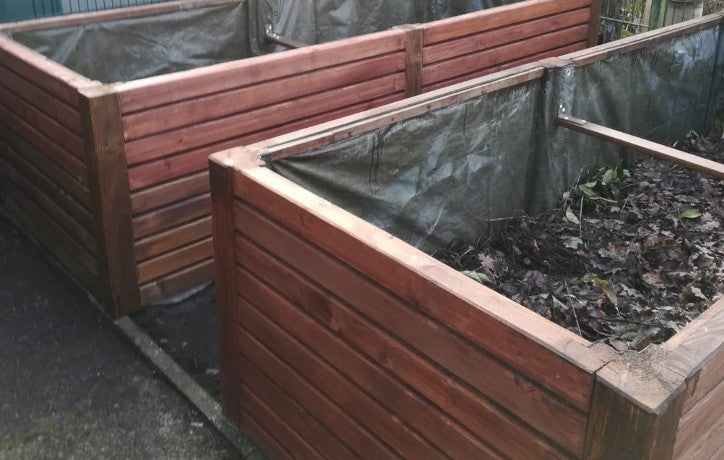
 © OFC Pictures/AdobeStock
 © ELEO Garden
 © ELEO Garden


